Compliance Just Got Easier: Stay ahead of regulatory changes with instant notifications on updates that matter.
['Hazard Communication']
['Hazard Communication', 'Hazcom Labeling']
11/05/2026

Copyright 2026 J. J. Keller & Associate, Inc. For re-use options please contact copyright@jjkeller.com or call 800-558-5011.
:
|
InstituteEnglishSafety & HealthGeneral Industry SafetyUSAHazard CommunicationHazard CommunicationHazcom LabelingAnalysisFocus AreaIn Depth (Level 3)
Label design and in-house labeling
['Hazard Communication']
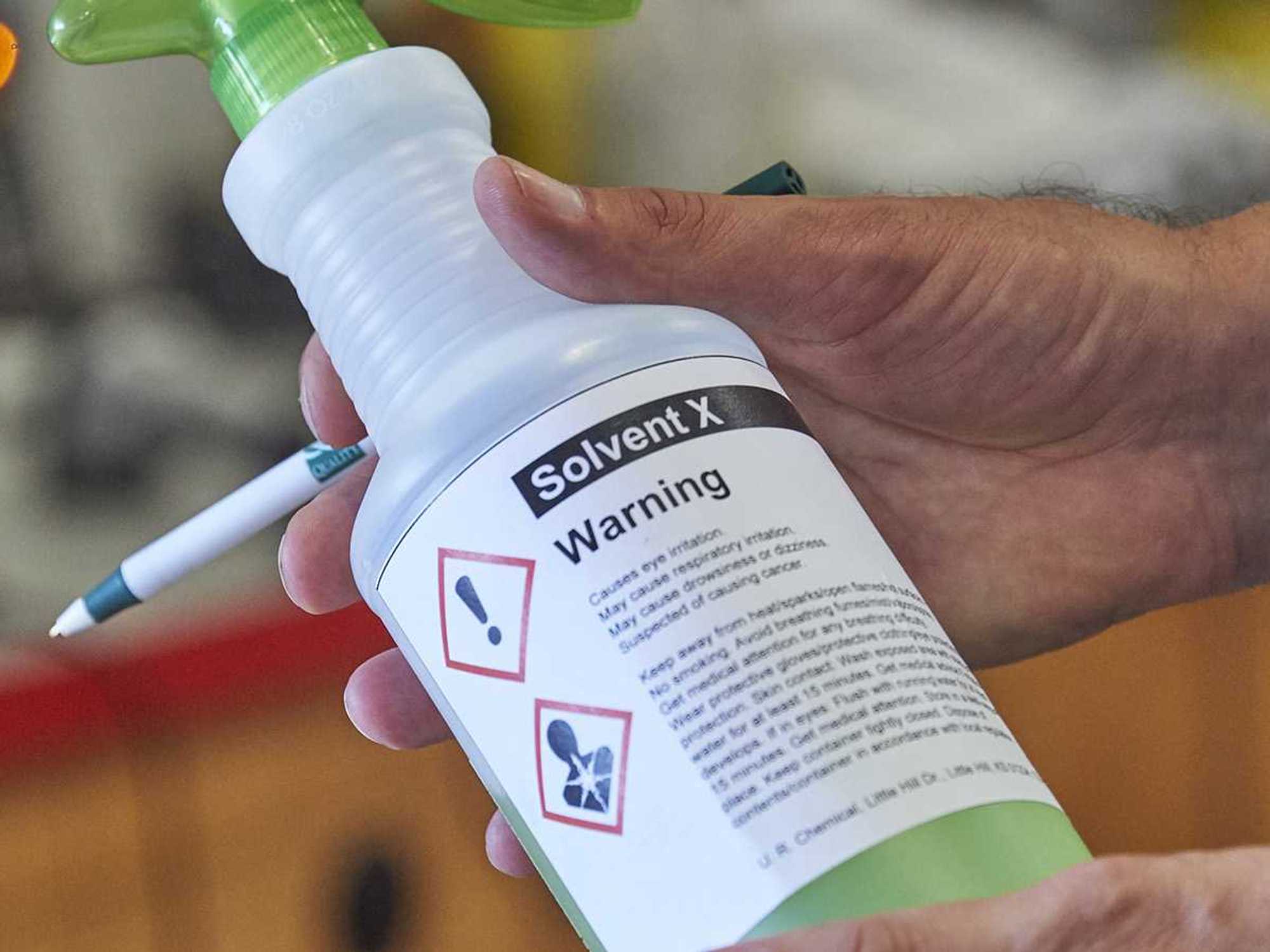
- Labels must be legible and pictograms, signal words, and hazard statements should be together on the label.
- Maintain the labels of any containers received already labeled from the supplier.
The label format or layout is not specified by the Occupational Safety and Health Administration (OSHA), except to require that the pictograms, signal word, and hazard statements should be located together on the label. OSHA states that the three elements should appear in “the same field of view.”
There are also no guidelines or requirements on label size. However, OSHA says that labels must be legible without the use of any aid except corrective lenses if the person reading the label normally must wear glasses. If the label is not legible, it is not in compliance.
In-house labeling
For those containers that are received already labeled from the supplier, simply maintaining the label on the container is the best and easiest option. If materials are transferred in the workplace from labeled containers into other containers, the employer must ensure that these are labeled as well, unless they fall under the portable container exemption.
In-house containers of hazardous chemicals must be labeled, tagged, or marked with either:
- The same label information required on shipped containers (apart from the supplier identification), or
- A product identifier and words, pictures, symbols, or some combination that provides general hazard information regarding the hazards of the chemicals, and which, in conjunction with the other information immediately available to employees under the hazard communication program, will provide employees with the specific information regarding the physical and health hazards of the hazardous chemical. If symbols are used, they must not contradict the pictograms, or use of the wrong symbol for a given hazard (e.g., using the symbol for oxidizers to signify carcinogens).
When using the second labeling option above, the workplace (in-house) label does not require:
- The pictogram or a description of the pictogram. If a pictogram is used, it can be used with a black border. (The black border is only acceptable for in-house labels, not labels for shipped containers.)
- Precautionary statements and hazard statements.
The employer shall ensure that workplace labels or other forms of warning are:
- Legible and in English (however, they may be provided in other languages as well), and
- Prominently displayed on the container, or readily available in the work area throughout each work shift.
:
hazard-communication
hazard-communication
FOUNDATIONAL LEARNING
Label design and in-house labeling
InstituteEnglishSafety & HealthGeneral Industry SafetyUSAHazard CommunicationHazard CommunicationHazcom LabelingAnalysisFocus AreaIn Depth (Level 3)
['Hazard Communication']
- Labels must be legible and pictograms, signal words, and hazard statements should be together on the label.
- Maintain the labels of any containers received already labeled from the supplier.
The label format or layout is not specified by the Occupational Safety and Health Administration (OSHA), except to require that the pictograms, signal word, and hazard statements should be located together on the label. OSHA states that the three elements should appear in “the same field of view.”
There are also no guidelines or requirements on label size. However, OSHA says that labels must be legible without the use of any aid except corrective lenses if the person reading the label normally must wear glasses. If the label is not legible, it is not in compliance.
In-house labeling
For those containers that are received already labeled from the supplier, simply maintaining the label on the container is the best and easiest option. If materials are transferred in the workplace from labeled containers into other containers, the employer must ensure that these are labeled as well, unless they fall under the portable container exemption.
In-house containers of hazardous chemicals must be labeled, tagged, or marked with either:
- The same label information required on shipped containers (apart from the supplier identification), or
- A product identifier and words, pictures, symbols, or some combination that provides general hazard information regarding the hazards of the chemicals, and which, in conjunction with the other information immediately available to employees under the hazard communication program, will provide employees with the specific information regarding the physical and health hazards of the hazardous chemical. If symbols are used, they must not contradict the pictograms, or use of the wrong symbol for a given hazard (e.g., using the symbol for oxidizers to signify carcinogens).
When using the second labeling option above, the workplace (in-house) label does not require:
- The pictogram or a description of the pictogram. If a pictogram is used, it can be used with a black border. (The black border is only acceptable for in-house labels, not labels for shipped containers.)
- Precautionary statements and hazard statements.
The employer shall ensure that workplace labels or other forms of warning are:
- Legible and in English (however, they may be provided in other languages as well), and
- Prominently displayed on the container, or readily available in the work area throughout each work shift.
2656869319
2656869323
UPGRADE TO CONTINUE READING
RELATED TOPICS
J. J. Keller is the trusted source for DOT / Transportation, OSHA / Workplace Safety, Human Resources, Construction Safety and Hazmat / Hazardous Materials regulation compliance products and services. J. J. Keller helps you increase safety awareness, reduce risk, follow best practices, improve safety training, and stay current with changing regulations.
Copyright 2026 J. J. Keller & Associate, Inc. For re-use options please contact copyright@jjkeller.com or call 800-558-5011.