
Welding
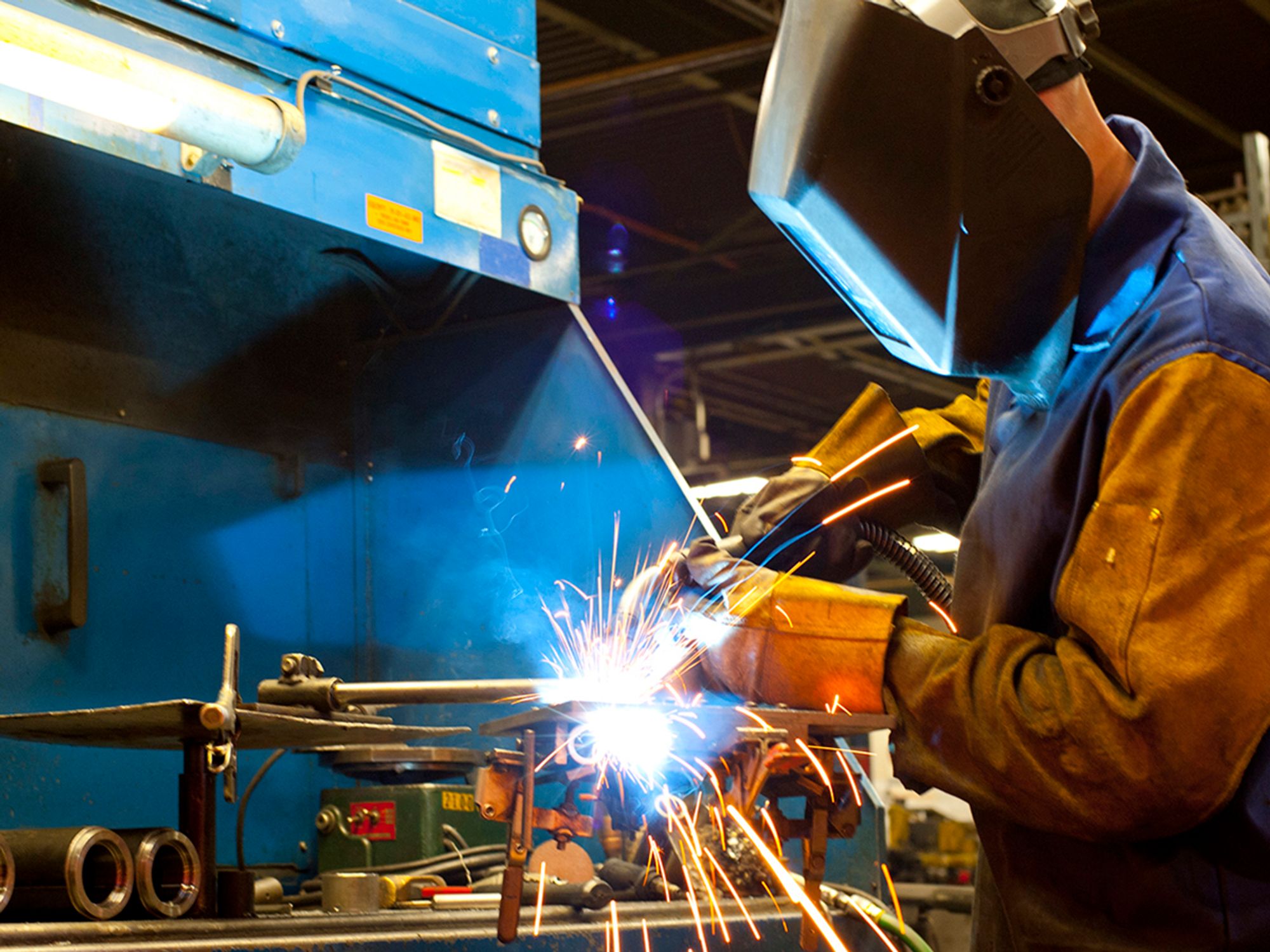
OSHA’s Subpart O regulations apply to all welders and welding operators who operate electric or gas welding and cutting equipment. The standards apply whether you have a single portable welding unit to do an occasional spot welding task, or if you have large electric welders to use in daily production.
Action steps
- Follow safety precautions for fire prevention and protection.
- Maintain suitable fire extinguishers.
- Provide a fire watch where required.
- Ensure areas are inspected and a permit issued before welding is allowed.
- Follow proper welding procedures.
- Provide PPE as needed.
- Ensure safety when working in confined spaces.
- Handle welding materials and equipment properly.
- Ensure proper marking of welding materials and equipment.
- Provide suitable ventilation.
- Maintain welding equipment.
Training action plan
Cutters, welders, and their supervisors are required to be trained in the safe operation of welding equipment. Also, fire watchers shall be trained in the use of fire extinguishing equipment. Training content should generally cover:
- Welding safety program guidelines established at your company,
- Welding hazards,
- Safe work practices,
- Fire watches,
- Welding safety when working in confined spaces, and
- Housekeeping.
Consider other safety training issues relative to your welding operations:
- Hazard communication for all hazardous substances generated during welding (e.g., certain gases, fluxes, wires, and rods contain cadmium, fluorides, zinc, beryllium, and so on, and require various protections).
- Spill cleanup procedures under HAZWOPER for leaky oxy fuel type cylinders or for situations with explosion or fire potential.
- Personal protective equipment, especially where respirators are required and eye shades are needed for arc welding operations.
- Employees must be informed of the status of their exposure records each year.
- Construction regulation requirements where welding operations involve new structures or modification of existing structures.
- Electrical codes for exposed live parts.
Training is required prior to or at the time of initial assignment.
Documentation
OSHA does not require training documentation for safety training on welding, but it is always prudent to keep records anyway. Training records can tell you who was trained on what, when, and who conducted the training.
Tips
- Adverse effects of overexposure to welding fumes can be acute or may occur only after repeated exposures.
- The hazards presented by welding fumes will vary based upon: the base material, the filler material, the gases being used, current level, arc length, and other factors.
- Welding fumes can cause nausea, headaches, dizziness, and metal fume fever.
Checklists
Follow these checklists to ensure welding safety at your facility.
General
- Are only authorized and trained personnel permitted to use welding, cutting, or brazing equipment?
- Are pressure-reducing regulators used only for the gas and pressures for which they are intended?
- Does each operator have a copy of the appropriate operating instructions and are they directed to follow them?
- Is a check made for adequate ventilation in and where welding or cutting is performed?
- Is red used to identify acetylene (and other fuel-gas) hose, green for oxygen hose, and black for inert gas and air hose?
- When working in confined places, are environmental monitoring tests taken and means provided for quick removal of welders in case of an emergency?
- Are compressed gases used and handled properly?
Welding: Equipment
- Are only approved apparatus (torches, regulators, pressure-reducing valves, acetylene generators, manifolds) used?
- Is grounding of the welding machine frame and safety ground connections of portable machines checked periodically?
- Is necessary personal protective equipment available?
- Is open circuit (No Load) voltage of arc welding and cutting machines as low as possible and not in excess of the recommended limits?
Welding: Fire prevention
- Are compressed gas cylinders kept away from sources of heat?
- Are fire watchers assigned when welding or cutting is performed in locations where a serious fire might develop?
- Are precautions taken to prevent the mixture of air or oxygen with flammable gases, except at a burner or in a standard torch?
- Are provisions made for personnel to perform fire watch duties under appropriate circumstances?
- Are provisions made to never crack a fuel-gas cylinder valve near sources of ignition?
- Are signs reading “DANGER NO SMOKING, MATCHES, OR OPEN LIGHTS” or the equivalent, posted in welding areas?
- Before hot work is begun, are used drums, barrels, tanks, and other containers so thoroughly cleaned that no substances remain that could explode, ignite, or produce toxic vapors?
- If welding gases are stored, are oxygen and acetylene separated by a 5-foot noncombustible barrier?
- Is combustible scrap, debris, and waste stored safely and removed from the work site promptly?
- When welding is done on metal walls, are precautions taken to protect combustibles on the other side?