Compliance Just Got Easier: Stay ahead of regulatory changes with instant notifications on updates that matter.
['Risk Assessment and Management']
['Risk Assessment and Management']
04/18/2026

Copyright 2026 J. J. Keller & Associate, Inc. For re-use options please contact copyright@jjkeller.com or call 800-558-5011.
:
|
InstituteRisk Assessment and ManagementIn Depth Sub Topics (Level 4)Risk Assessment and ManagementEnglishAnalysisFocus AreaUSA
Signs, tags, labeling, and postings
['Risk Assessment and Management']
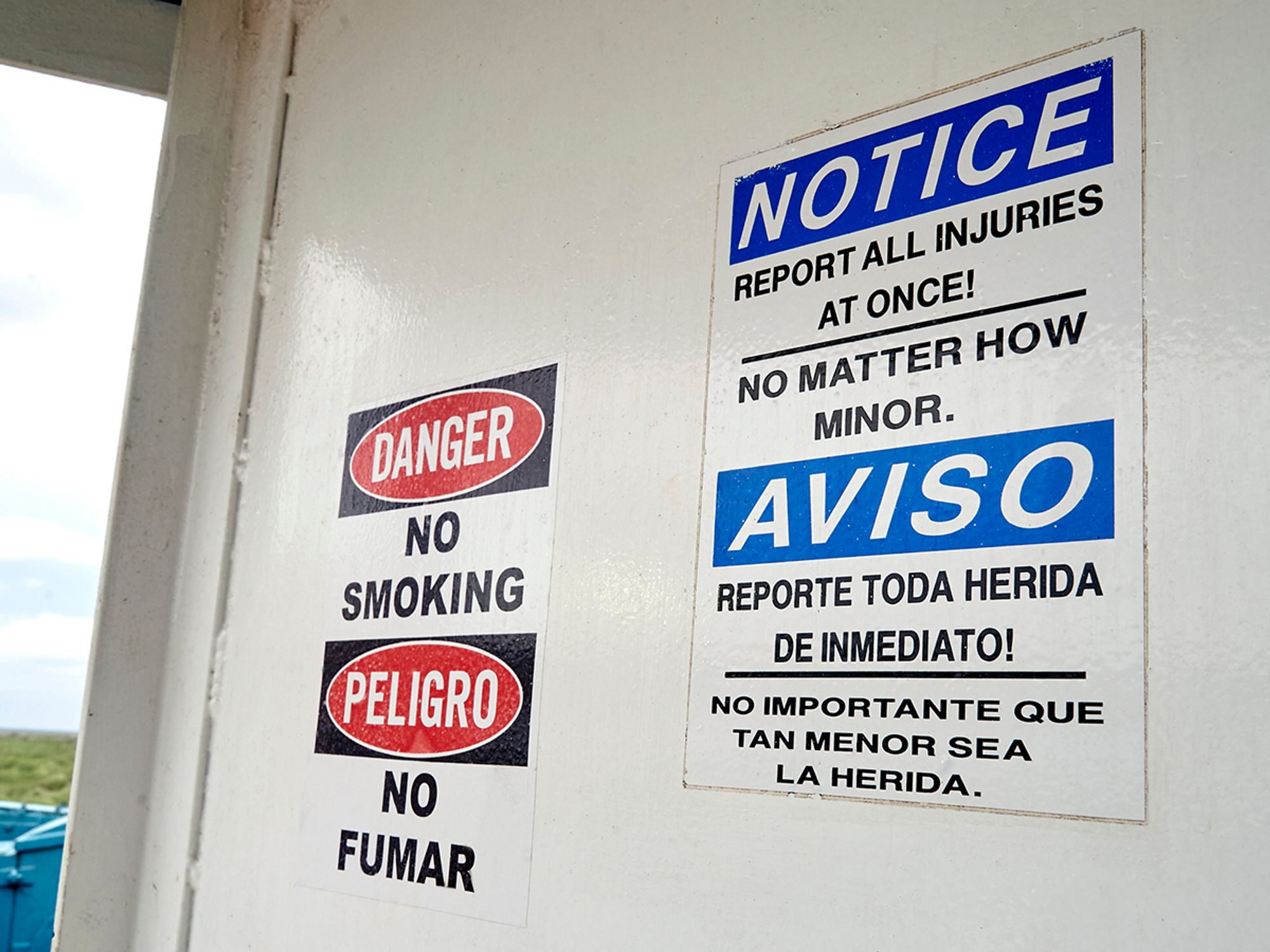
Occupational Safety and Health Administration (OSHA) regulations specify an array of sign, tag, labeling, and posting requirements. The major ones are found in 29 CFR 1903.2, 1904.32, 1910.23, 1910.37, 1910.144, 1910.145, 1910.146, 1910.147, 1910.157, 1910.176, 1910.178, 1910.179, 29 CFR 1910 Subpart S, 1910.1030, 1910.1200, and other standards within 29 CFR 1910 Subpart Z. This list is not comprehensive.
Action steps
- Use appropriate colors for identification of equipment and hazards per OSHA regulations.
- Ensure emergency stop bars and buttons on hazardous machines are red.
- Ensure yellow is used for designating caution and for marking physical hazards such as: striking against, stumbling, falling, tripping, and “caught in between.”
- Follow OSHA specifications for accident prevention signs and tags.
- Instruct employees in recognizing accident prevention signs and tags and the appropriate action to take regarding those markings.
- Ensure messages on signs and tags are clear and to the point.
Training action plan
Training on accident prevention signs and tags is required prior to or at the time of initial assignment to areas where accident prevention signs and tags are used. Training content should generally include: what signs and tags are, their importance, message types, signal words, symbols, surround shapes, color schemes, and other marking systems.
Consider other safety training issues relative to safety signs such as hazard communication and the specific posting requirements of the chemical-specific standards found in 29 CFR 1910 Subpart Z. Training might also cover the information found in the poster describing employee rights under OSHA (poster 3165 or 2203) which must be displayed somewhere where workers will see it. Prior versions of the poster are also compliant.
OSHA does not require training documentation for 1910.145, but it is always prudent to keep records. They can tell you who was trained, when, and what was covered.
Tips
- The lines used to delineate the aisles may be any color so long as they clearly define the area considered as aisle space. The lines may be composed of dots, square, strip or continuous, but they too must define the aisle area.
- The recommended width of aisle markings varies from two inches to six inches; therefore, any width two inches or more is considered acceptable.
- Danger sign — The colors red, black, and white must be those of opaque glossy samples as specified in the tables referenced at 1910.145(d)(2).
- Caution sign — Standard color of the background must be yellow; and the panel, black with yellow letters. Any letters used against the yellow background must be black. The colors must be those of opaque glossy samples as specified in the tables specified at 1910.145(d)(4).
- Safety instruction signs — Standard color of the background must be white; and the panel, green with white letters. Any letters used against the white background must be black. The colors must be those of opaque glossy samples as specified in the tables specified at 1910.145(d)(6).
Checklist
Review these checklists for signs, tags, labels, and postings at your facility.
Hazardous substances
- Are hazardous chemicals labeled with the product identifier and general hazards?
- Are safety and other containers painted appropriately?
- Are equipment, containers, materials, or areas where biohazards are or could be present labeled with the biological hazard warning?
- Are any entrances to regulated areas where the 13 carcinogens listed at 1910.1003 are present marked with appropriate signage warning of the danger?
- Are signs posted warning of presence and hazards of asbestos where required?
Aisles
- Are permanent aisles and passageways appropriately marked?
Materials handling
- Are clearance signs warning of clearance limits provided?
- Are powered industrial trucks appropriately marked?
- Are cranes marked with the load rating on each side?
- Are crane pendant control boxes clearly marked for identification of functions?
Emergencies
- Are exits marked by a readily visible sign?
- Are areas that could be mistaken for an exit identified by a sign reading “Not an Exit” or something similar?
- Are portable fire extinguishers mounted, located, and identified so they are readily accessible?
Ladders
- Are defective ladders withdrawn from service and tagged or marked as “Dangerous, Do Not Use”?
Lockout/tagout
- Do tagout devices warn against hazardous conditions if the machine or equipment is energized?
Confined spaces
- Are completed confined space permits posted at an appropriate location?
- Are signs posted at permit-required confined spaces describing the dangers present?
OSHA postings
- Is OSHA’s Form 3165 (or 2203) describing the OSH Act posted appropriately?
- Is the OSHA 300A Form posted appropriately?
- Are citations received from OSHA posted at or near the place the violation(s) occurred?
Electrical
- Is the manufacturer’s description marked on all electrical equipment used?
- Are covers for pull and junction boxes permanently marked “HIGH VOLTAGE”?
:
risk-assessment-and-management
risk-assessment-and-management
FOUNDATIONAL LEARNING
Signs, tags, labeling, and postings
InstituteRisk Assessment and ManagementIn Depth Sub Topics (Level 4)Risk Assessment and ManagementEnglishAnalysisFocus AreaUSA
['Risk Assessment and Management']
Occupational Safety and Health Administration (OSHA) regulations specify an array of sign, tag, labeling, and posting requirements. The major ones are found in 29 CFR 1903.2, 1904.32, 1910.23, 1910.37, 1910.144, 1910.145, 1910.146, 1910.147, 1910.157, 1910.176, 1910.178, 1910.179, 29 CFR 1910 Subpart S, 1910.1030, 1910.1200, and other standards within 29 CFR 1910 Subpart Z. This list is not comprehensive.
Action steps
- Use appropriate colors for identification of equipment and hazards per OSHA regulations.
- Ensure emergency stop bars and buttons on hazardous machines are red.
- Ensure yellow is used for designating caution and for marking physical hazards such as: striking against, stumbling, falling, tripping, and “caught in between.”
- Follow OSHA specifications for accident prevention signs and tags.
- Instruct employees in recognizing accident prevention signs and tags and the appropriate action to take regarding those markings.
- Ensure messages on signs and tags are clear and to the point.
Training action plan
Training on accident prevention signs and tags is required prior to or at the time of initial assignment to areas where accident prevention signs and tags are used. Training content should generally include: what signs and tags are, their importance, message types, signal words, symbols, surround shapes, color schemes, and other marking systems.
Consider other safety training issues relative to safety signs such as hazard communication and the specific posting requirements of the chemical-specific standards found in 29 CFR 1910 Subpart Z. Training might also cover the information found in the poster describing employee rights under OSHA (poster 3165 or 2203) which must be displayed somewhere where workers will see it. Prior versions of the poster are also compliant.
OSHA does not require training documentation for 1910.145, but it is always prudent to keep records. They can tell you who was trained, when, and what was covered.
Tips
- The lines used to delineate the aisles may be any color so long as they clearly define the area considered as aisle space. The lines may be composed of dots, square, strip or continuous, but they too must define the aisle area.
- The recommended width of aisle markings varies from two inches to six inches; therefore, any width two inches or more is considered acceptable.
- Danger sign — The colors red, black, and white must be those of opaque glossy samples as specified in the tables referenced at 1910.145(d)(2).
- Caution sign — Standard color of the background must be yellow; and the panel, black with yellow letters. Any letters used against the yellow background must be black. The colors must be those of opaque glossy samples as specified in the tables specified at 1910.145(d)(4).
- Safety instruction signs — Standard color of the background must be white; and the panel, green with white letters. Any letters used against the white background must be black. The colors must be those of opaque glossy samples as specified in the tables specified at 1910.145(d)(6).
Checklist
Review these checklists for signs, tags, labels, and postings at your facility.
Hazardous substances
- Are hazardous chemicals labeled with the product identifier and general hazards?
- Are safety and other containers painted appropriately?
- Are equipment, containers, materials, or areas where biohazards are or could be present labeled with the biological hazard warning?
- Are any entrances to regulated areas where the 13 carcinogens listed at 1910.1003 are present marked with appropriate signage warning of the danger?
- Are signs posted warning of presence and hazards of asbestos where required?
Aisles
- Are permanent aisles and passageways appropriately marked?
Materials handling
- Are clearance signs warning of clearance limits provided?
- Are powered industrial trucks appropriately marked?
- Are cranes marked with the load rating on each side?
- Are crane pendant control boxes clearly marked for identification of functions?
Emergencies
- Are exits marked by a readily visible sign?
- Are areas that could be mistaken for an exit identified by a sign reading “Not an Exit” or something similar?
- Are portable fire extinguishers mounted, located, and identified so they are readily accessible?
Ladders
- Are defective ladders withdrawn from service and tagged or marked as “Dangerous, Do Not Use”?
Lockout/tagout
- Do tagout devices warn against hazardous conditions if the machine or equipment is energized?
Confined spaces
- Are completed confined space permits posted at an appropriate location?
- Are signs posted at permit-required confined spaces describing the dangers present?
OSHA postings
- Is OSHA’s Form 3165 (or 2203) describing the OSH Act posted appropriately?
- Is the OSHA 300A Form posted appropriately?
- Are citations received from OSHA posted at or near the place the violation(s) occurred?
Electrical
- Is the manufacturer’s description marked on all electrical equipment used?
- Are covers for pull and junction boxes permanently marked “HIGH VOLTAGE”?
2667392556
2667392539
UPGRADE TO CONTINUE READING
J. J. Keller is the trusted source for DOT / Transportation, OSHA / Workplace Safety, Human Resources, Construction Safety and Hazmat / Hazardous Materials regulation compliance products and services. J. J. Keller helps you increase safety awareness, reduce risk, follow best practices, improve safety training, and stay current with changing regulations.
Copyright 2026 J. J. Keller & Associate, Inc. For re-use options please contact copyright@jjkeller.com or call 800-558-5011.