
Selecting PPE and CPC
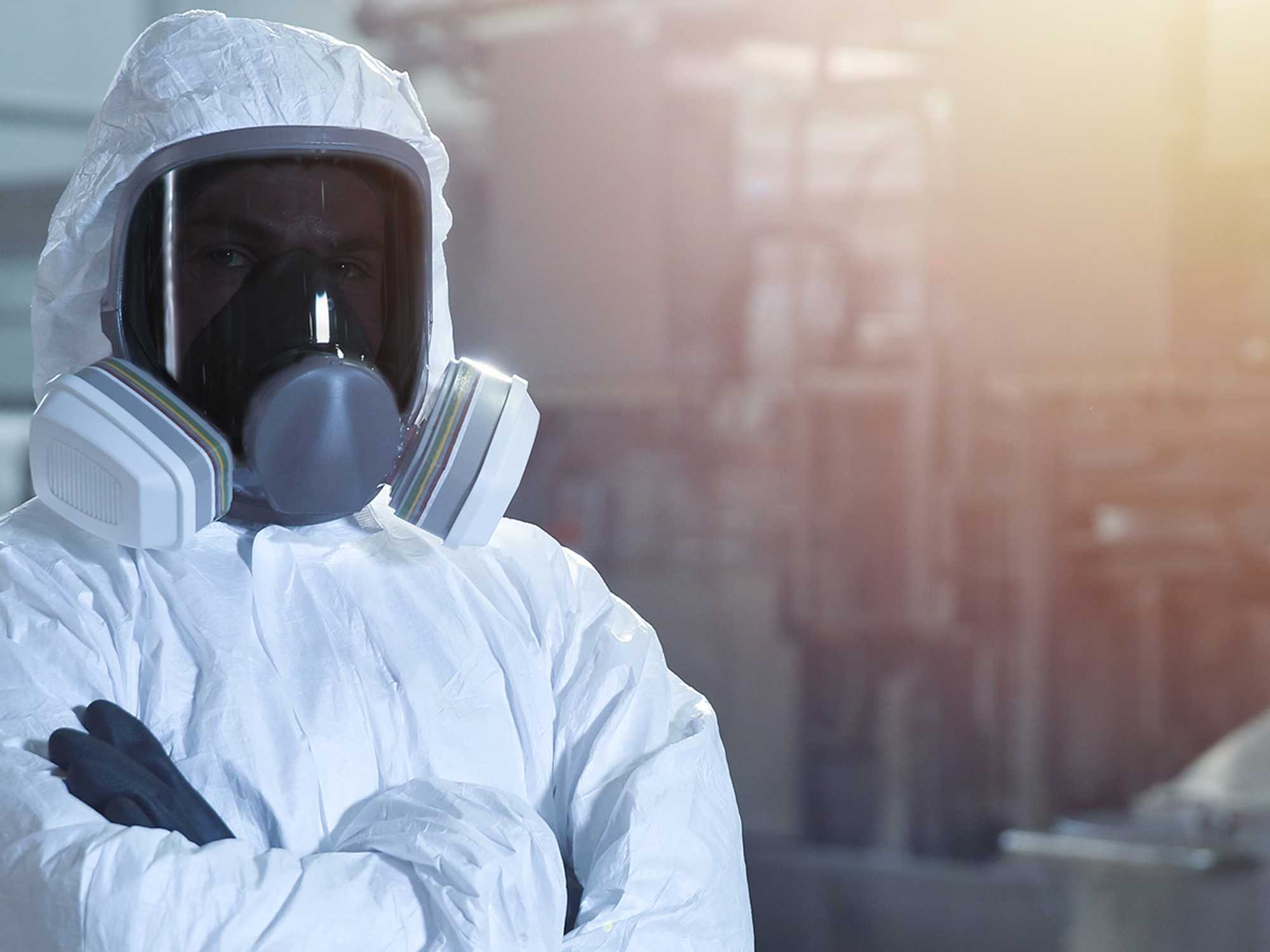
- Selection criteria for PPE and CPC should include not only the level and nature of protection they provide but their fit, compatibility, and ease of decontamination.
Before selecting any personal protective equipment (PPE) or chemical protective clothing (CPC), employees should be well informed about the conditions. What hazardous substances are present, what form they are in (such as a vapor cloud or a liquid spill), the concentration levels, the hazards involved, the exposure routes, and any expectations for possible changing conditions are all vital pieces of information.
Selecting PPE
One thing to take into consideration is whether all pieces of PPE needed are compatible and do not interfere with each other. For instance, an employee wearing a hard hat, goggles, and hearing protection should make sure the goggles don’t interfere with the fit of the hard hat. An employee preferring earmuffs as hearing protection may need a hard hat that has special grooves in it to accommodate them.
Another consideration is proper fit. PPE must be comfortable to wear; if it’s too tight and causing pinch points, it will be distracting. If it’s too large and falling off or moving around and the employee needs to adjust it regularly, that will be equally distracting.
Considerations when selecting PPE may include:
- Specific hazards such as elevated heights, projectiles, falling objects, loud noises, or splashing liquids;
- Unrestricted vision and movement;
- Electrical hazards;
- Explosive or combustible environments;
- Wet surfaces or slippery conditions;
- Possible changing conditions;
- Thermal protection;
- Duration of work;
- Grip requirements; and
- Shock absorbency.
Selecting CPC
When selecting CPC, one thing to consider is permeation. Even chemically resistant clothing is not immune to permeation. And in most cases, there won’t be any visible evidence that chemicals are permeating the material.
Chemical mixtures make permeation especially unpredictable, as even small concentrations of certain chemicals can enable the more rapid permeation of others.
Some factors that can affect the degree of permeation and how quickly it breaks through materials include:
- Material type and thickness;
- How the material was manufactured;
- The concentration of the hazardous substance; and
- Temperature, pressure, and humidity.
When selecting CPC, employees should also consider penetration and degradation. Penetration is the ability of chemicals to move through zippers, seams, or imperfections in material. Degradation involves physical changes in a material due to chemical exposure, use over time, or exposure to ambient conditions like sunlight. Signs of degradation include fading, swelling, loss of strength, and deterioration.
Another consideration is heat transfer. This refers to the clothing’s ability to dissipate heat. During work that occurs in a hot environment or requires rapid movement, heat can build up quickly inside CPC, which creates a concern for heat stress. The level of protection should never be downgraded due to heat stress, but adding some type of cooling garments may be necessary.
More factors to consider when selecting CPC include:
- Durability. Does the material have the strength to stand up to the physical stresses of the tasks the wearer needs to perform? Can the material resist tears, punctures, and abrasions?
- Flexibility. Will the material allow the wearer the flexibility required to perform necessary tasks?
- Temperature. What effects will hot or cold temperatures have on the protective clothing? Will the clothing remain flexible in extreme temperatures?
- Decontamination. How difficult is the clothing to decontaminate? Employees may decide to wear disposable or reusable clothing or a combination of both, depending on the conditions.
- Compatibility. Is the clothing compatible with other needed clothing and PPE? For instance, some fully encapsulating suits may not be compatible with a hard hat.
- Duration. How long will the required tasks take? Can the tasks be done before degradation or permeation becomes an issue?
- Special conditions. Are there any special conditions that are present or could potentially happen, such as fires, explosions, heat, and radiation? The employee could need protection from those conditions in addition to chemical protection.