
Personal sampling
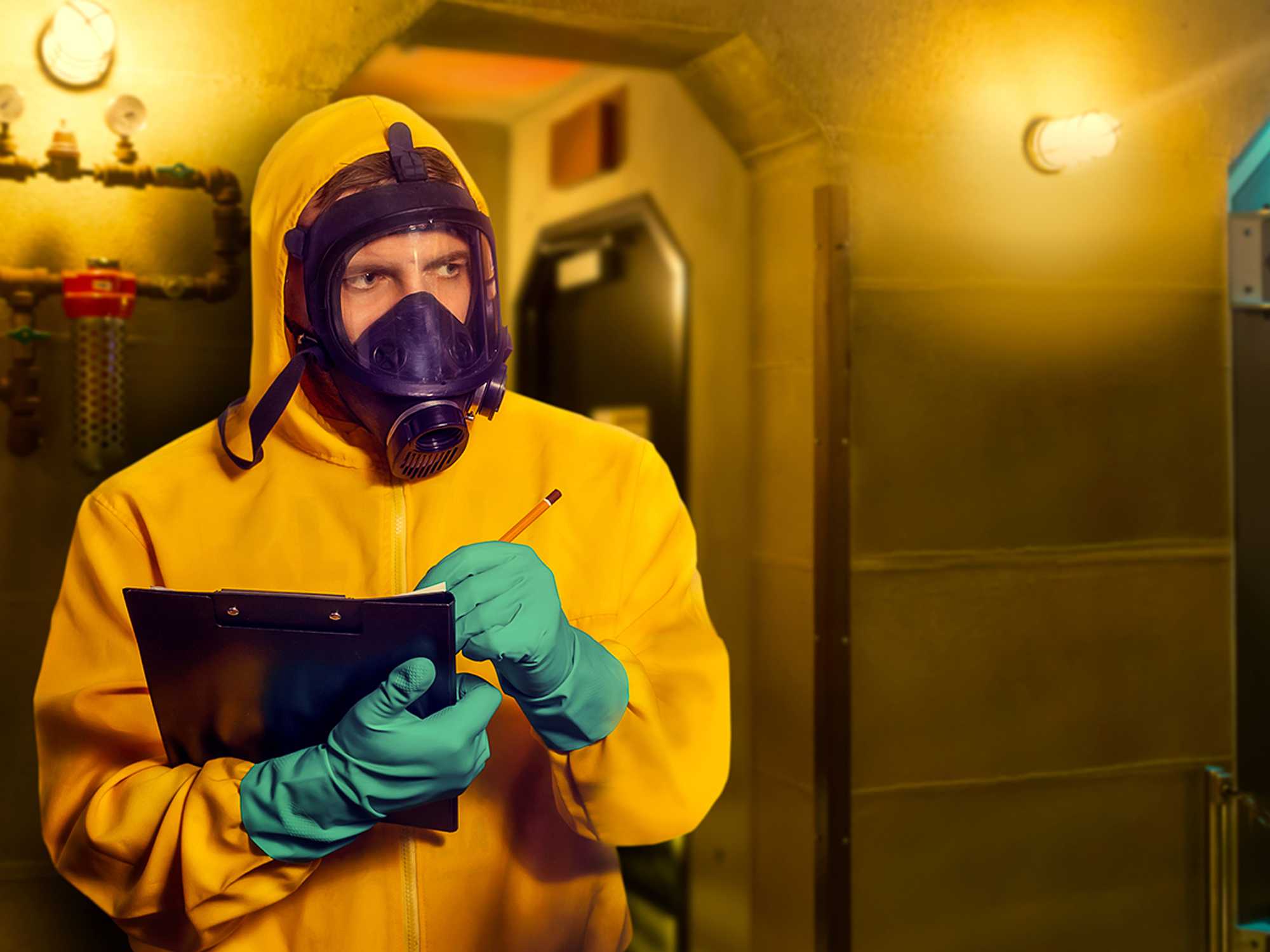
- Employees may participate in personal sampling by wearing a sampling device such as a passive dosimeter clipped to their clothing or having their skin, breath, body fluids, and so forth tested for contaminants.
Employees may be asked to wear a personal sampler while conducting work activities. Selecting who will wear personal samplers is based on which employees will be closest to the source.
Personal samplers usually consist of:
- A pump unit, which is worn on a belt around the waist;
- A tube for drawing air through; and
- Some type of collection media, like a filter or canister of sorbent material.
It’s important to target the breathing zone when wearing sampling equipment. To stay in the breathing zone, the collection media should be fastened outside the facepiece of the respirator close to the employee’s face. That means it’s often secured to the employee’s shoulder or chest.
This type of sampling indicates what the actual inhalation exposure of an employee would be without a respirator. This information is used to help keep an employee’s exposure to airborne contaminants below permissible exposure limit (PEL) values.
Because there can be several different contaminants present, one employee may be asked to change sampling devices several times or each member of a team may be assigned to wear a different sampling device so exposure records can be recorded for each contaminant.
One personal sampling device that’s used is the passive dosimeter. Passive dosimeters are small badges worn clipped to clothing, usually on the collar or a shirt pocket. Hazardous substances are collected on the dosimeter as air passes over it. The dosimeter is then sent to a lab to be analyzed.
A less common type of sampling is dermal sampling, which tries to measure exposure through absorption to the dermal layer of skin using skin washes or wipes, dosimeter patches, or whole-body suits.
Another less common type of personal sampling is biological sampling, where samples of an employee’s blood, urine, and exhaled breath are used to measure contaminants that have made their way into the body.
Personal monitoring can also be performed during work tasks. An employee can monitor for oxygen deficiency, flammability, and radiation by either wearing or holding monitoring equipment that is set to alarm if the readings are too high.
Some monitoring instruments also allow an employee to take a quick sample while working to verify conditions.