Compliance Just Got Easier: Stay ahead of regulatory changes with instant notifications on updates that matter.
['Passenger carriers']
['Passenger vehicles']
03/26/2026

Copyright 2026 J. J. Keller & Associate, Inc. For re-use options please contact copyright@jjkeller.com or call 800-558-5011.
:
|
InstitutePassenger vehiclesPassenger carriersFocus AreaUSAFleet OperationsEnglishAnalysisTransportationIn Depth (Level 3)
Part 374 passenger requirements
['Passenger carriers']
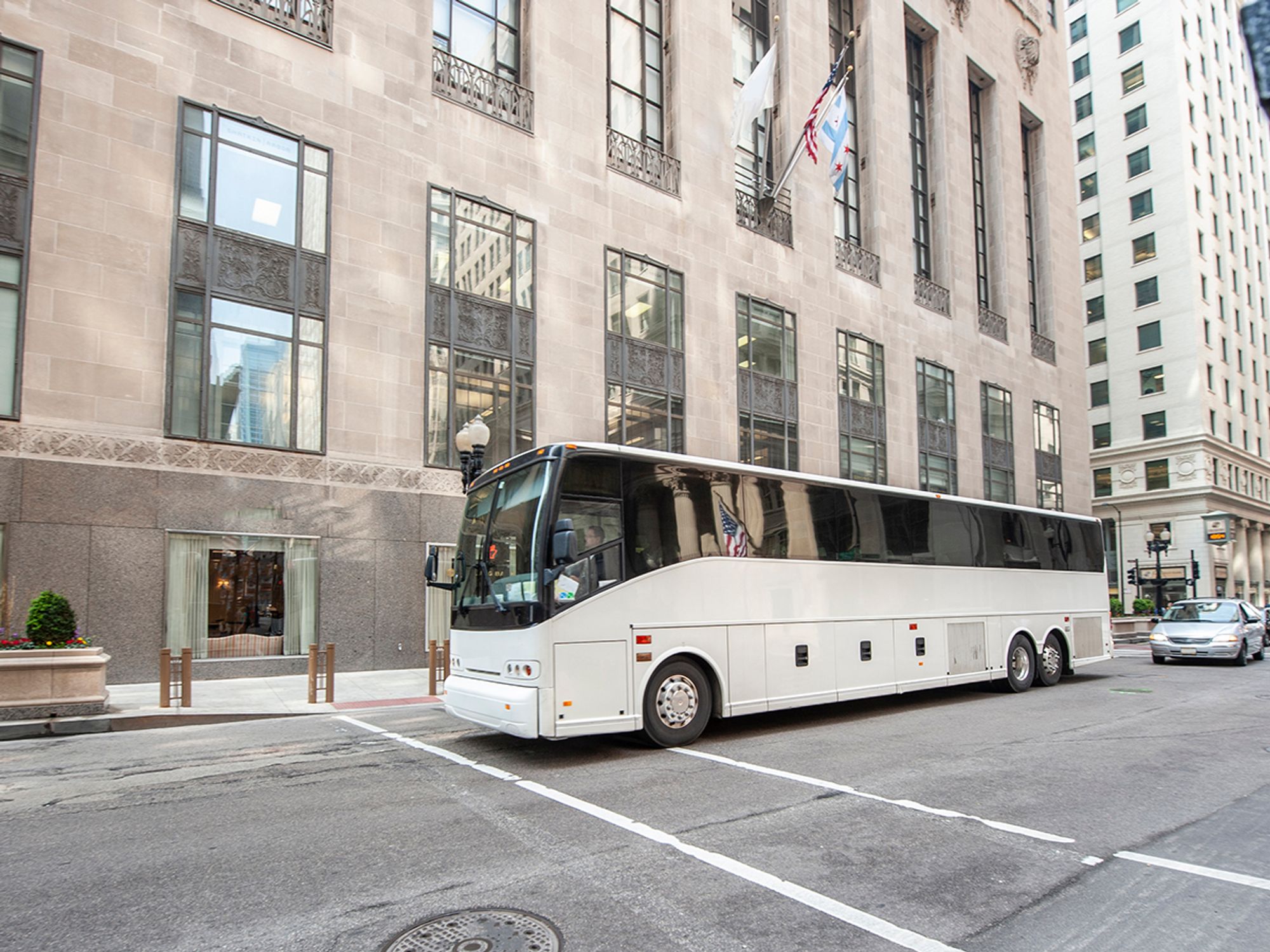
- For-hire regular-route passenger carriers must comply Part 374 and the Americans with Disabilities Act requirements along with the regulations in Parts 380 to 399.
Part 374 of the FMCSRs contains miscellaneous requirements for passenger carriers, covering diverse issues from discrimination and smoking to charter rights and bathroom conditions. The following is an overview of the requirements; refer to Part 374 for details on the respective Sections and Subparts.
Discrimination: Part 374 Subpart A
Interstate motor carriers of passengers that provide transportation to the public for a fee may not base their seating practices on the basis of race, color, creed, or national origin. Every ticket sold must include a plainly legible notice that reads: “Seating aboard vehicles operated in interstate or foreign commerce is without regard to race, color, creed, or national origin.” Discrimination is also prohibited within terminal facilities.
Each interstate carrier of passengers must ensure that its terminal facilities have a visible sign or placard containing the full text of the Part 374 anti-discrimination regulations and captioned: “Public Notice: Regulations Applicable to Vehicles and Terminal Facilities of Interstate Motor Carriers of Passengers, by order of the Secretary, U.S. Department of Transportation.” Any interference, by any person or government body, with a carrier’s observance of the antidiscrimination requirements must be reported within 15 days to the DOT, including a description of the actions the carrier may have taken to eliminate the interference.
Smoking: Part 374 Subpart B
Interstate motor carriers of passengers that provide transportation to the public for a fee must prohibit smoking on vehicles transporting passengers in scheduled or special service.
Chartered trips are exempt from this. Carriers have to make passengers, drivers, and other employees aware of the smoking ban through appropriate announcements, no-smoking symbols, and the posting of signs in all vehicles. The signs must be (and remain) legible and must indicate that smoking is prohibited by federal regulation.
Regular-route operations: Part 374 Subpart C , Subpart D, and Subpart E requirements
Under Part 374 Subpart C unless otherwise noted, interstate motor carriers of passengers that provide regular-route transportation to the public for a fee must comply regulations in the areas of:
- Ticketing and passenger information,
- Baggage service (Subpart C) and excess baggage value (Subpart D),
- Terminal facilities,
- Service responsibilities,
- Equipment including transportation of persons with disabilities,
- Bus and driver identification,
- Petitions for exception from regulations, and
- Incidental charter rights (Subpart E).
:
passenger-carriers
FOUNDATIONAL LEARNING
Part 374 passenger requirements
InstitutePassenger vehiclesPassenger carriersFocus AreaUSAFleet OperationsEnglishAnalysisTransportationIn Depth (Level 3)
['Passenger carriers']
- For-hire regular-route passenger carriers must comply Part 374 and the Americans with Disabilities Act requirements along with the regulations in Parts 380 to 399.
Part 374 of the FMCSRs contains miscellaneous requirements for passenger carriers, covering diverse issues from discrimination and smoking to charter rights and bathroom conditions. The following is an overview of the requirements; refer to Part 374 for details on the respective Sections and Subparts.
Discrimination: Part 374 Subpart A
Interstate motor carriers of passengers that provide transportation to the public for a fee may not base their seating practices on the basis of race, color, creed, or national origin. Every ticket sold must include a plainly legible notice that reads: “Seating aboard vehicles operated in interstate or foreign commerce is without regard to race, color, creed, or national origin.” Discrimination is also prohibited within terminal facilities.
Each interstate carrier of passengers must ensure that its terminal facilities have a visible sign or placard containing the full text of the Part 374 anti-discrimination regulations and captioned: “Public Notice: Regulations Applicable to Vehicles and Terminal Facilities of Interstate Motor Carriers of Passengers, by order of the Secretary, U.S. Department of Transportation.” Any interference, by any person or government body, with a carrier’s observance of the antidiscrimination requirements must be reported within 15 days to the DOT, including a description of the actions the carrier may have taken to eliminate the interference.
Smoking: Part 374 Subpart B
Interstate motor carriers of passengers that provide transportation to the public for a fee must prohibit smoking on vehicles transporting passengers in scheduled or special service.
Chartered trips are exempt from this. Carriers have to make passengers, drivers, and other employees aware of the smoking ban through appropriate announcements, no-smoking symbols, and the posting of signs in all vehicles. The signs must be (and remain) legible and must indicate that smoking is prohibited by federal regulation.
Regular-route operations: Part 374 Subpart C , Subpart D, and Subpart E requirements
Under Part 374 Subpart C unless otherwise noted, interstate motor carriers of passengers that provide regular-route transportation to the public for a fee must comply regulations in the areas of:
- Ticketing and passenger information,
- Baggage service (Subpart C) and excess baggage value (Subpart D),
- Terminal facilities,
- Service responsibilities,
- Equipment including transportation of persons with disabilities,
- Bus and driver identification,
- Petitions for exception from regulations, and
- Incidental charter rights (Subpart E).
2657091339
2657091360
UPGRADE TO CONTINUE READING
RELATED TOPICS
J. J. Keller is the trusted source for DOT / Transportation, OSHA / Workplace Safety, Human Resources, Construction Safety and Hazmat / Hazardous Materials regulation compliance products and services. J. J. Keller helps you increase safety awareness, reduce risk, follow best practices, improve safety training, and stay current with changing regulations.
Copyright 2026 J. J. Keller & Associate, Inc. For re-use options please contact copyright@jjkeller.com or call 800-558-5011.