
Packaging
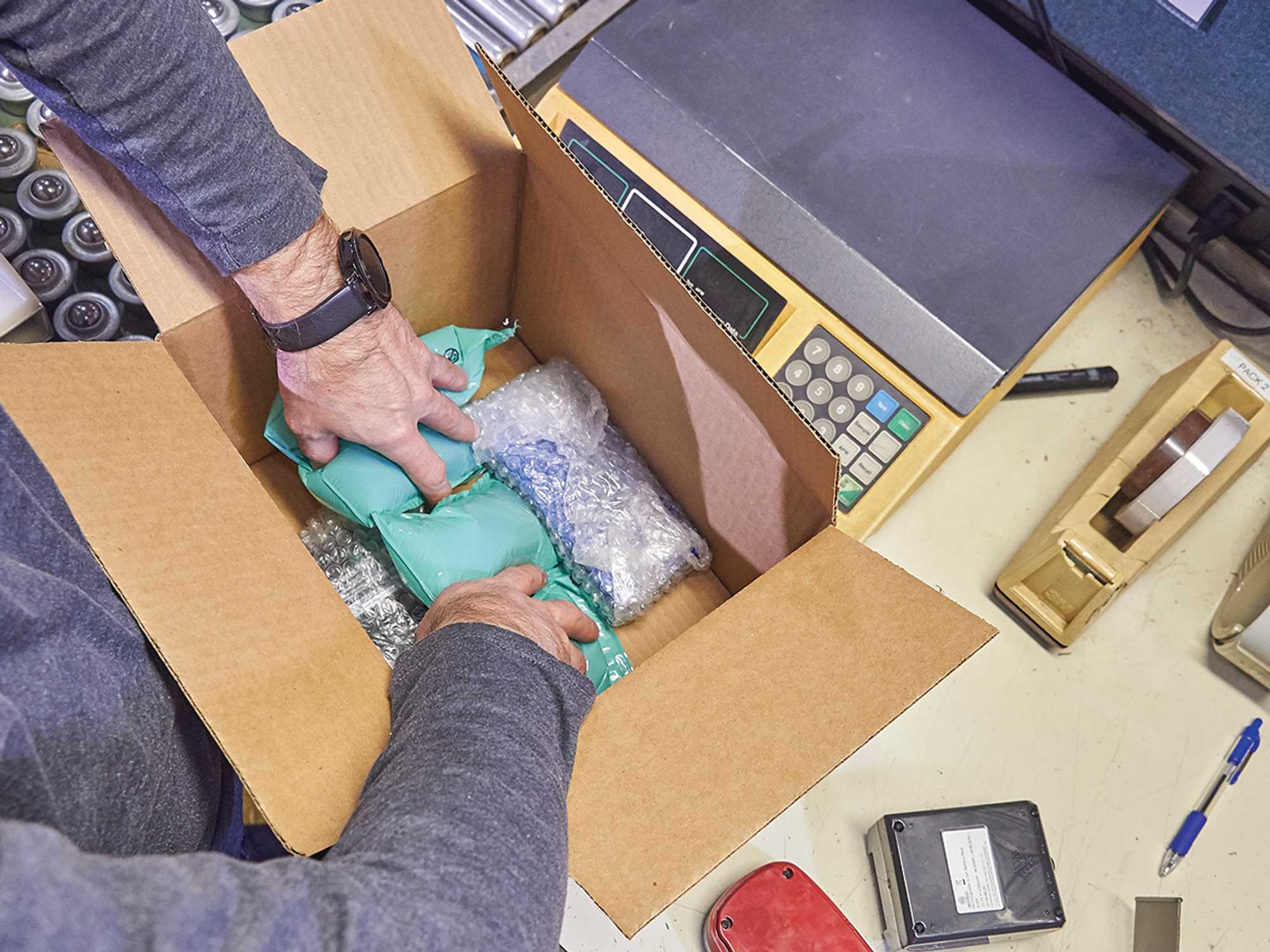
- Regulations require packaging that prevents the release of hazmat during air transportation.
- This type of packaging is crucial during air transportation as changes in pressure or vibrations from air transportation can cause leakage or the loosening of package closures.
Packages offered or intended for air transportation must comply with the general packaging requirements in 49 CFR sections 173.24, 173.24(a), and 173.27. Unless otherwise stated, each packaging used for the shipment of hazardous materials (hazmat) must be designed, constructed, and maintained to prevent the release of the hazmat.
Proper packaging is critical to the safe transportation of hazmat, especially in air transport, where the hazmat is subject to changes in temperature, altitude, and pressure.
Special requirements for Class 4, 5, and 8 materials
Even though Column 5 of the Hazardous Materials Table (HMT) shows that packages containing the following materials are in Packing Group (PG) III, they must meet performance tests at the PG II level:
- Division 4.1, 4.2, and 4.3 materials;
- Division 5.1 materials; and
- Class 8 materials.
Prevent leakage
Packages must be designed and constructed to prevent leakage that may be caused by internal pressure changes in altitude and temperature during air transportation.
Package closure
All packages must be securely closed. Friction-type closures on packages, such as stoppers and corks, must be held securely in place by positive means. Screw-type closures must be secured to prevent loosening from vibration or substantial changes in temperature or pressure.
For a package to be offered in accordance with the Hazardous Materials Regulations (HMRs), and for a United Nations certification to remain valid, it must be closed by the same method of closure used during testing. To ensure proper closure, the carrier should obtain closure instructions from the packaging manufacturer and close the packing as specified.
Unless otherwise noted, venting packages to reduce internal pressure is not permitted when packages are being transported by air.
Absorbent materials
Combination packages of liquids in PG I of Class 3, 4, 5, 6.1, and 8 require absorbent materials when the inner container is made of glass, earthenware, plastic, or metal. The absorbent material must be made of a substance that does not react dangerously with the liquid. When a liquid hazardous material in PG I is being transported on a passenger aircraft and the regulations require absorbent material, there must be sufficient material to absorb the contents of all inner packages containing liquids.
For PG I liquids being offered for transportation on a cargo aircraft only and PG II liquids offered for transportation on passenger aircraft, there must be enough absorbent material in the package to absorb the contents of one of the inner packages. If the inner packages are different sizes, there must be enough material to absorb the contents of the package with the greatest quantity of liquid.