Compliance Just Got Easier: Stay ahead of regulatory changes with instant notifications on updates that matter.
['Toxic and Hazardous Substances - OSHA']
['Toxic and Hazardous Substances - OSHA', 'Lead']
04/30/2026

Copyright 2026 J. J. Keller & Associate, Inc. For re-use options please contact copyright@jjkeller.com or call 800-558-5011.
:
|
InstituteLeadSafety & HealthGeneral Industry SafetyToxic and Hazardous Substances - OSHAUSAEnglishAnalysisFocus AreaToxic and Hazardous Substances - OSHAIn Depth (Level 3)
Medical surveillance
['Toxic and Hazardous Substances - OSHA']
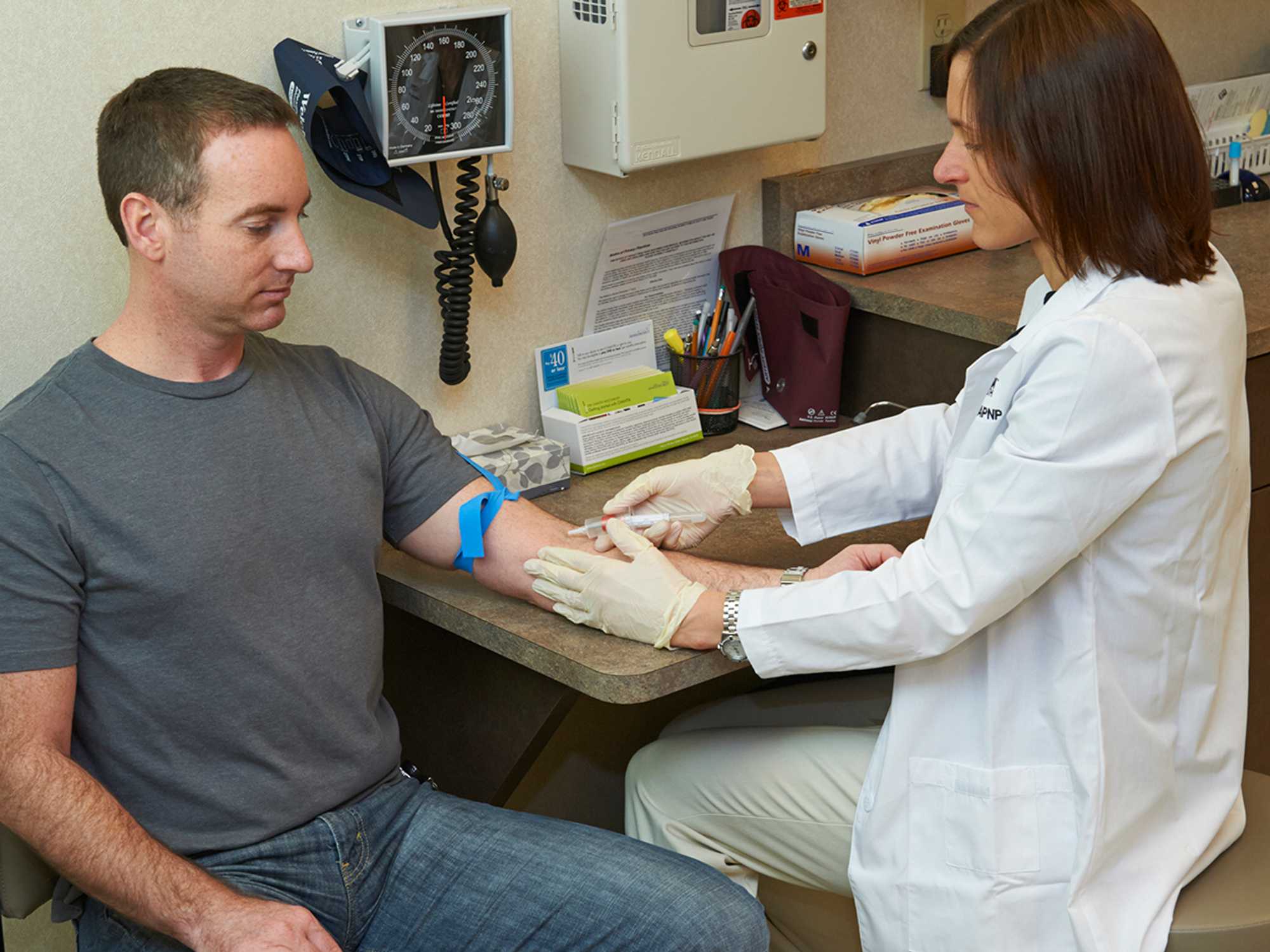
- Employers must institute a medical surveillance program for employees who are exposed to lead at or above the action level for more than 30 days per year.
- If an employee refuses blood testing, another test may not be substituted. Employers should document any employee refusal of a blood test.
Employers must institute a medical surveillance program for employees who are or may be exposed at or above the action level more than 30 days per year. The program must include:
- Blood lead and zinc protoporphyrin level sampling and analysis;
- Medical examinations and consultations prior to assignment for each employee:
- Being assigned for the first time to an area in which airborne concentrations of lead are at or above the action level, and
- As soon as possible upon notification by an employee either that the employee has developed signs or symptoms commonly associated with lead intoxication, that the employee desires medical advice concerning the effects of current or past exposure to lead on the employee’s ability to procreate a healthy child, or that the employee has demonstrated difficulty in breathing during a respirator fitting test or during use.
Employers must provide an initial physician conducting a medical examination or consultation with information listed in 1910.1025. Do the same upon request of the second and third physicians.
Employers should follow 1910.1025(k) with regard to employee removal requirements due to elevated blood lead levels, medical determination, protective measures or limitations, removal protection benefits, follow-up medical surveillance, workers’ compensation claims, or other reason noted.
If an employee refuses blood lead testing
The Lead standard requires blood testing to comply with 1910.1025(j). However, neither the lead standard, nor any other Occupational Safety and Health Administration (OSHA) standard, makes participation in the medical surveillance program mandatory for the employee.
The employer’s obligation is to provide medical tests and examinations as required, whether or not an employee cooperates. Substitution of other tests is not acceptable. A non-invasive test (such as urinary lead or hair lead) cannot be substituted for the blood lead and zinc protoporphyrin sampling and analyses.
Employers should document any employee refusal to undergo testing while proceeding with any other medical procedures that are required by OSHA with which the employee will cooperate.
:
toxic-and-hazardous-substances-osha
toxic-and-hazardous-substances-osha
FOUNDATIONAL LEARNING
Medical surveillance
InstituteLeadSafety & HealthGeneral Industry SafetyToxic and Hazardous Substances - OSHAUSAEnglishAnalysisFocus AreaToxic and Hazardous Substances - OSHAIn Depth (Level 3)
['Toxic and Hazardous Substances - OSHA']
- Employers must institute a medical surveillance program for employees who are exposed to lead at or above the action level for more than 30 days per year.
- If an employee refuses blood testing, another test may not be substituted. Employers should document any employee refusal of a blood test.
Employers must institute a medical surveillance program for employees who are or may be exposed at or above the action level more than 30 days per year. The program must include:
- Blood lead and zinc protoporphyrin level sampling and analysis;
- Medical examinations and consultations prior to assignment for each employee:
- Being assigned for the first time to an area in which airborne concentrations of lead are at or above the action level, and
- As soon as possible upon notification by an employee either that the employee has developed signs or symptoms commonly associated with lead intoxication, that the employee desires medical advice concerning the effects of current or past exposure to lead on the employee’s ability to procreate a healthy child, or that the employee has demonstrated difficulty in breathing during a respirator fitting test or during use.
Employers must provide an initial physician conducting a medical examination or consultation with information listed in 1910.1025. Do the same upon request of the second and third physicians.
Employers should follow 1910.1025(k) with regard to employee removal requirements due to elevated blood lead levels, medical determination, protective measures or limitations, removal protection benefits, follow-up medical surveillance, workers’ compensation claims, or other reason noted.
If an employee refuses blood lead testing
The Lead standard requires blood testing to comply with 1910.1025(j). However, neither the lead standard, nor any other Occupational Safety and Health Administration (OSHA) standard, makes participation in the medical surveillance program mandatory for the employee.
The employer’s obligation is to provide medical tests and examinations as required, whether or not an employee cooperates. Substitution of other tests is not acceptable. A non-invasive test (such as urinary lead or hair lead) cannot be substituted for the blood lead and zinc protoporphyrin sampling and analyses.
Employers should document any employee refusal to undergo testing while proceeding with any other medical procedures that are required by OSHA with which the employee will cooperate.
2656868390
2656866498
UPGRADE TO CONTINUE READING
RELATED TOPICS
J. J. Keller is the trusted source for DOT / Transportation, OSHA / Workplace Safety, Human Resources, Construction Safety and Hazmat / Hazardous Materials regulation compliance products and services. J. J. Keller helps you increase safety awareness, reduce risk, follow best practices, improve safety training, and stay current with changing regulations.
Copyright 2026 J. J. Keller & Associate, Inc. For re-use options please contact copyright@jjkeller.com or call 800-558-5011.