Compliance Just Got Easier: Stay ahead of regulatory changes with instant notifications on updates that matter.
['Hazmat: Air']
['Hazmat: Air']
12/01/2023

Copyright 2026 J. J. Keller & Associate, Inc. For re-use options please contact copyright@jjkeller.com or call 800-558-5011.
:
|
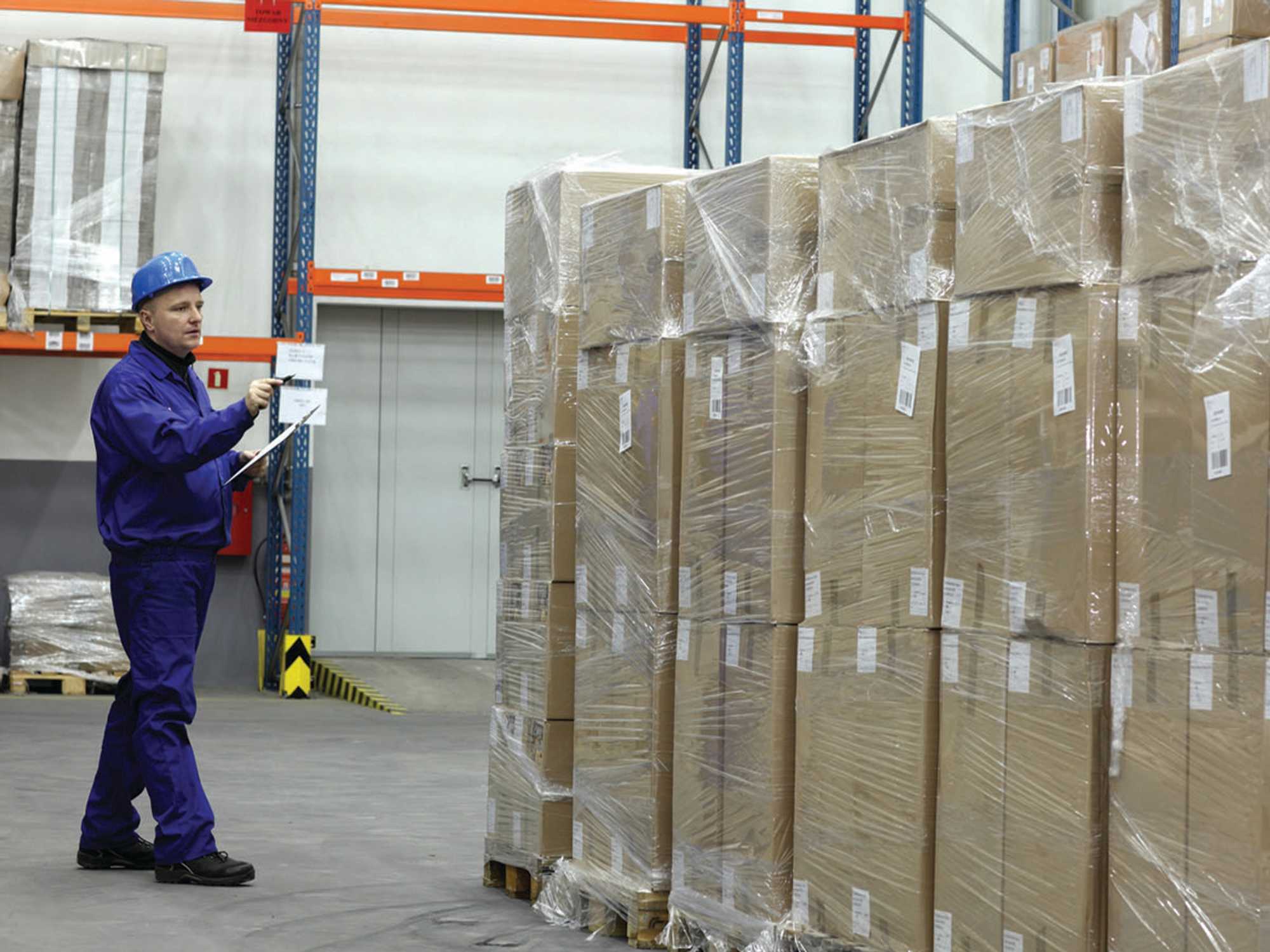
- Dangerous goods packaging must include specific markings on the outside, including proper shipping name, UN/ID number, name and address of the shipper and consignee, net quantity, and more.
Unless otherwise stated in the International Air Transport Association (IATA) Dangerous Goods Regulations (DGR), the outside of each package must be durably and legibly marked with the:
- Proper Shipping Name(s) including the UN/ID number(s). This information is provided in the IATA DGR Section 4.2, the table listing the proper shipping names and UN/ID numbers.
- Full name and address of the shipper.
- Full name and address of the consignee.
- Net quantity. The net quantity is the net quantity of dangerous goods in each package. The net quantity must appear next to the proper shipping name and UN/ID number; however, if there’s only one dangerous goods package, multiple packages of the same dangerous goods, consumer commodity (ID 8000), or radioactive materials (Class 7), the net quantity requirement does not apply.
Note there are special marking requirements for the following materials; consult the IATA DGR for more details:
- Dry ice;
- Division 6.2, Infectious Substances (other than UN3373);
- Class 2, Refrigerated Liquefied Gases referenced in Packing Instruction 202;
- UN3373, Biological Substance, Category B materials;
- Chemical oxygen generators contained in Protective Breathing Equipment; and
- Environmentally hazardous substances.
Outer packagings containing more than one dangerous good must be marked for each dangerous good.
Marking specifications and sizes
The UN/ID number and “overpack” marks must be at least 12 mm high. If a package meets any one of the following, the UN/ID number must be at least 6 mm high:
- A package that is 30 liters capacity or less,
- A package of 30 kilograms maximum net weight; or
- Cylinders of 60 liters water capacity or less.
The UN/ID number must be reduced, but still viewable (an appropriate size), if a package is 5 liters capacity or less or 5 kilograms maximum net weight.
Overpack marks displaying the word “Overpack” should be 6 millimeters if the packages are 30 liters or 30 kilograms capacity or less.
Limited quantity markings
Dangerous goods in limited quantities must be marked with the limited quantities marking. The marking is as follows:
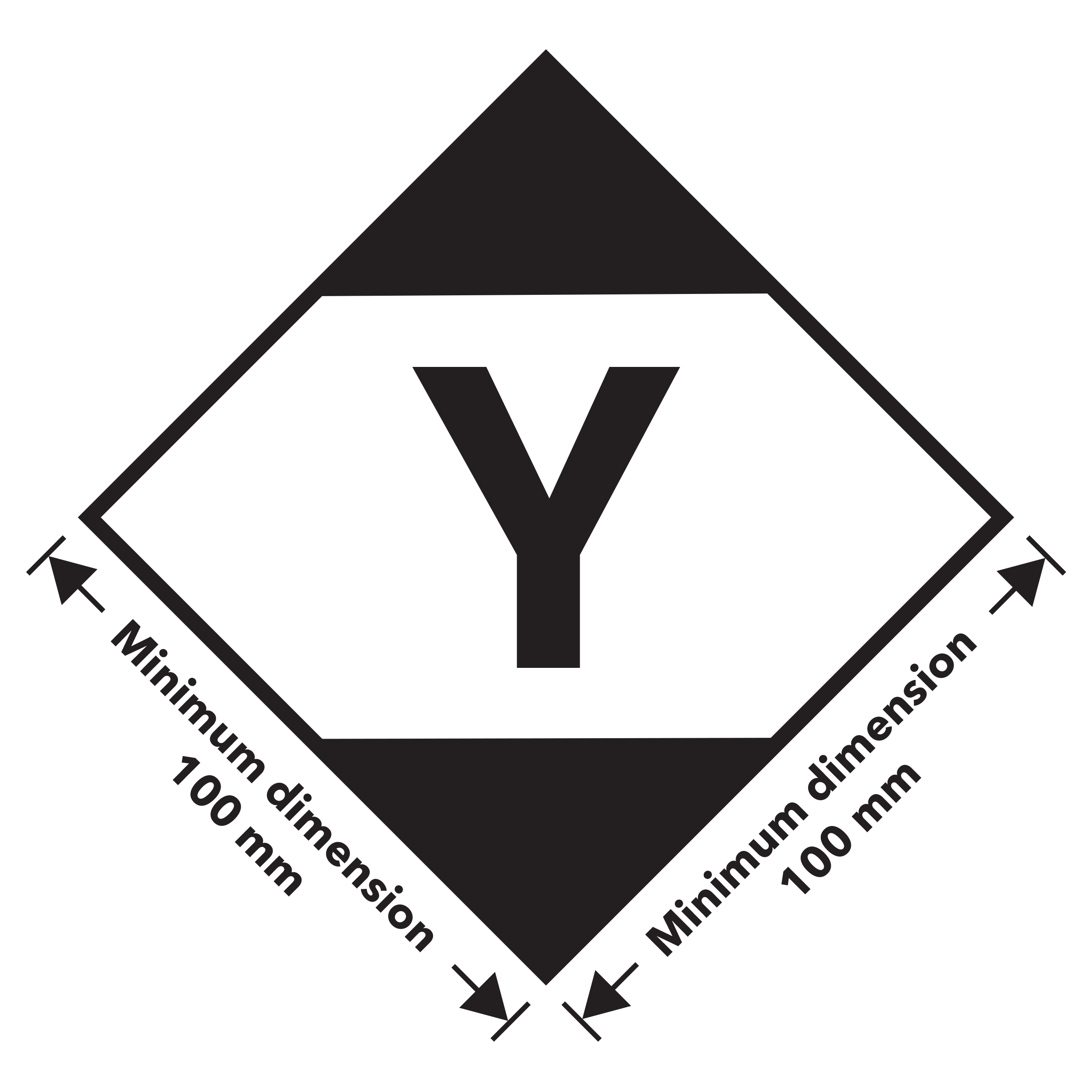
Each side of the marking must be 100 mm (approximately 4 inches) and the black diamond outline must be 2 mm wide.
If necessary to fit onto the package, the marking can be made smaller. The marking can be no less than 50 mm per side, with the black diamond outline at least 1 mm wide.
Salvage markings
Salvage packaging must be marked with the dangerous good’s proper shipping name and the UN number. The package must also have “SALVAGE” marked on the package in letters at least 12 mm high.
Markings on empty packagings
Except for Class 7 materials, an empty package that previously contained dangerous goods requires markings unless it has been thoroughly cleaned and purged (in the case of infectious substances, before it can be returned to the shipper or shipped to another place, the empty packaging must be thoroughly disinfected/sanitized).
Lithium battery markings
Lithium battery shipments are required to display this lithium battery marking, with a minimum dimension of 100 millimeters high by 100 millimeters wide, with hatching at least 5 mm wide:
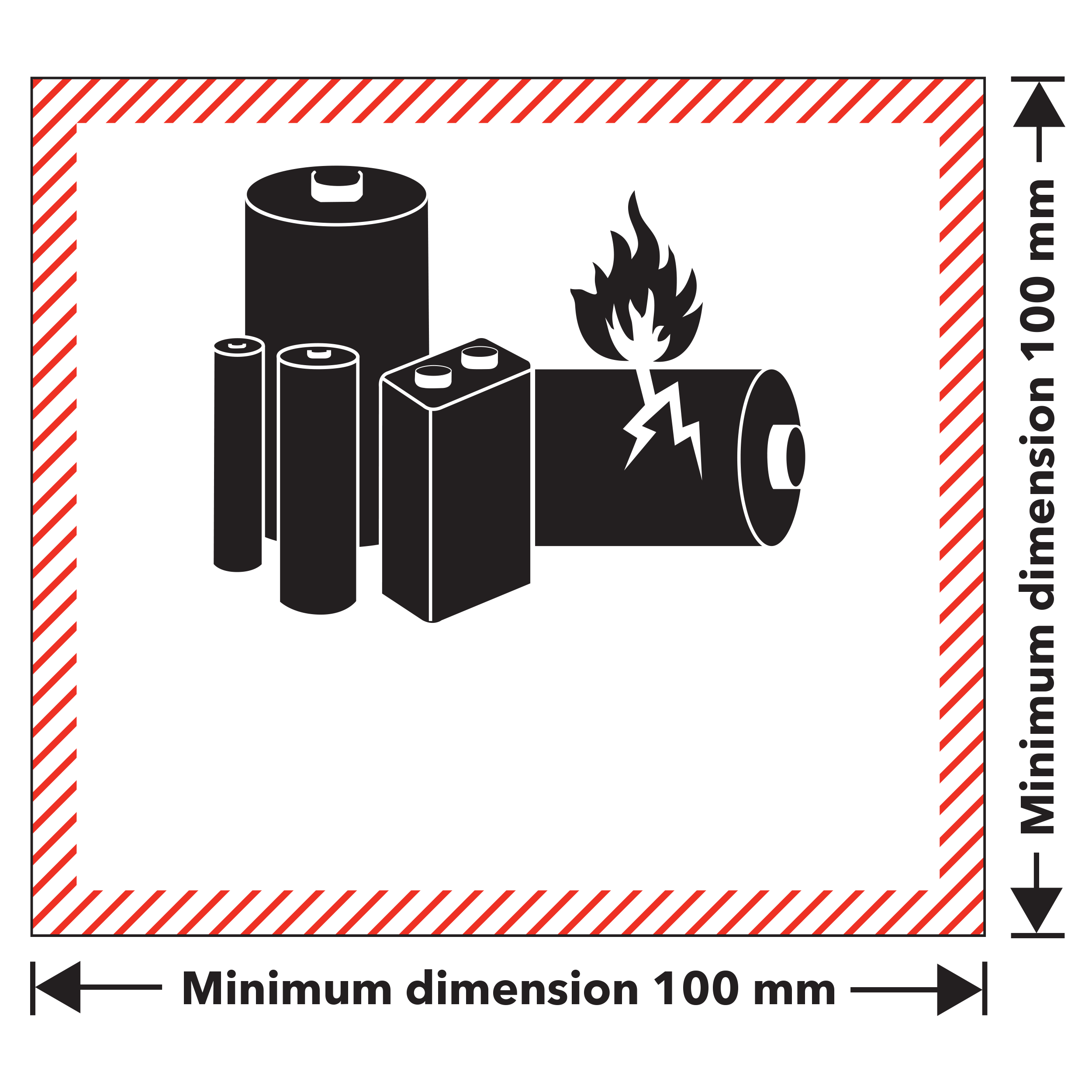
A lithium battery marking may be reduced in size if the size of the package requires it, but no less than 100 millimeters by 70 millimeters.
- The following items are required on the marking:
- The following UN/ID numbers as applicable, in numerals at least 12 millimeters high:
- “UN 3090” for lithium metal cells or batteries;
- “UN 3480” for lithium ion cells or batteries;
- “UN 3091” for lithium metal cells or batteries contained in, or packed with, equipment; or
- “UN 3481” for lithium ion cells or batteries contained in, or packed with, equipment;
- Telephone number for additional information.
If the UN/ID number varies among the types of batteries in a single package, then all UN/ID numbers must be indicated on one or more markings.
In certain cases, lithium battery packages must display both the lithium battery mark and the lithium battery Class 9 hazard label. See the IATA DGR Section 7.1.5.5.4 for more details.
Orientation arrows
Arrows (other than orientation arrows) cannot be placed on a package or overpack containing liquid dangerous goods.
Overpack markings
If the markings aren’t visible through the overpack, then the overpack must be marked accordingly. An “overpack” marking must appear on the outside of the overpack along with other required markings (except for net quantity of each package, unless the overpack contains UN1845, the total quantity of dry ice within the overpack must be marked).
However, if an overpack contains more than one UN number, then the total quantity of dangerous goods should be shown by UN number.
If a shipment contains more than one overpack, then each one must have some type of identification along with the total quantity of dangerous goods.
Limited quantity markings are also required on the overpack, unless the limited quantity marking on the packages is visible.
:
- Dangerous goods packaging must include specific markings on the outside, including proper shipping name, UN/ID number, name and address of the shipper and consignee, net quantity, and more.
Unless otherwise stated in the International Air Transport Association (IATA) Dangerous Goods Regulations (DGR), the outside of each package must be durably and legibly marked with the:
- Proper Shipping Name(s) including the UN/ID number(s). This information is provided in the IATA DGR Section 4.2, the table listing the proper shipping names and UN/ID numbers.
- Full name and address of the shipper.
- Full name and address of the consignee.
- Net quantity. The net quantity is the net quantity of dangerous goods in each package. The net quantity must appear next to the proper shipping name and UN/ID number; however, if there’s only one dangerous goods package, multiple packages of the same dangerous goods, consumer commodity (ID 8000), or radioactive materials (Class 7), the net quantity requirement does not apply.
Note there are special marking requirements for the following materials; consult the IATA DGR for more details:
- Dry ice;
- Division 6.2, Infectious Substances (other than UN3373);
- Class 2, Refrigerated Liquefied Gases referenced in Packing Instruction 202;
- UN3373, Biological Substance, Category B materials;
- Chemical oxygen generators contained in Protective Breathing Equipment; and
- Environmentally hazardous substances.
Outer packagings containing more than one dangerous good must be marked for each dangerous good.
Marking specifications and sizes
The UN/ID number and “overpack” marks must be at least 12 mm high. If a package meets any one of the following, the UN/ID number must be at least 6 mm high:
- A package that is 30 liters capacity or less,
- A package of 30 kilograms maximum net weight; or
- Cylinders of 60 liters water capacity or less.
The UN/ID number must be reduced, but still viewable (an appropriate size), if a package is 5 liters capacity or less or 5 kilograms maximum net weight.
Overpack marks displaying the word “Overpack” should be 6 millimeters if the packages are 30 liters or 30 kilograms capacity or less.
Limited quantity markings
Dangerous goods in limited quantities must be marked with the limited quantities marking. The marking is as follows:
Each side of the marking must be 100 mm (approximately 4 inches) and the black diamond outline must be 2 mm wide.
If necessary to fit onto the package, the marking can be made smaller. The marking can be no less than 50 mm per side, with the black diamond outline at least 1 mm wide.
Salvage markings
Salvage packaging must be marked with the dangerous good’s proper shipping name and the UN number. The package must also have “SALVAGE” marked on the package in letters at least 12 mm high.
Markings on empty packagings
Except for Class 7 materials, an empty package that previously contained dangerous goods requires markings unless it has been thoroughly cleaned and purged (in the case of infectious substances, before it can be returned to the shipper or shipped to another place, the empty packaging must be thoroughly disinfected/sanitized).
Lithium battery markings
Lithium battery shipments are required to display this lithium battery marking, with a minimum dimension of 100 millimeters high by 100 millimeters wide, with hatching at least 5 mm wide:
A lithium battery marking may be reduced in size if the size of the package requires it, but no less than 100 millimeters by 70 millimeters.
- The following items are required on the marking:
- The following UN/ID numbers as applicable, in numerals at least 12 millimeters high:
- “UN 3090” for lithium metal cells or batteries;
- “UN 3480” for lithium ion cells or batteries;
- “UN 3091” for lithium metal cells or batteries contained in, or packed with, equipment; or
- “UN 3481” for lithium ion cells or batteries contained in, or packed with, equipment;
- Telephone number for additional information.
If the UN/ID number varies among the types of batteries in a single package, then all UN/ID numbers must be indicated on one or more markings.
In certain cases, lithium battery packages must display both the lithium battery mark and the lithium battery Class 9 hazard label. See the IATA DGR Section 7.1.5.5.4 for more details.
Orientation arrows
Arrows (other than orientation arrows) cannot be placed on a package or overpack containing liquid dangerous goods.
Overpack markings
If the markings aren’t visible through the overpack, then the overpack must be marked accordingly. An “overpack” marking must appear on the outside of the overpack along with other required markings (except for net quantity of each package, unless the overpack contains UN1845, the total quantity of dry ice within the overpack must be marked).
However, if an overpack contains more than one UN number, then the total quantity of dangerous goods should be shown by UN number.
If a shipment contains more than one overpack, then each one must have some type of identification along with the total quantity of dangerous goods.
Limited quantity markings are also required on the overpack, unless the limited quantity marking on the packages is visible.
2657906436
2657906439
UPGRADE TO CONTINUE READING