Compliance Just Got Easier: Stay ahead of regulatory changes with instant notifications on updates that matter.
['Toxic and Hazardous Substances - OSHA']
['Toxic and Hazardous Substances - OSHA', 'Lead']
04/30/2026

Copyright 2026 J. J. Keller & Associate, Inc. For re-use options please contact copyright@jjkeller.com or call 800-558-5011.
:
|
InstituteLeadSafety & HealthGeneral Industry SafetyToxic and Hazardous Substances - OSHAUSAEnglishAnalysisFocus AreaToxic and Hazardous Substances - OSHAIn Depth (Level 3)
Exposure assessment
['Toxic and Hazardous Substances - OSHA']
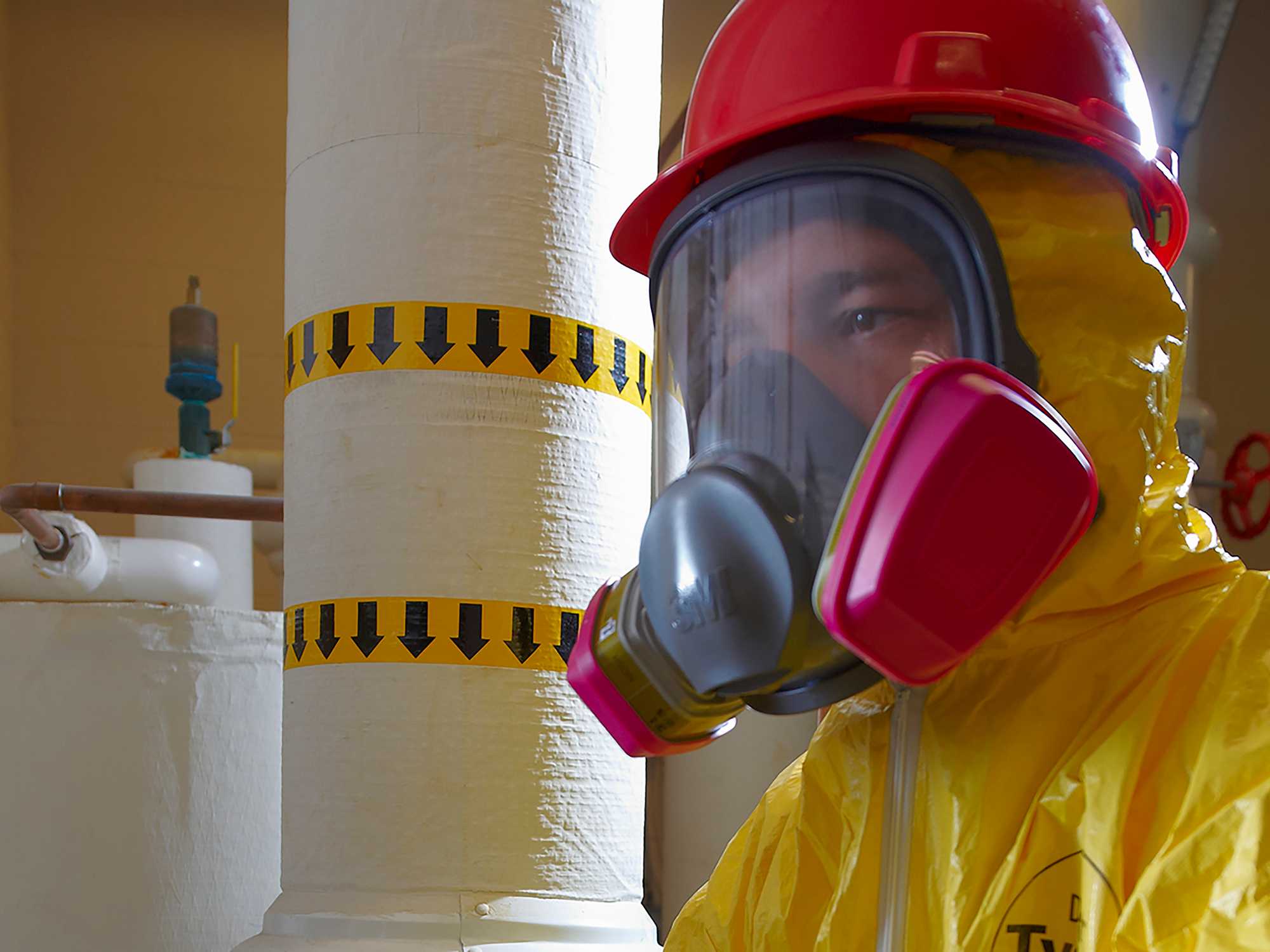
- Employees may not be exposed to lead at amounts greater than 50 micrograms per cubic meter of air in an eight-hour period.
No employee may be exposed to lead at concentrations greater than 50 micrograms per cubic meter of air (50 μg/m3) averaged over an eight-hour period. If an employee is exposed to lead for more than eight hours in any workday, the permissible exposure limit (PEL), as a time-weighted average (TWA) for that day, must be reduced per the formula in 29 CFR 1910.1025.
When respirators are used to supplement engineering and work practice controls to comply with the PEL and all the requirements for respiratory protection under 1910.1025(f) have been met, employee exposure, for the purpose of determining whether the employer has complied with the PEL, may be considered to be at the level provided by the protection factor of the respirator for those periods the respirator is worn. Those periods may be averaged with exposure levels during periods when respirators are not worn to determine the employee’s daily TWA exposure.
Determine if any employee may be exposed to lead at or above the action level. A representative sample of the exposed employees who the employer reasonably believes are exposed to the greatest airborne concentrations of lead must be taken. If the results show the possibility of any employee exposure at or above the action level, extensive monitoring is required according to 1910.1025.
Whenever there has been a production, process, control, or personnel change which may result in new or additional exposure to lead, or whenever the employer has any other reason to suspect a change which may result in new or additional exposures to lead, additional monitoring must be conducted.
:
toxic-and-hazardous-substances-osha
toxic-and-hazardous-substances-osha
FOUNDATIONAL LEARNING
Exposure assessment
InstituteLeadSafety & HealthGeneral Industry SafetyToxic and Hazardous Substances - OSHAUSAEnglishAnalysisFocus AreaToxic and Hazardous Substances - OSHAIn Depth (Level 3)
['Toxic and Hazardous Substances - OSHA']
- Employees may not be exposed to lead at amounts greater than 50 micrograms per cubic meter of air in an eight-hour period.
No employee may be exposed to lead at concentrations greater than 50 micrograms per cubic meter of air (50 μg/m3) averaged over an eight-hour period. If an employee is exposed to lead for more than eight hours in any workday, the permissible exposure limit (PEL), as a time-weighted average (TWA) for that day, must be reduced per the formula in 29 CFR 1910.1025.
When respirators are used to supplement engineering and work practice controls to comply with the PEL and all the requirements for respiratory protection under 1910.1025(f) have been met, employee exposure, for the purpose of determining whether the employer has complied with the PEL, may be considered to be at the level provided by the protection factor of the respirator for those periods the respirator is worn. Those periods may be averaged with exposure levels during periods when respirators are not worn to determine the employee’s daily TWA exposure.
Determine if any employee may be exposed to lead at or above the action level. A representative sample of the exposed employees who the employer reasonably believes are exposed to the greatest airborne concentrations of lead must be taken. If the results show the possibility of any employee exposure at or above the action level, extensive monitoring is required according to 1910.1025.
Whenever there has been a production, process, control, or personnel change which may result in new or additional exposure to lead, or whenever the employer has any other reason to suspect a change which may result in new or additional exposures to lead, additional monitoring must be conducted.
2656868707
2656870619
UPGRADE TO CONTINUE READING
RELATED TOPICS
J. J. Keller is the trusted source for DOT / Transportation, OSHA / Workplace Safety, Human Resources, Construction Safety and Hazmat / Hazardous Materials regulation compliance products and services. J. J. Keller helps you increase safety awareness, reduce risk, follow best practices, improve safety training, and stay current with changing regulations.
Copyright 2026 J. J. Keller & Associate, Inc. For re-use options please contact copyright@jjkeller.com or call 800-558-5011.