Compliance Just Got Easier: Stay ahead of regulatory changes with instant notifications on updates that matter.
['Enforcement - DOT']
['Out-of-service criteria - Motor Carrier', 'Roadside Inspections']
02/12/2026

Copyright 2026 J. J. Keller & Associate, Inc. For re-use options please contact copyright@jjkeller.com or call 800-558-5011.
:
|
InstituteFleet SafetyOut-of-service criteria - Motor CarrierTransportationFocus AreaUSAEnglishRoadside InspectionsAnalysisIn Depth Sub Topics (Level 4)Enforcement - DOT
Driver inspection recap
['Enforcement - DOT']
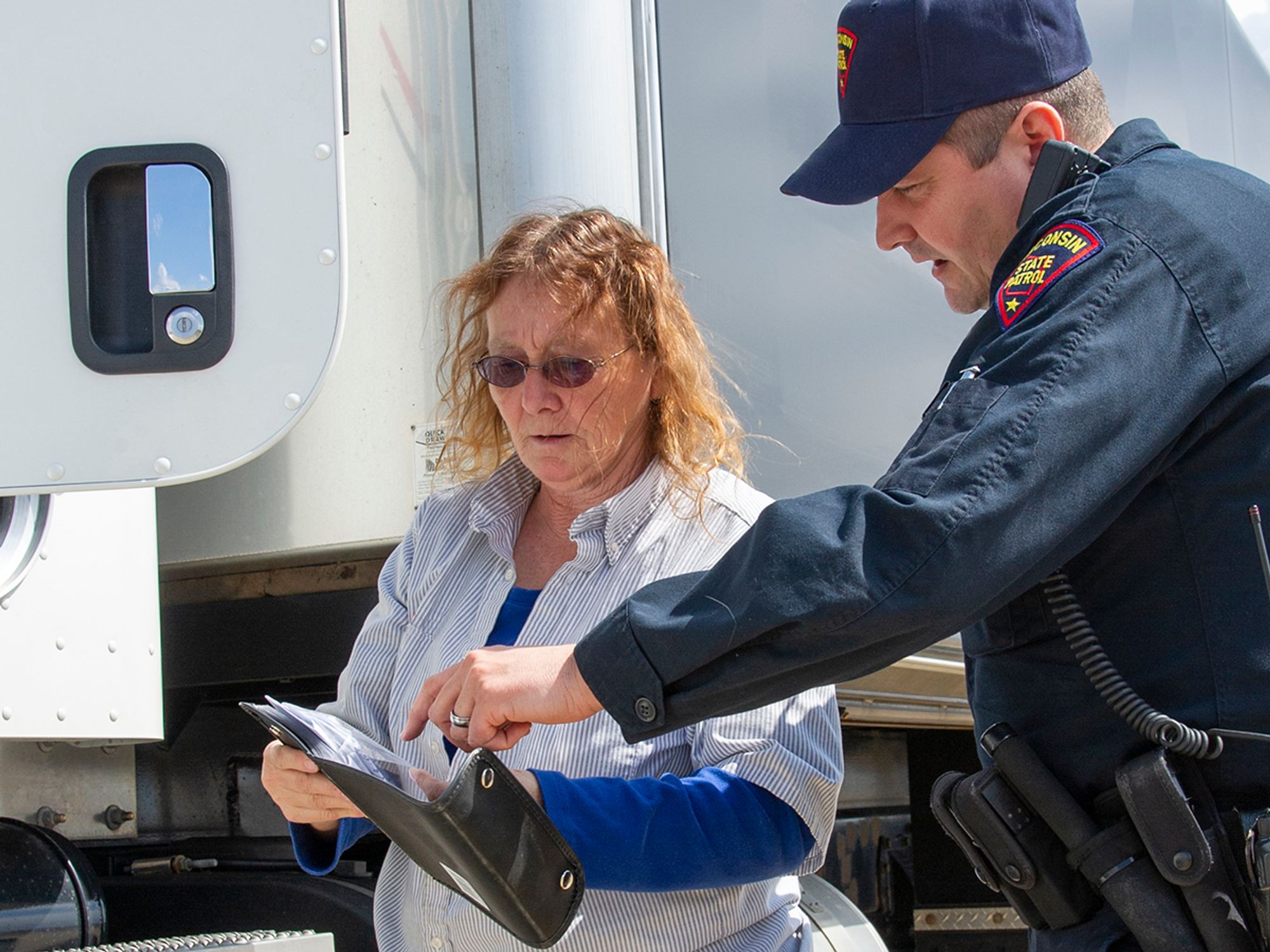
- If, after the driver inspection, driver violations are found, the officer will compare the violations to the North American Standard Out-of-Service Criteria, published by the CVSA, to decide if the driver should be allowed to continue to drive.
- Roughly five percent of driver inspections result in an out-of-service order.
- No violations are issued in approximately two-thirds of all driver inspections conducted.
If the officer is conducting only a driver inspection, the inspection ends with the annual inspection verification. The officer will document the driver, carrier, and vehicle inspected, and note any violations. If any violations were discovered, the officer will compare the violations to the North American Standard Out-of-Service Criteria, published by the Commercial Vehicle Safety Alliance (CVSA), to decide if the driver should be allowed to continue to drive. An out-of-service order could be issued if the driver:
- Has a driver’s license that has been suspended, revoked, downgraded, disqualified, etc.;
- Does not have the correct license for the vehicle being operated;
- Is found to be impaired by illness, fatigue, drugs, or alcohol;
- Cannot provide logs;
- Cannot provide a reasonable explanation for not having logs; or
- Is currently out of hours or has a false log.
The officer will provide the report to the driver once it is complete and discuss any violations that were discovered. If the driver is placed out of service, the officer will instruct the driver what must be done before the driver can operate a commercial motor vehicle again. Roughly five percent of driver inspections result in an out-of-service order.
If there were violations, but no out-of-service violations, the driver may continue driving, but the violations must be corrected as soon as possible.
The outcome every carrier wants is no violations issued, and that is the case in about two-thirds of all driver inspections conducted.
If the officer will be conducting a vehicle inspection as well, the officer simply rolls right into the vehicle portion of the inspection and will include the driver’s inspection results in the full inspection report.
:
enforcement-dot
FOUNDATIONAL LEARNING
Driver inspection recap
InstituteFleet SafetyOut-of-service criteria - Motor CarrierTransportationFocus AreaUSAEnglishRoadside InspectionsAnalysisIn Depth Sub Topics (Level 4)Enforcement - DOT
['Enforcement - DOT']
- If, after the driver inspection, driver violations are found, the officer will compare the violations to the North American Standard Out-of-Service Criteria, published by the CVSA, to decide if the driver should be allowed to continue to drive.
- Roughly five percent of driver inspections result in an out-of-service order.
- No violations are issued in approximately two-thirds of all driver inspections conducted.
If the officer is conducting only a driver inspection, the inspection ends with the annual inspection verification. The officer will document the driver, carrier, and vehicle inspected, and note any violations. If any violations were discovered, the officer will compare the violations to the North American Standard Out-of-Service Criteria, published by the Commercial Vehicle Safety Alliance (CVSA), to decide if the driver should be allowed to continue to drive. An out-of-service order could be issued if the driver:
- Has a driver’s license that has been suspended, revoked, downgraded, disqualified, etc.;
- Does not have the correct license for the vehicle being operated;
- Is found to be impaired by illness, fatigue, drugs, or alcohol;
- Cannot provide logs;
- Cannot provide a reasonable explanation for not having logs; or
- Is currently out of hours or has a false log.
The officer will provide the report to the driver once it is complete and discuss any violations that were discovered. If the driver is placed out of service, the officer will instruct the driver what must be done before the driver can operate a commercial motor vehicle again. Roughly five percent of driver inspections result in an out-of-service order.
If there were violations, but no out-of-service violations, the driver may continue driving, but the violations must be corrected as soon as possible.
The outcome every carrier wants is no violations issued, and that is the case in about two-thirds of all driver inspections conducted.
If the officer will be conducting a vehicle inspection as well, the officer simply rolls right into the vehicle portion of the inspection and will include the driver’s inspection results in the full inspection report.
2657104952
2657105741
UPGRADE TO CONTINUE READING
RELATED TOPICS
J. J. Keller is the trusted source for DOT / Transportation, OSHA / Workplace Safety, Human Resources, Construction Safety and Hazmat / Hazardous Materials regulation compliance products and services. J. J. Keller helps you increase safety awareness, reduce risk, follow best practices, improve safety training, and stay current with changing regulations.
Copyright 2026 J. J. Keller & Associate, Inc. For re-use options please contact copyright@jjkeller.com or call 800-558-5011.