Compliance Just Got Easier: Stay ahead of regulatory changes with instant notifications on updates that matter.
['Fall Protection']
['Fall Protection for Construction', 'Fall Protection']
04/22/2025

Copyright 2026 J. J. Keller & Associate, Inc. For re-use options please contact copyright@jjkeller.com or call 800-558-5011.
:
|
InstituteSafety & HealthGeneral Industry SafetyFall ProtectionFall ProtectionFall Protection for ConstructionEnglishAnalysisFocus AreaCompliance and Exceptions (Level 2)USA
Construction coverage
['Fall Protection']
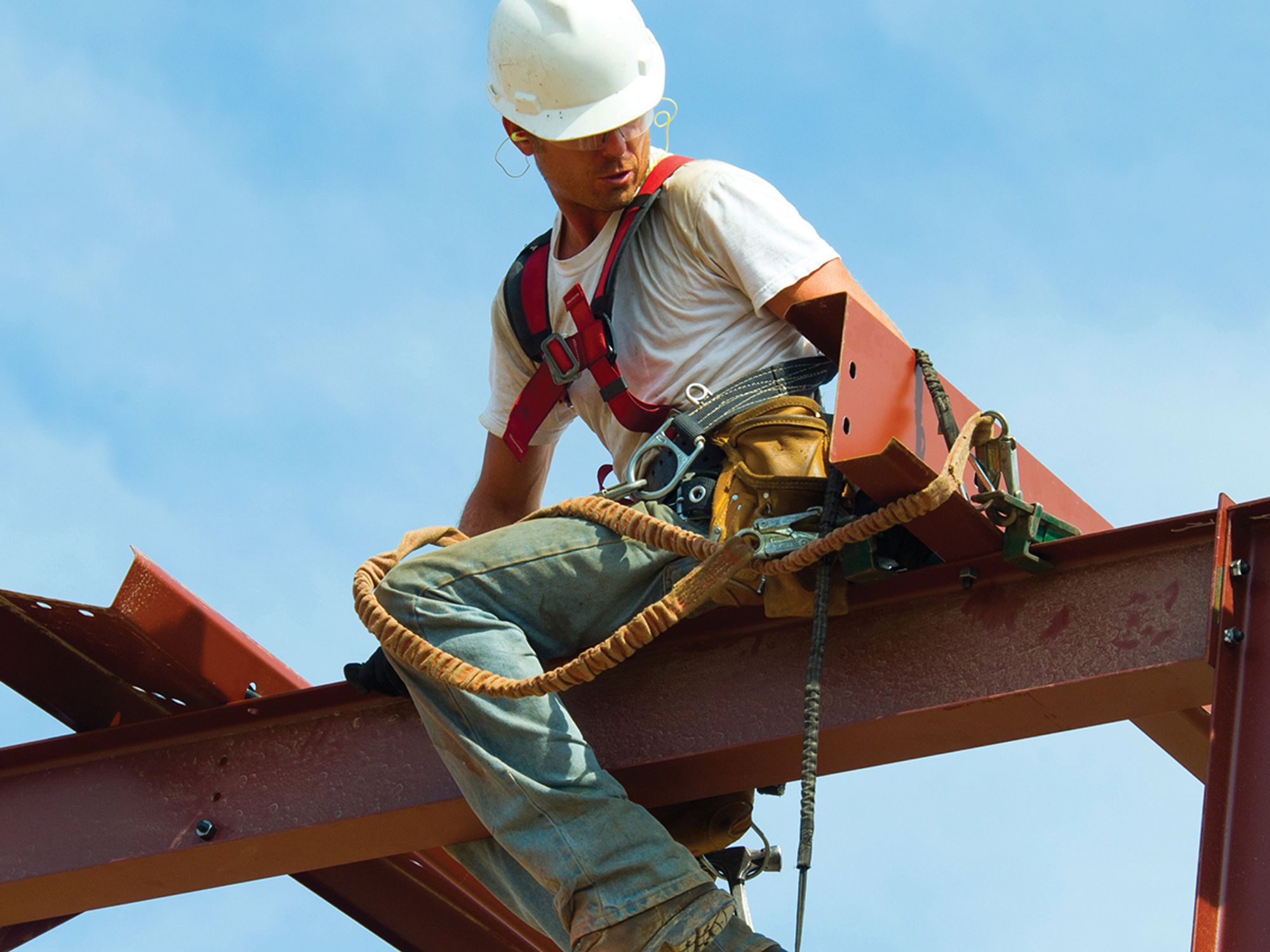
- The fall protection standard sets requirements and criteria for fall protection in construction workplaces.
The Occupational Safety and Health Administration (OSHA) requires the use of fall protection for construction workers in Part 1926, Subpart M. Virtually all construction companies are required to follow some provisions of the fall protection rule.
The rule sets a threshold height of six feet, meaning that employers must protect employees from fall hazards and falling objects whenever an affected employee is six feet or more above a lower level. Although not all employees may be working six feet or more above a lower level, they might need protection from falling objects.
Protection must also be provided for construction workers who are exposed to the hazard of falling onto dangerous equipment; for example, working over machinery with open drive belts, pulleys or gears, or open vats of degreasing agents or acid.
Initially, employers must assess the workplace to determine if walking-working surfaces have the necessary strength and structural integrity to safely support workers.
Once it is determined that the work surfaces will safely support the work activity, the employer must determine whether fall protection is required per 1926.501.
If fall protection is required, select and provide workers with fall protection systems that comply with the criteria at 1926.502.
If an employee is working on a scaffold, the height requirement for fall protection is 10 feet and this protection is usually provided by a guardrail (1926.451(g)). When working from a ladder, the fall protection is setting up and using the ladder correctly per the OSHA regulations at 1926, Subpart X—Stairways and ladders. Safe ladders use is found in 1926.1053(b). There is no other fall protection required for ladders.
:
fall-protection
fall-protection
FOUNDATIONAL LEARNING
- The fall protection standard sets requirements and criteria for fall protection in construction workplaces.
The Occupational Safety and Health Administration (OSHA) requires the use of fall protection for construction workers in Part 1926, Subpart M. Virtually all construction companies are required to follow some provisions of the fall protection rule.
The rule sets a threshold height of six feet, meaning that employers must protect employees from fall hazards and falling objects whenever an affected employee is six feet or more above a lower level. Although not all employees may be working six feet or more above a lower level, they might need protection from falling objects.
Protection must also be provided for construction workers who are exposed to the hazard of falling onto dangerous equipment; for example, working over machinery with open drive belts, pulleys or gears, or open vats of degreasing agents or acid.
Initially, employers must assess the workplace to determine if walking-working surfaces have the necessary strength and structural integrity to safely support workers.
Once it is determined that the work surfaces will safely support the work activity, the employer must determine whether fall protection is required per 1926.501.
If fall protection is required, select and provide workers with fall protection systems that comply with the criteria at 1926.502.
If an employee is working on a scaffold, the height requirement for fall protection is 10 feet and this protection is usually provided by a guardrail (1926.451(g)). When working from a ladder, the fall protection is setting up and using the ladder correctly per the OSHA regulations at 1926, Subpart X—Stairways and ladders. Safe ladders use is found in 1926.1053(b). There is no other fall protection required for ladders.
2656871051
2656870561
UPGRADE TO CONTINUE READING
RELATED TOPICS
J. J. Keller is the trusted source for DOT / Transportation, OSHA / Workplace Safety, Human Resources, Construction Safety and Hazmat / Hazardous Materials regulation compliance products and services. J. J. Keller helps you increase safety awareness, reduce risk, follow best practices, improve safety training, and stay current with changing regulations.
Copyright 2026 J. J. Keller & Associate, Inc. For re-use options please contact copyright@jjkeller.com or call 800-558-5011.