
What should a substance abuse policy include?
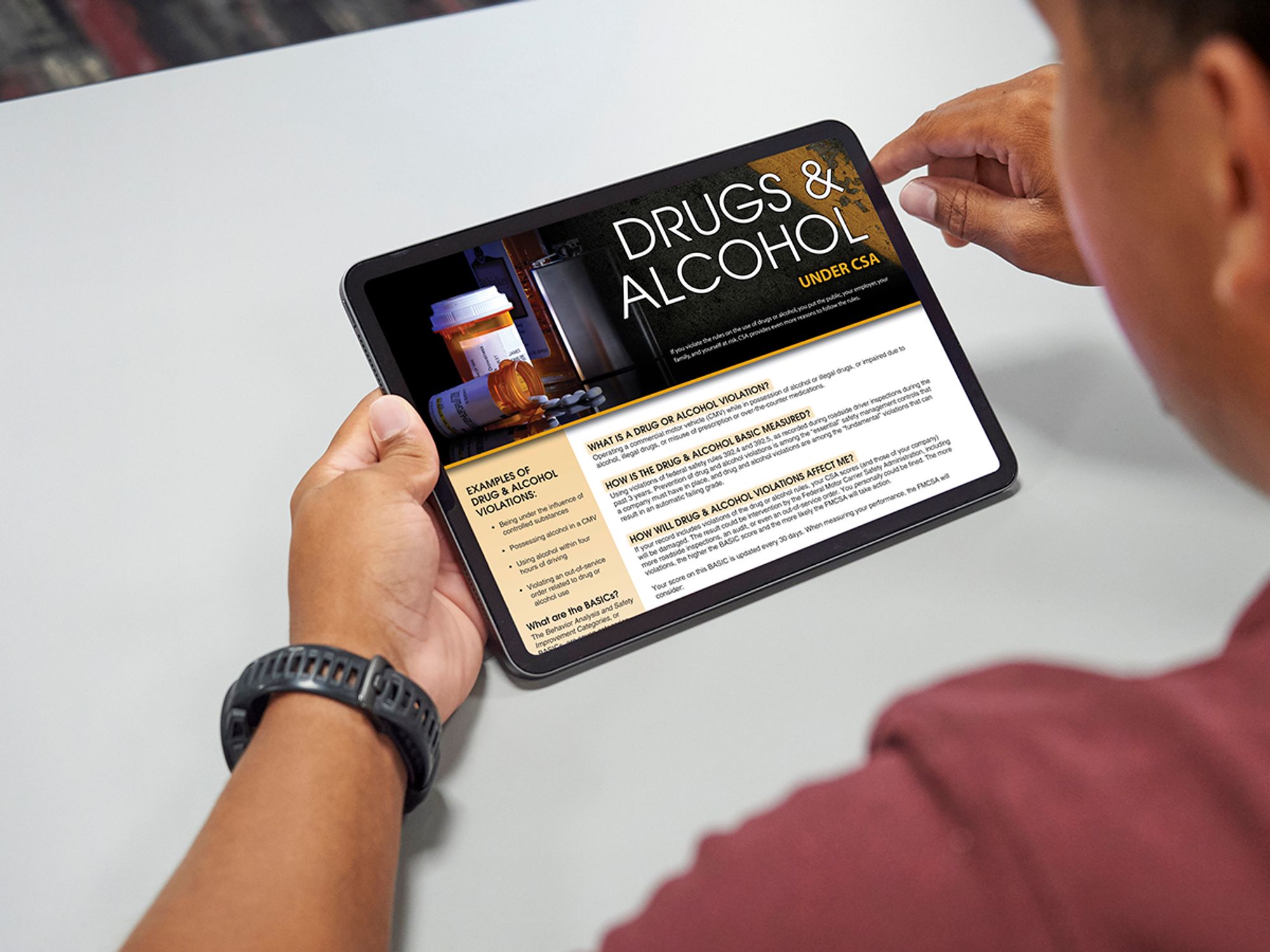
- A clear, transparent policy helps prevent substance misuse and supports those in recovery.
- A policy should include information about prohibited activities, consequences for violation, and rehabilitative services or employee assistance programs that are available.
- A drug and alcohol policy should comply with regulatory requirements and meet an organization’s workplace needs.
A workplace substance abuse policy lets workers know that drug and alcohol use is not allowed at work.
It provides employees with information about what is prohibited and the consequences for violating the policy. It may contain details about when and how drug and alcohol testing is done, and what happens if an employee tests positive or refuses to test. A policy also provides information on services that are available for substance abuse treatment and employee assistance.
In general, a policy will include:
- A why statement: This introductory statement outlines why the policy is being implemented. It is often brief, and stresses that a company wishes to support a safe, healthy, productive, and secure atmosphere for employees.
- Prohibited behaviors: The description should indicate that employers prohibit employees from being under the influence of illegal drugs or alcohol at work. Policies typically include a statement such as: “The company prohibits the use, possession, transfer, or sale of alcohol and illegally used drugs by employees. Employees are prohibited from working while under the influence of illegally used drugs or alcohol.” In states where recreational marijuana is legal, employers may want to add that marijuana use is not permitted in the workplace or on work time. Employers may also prohibit workers from possessing marijuana on company property.
- Consequences: Information that clearly states the repercussions for violating the policy can help applicants (and employees) know what to expect. A policy should spell out what steps may be taken when an employee is suspected of a violation and the consequences that follow if a violation is proven. Consequences of a policy violation may include suspension, termination, or participation in and successful completion of a rehabilitation program. For applicants, the consequence of a positive drug test can be refusal to hire, if that consequence is in line with applicable state and federal laws.
- Drug and alcohol testing: Company policy may address when and where employees and applicants will be tested for the illegal use of drugs or alcohol and steps that will be taken to ensure confidentiality. Reasons for testing can include pre-hire, random, reasonable suspicion of drug use, and post-accident. Follow-up tests may be conducted for a period of time after an employee returns to work after a positive drug test. When drug and alcohol testing is conducted, state and federal laws must be followed.
- Refusal to test: An employee has the right to refuse to take a drug test. However, a refusal may have consequences. Passing a drug test can be a condition of employment, and an applicant who refuses to take a drug test could be denied employment. An employee’s refusal to take a drug test could be treated as a positive test, and an employer could act under its policy. The consequences for refusal could include having continued employment contingent on successful completion of a rehabilitation program. Refusing to take the test could also be grounds for suspension or termination.
- Test tampering: An employee who has illegally used drugs in the recent past, or who has been drinking alcohol before work, may try to improve the chances of testing negative by delaying the test or using other tricks to avoid the repercussions of a positive test. Testing tricks can include:
- Asking to make stops along the way to a drug testing facility,
- Drinking large amounts of water to dilute a urine sample, and
- Using a product to adulterate a urine sample.
- Negative dilute: A company may also want to have procedures in place for handling a drug test result that is “negative dilute.” This means that there is a lower amount of creatine in the urine sample than normal, which is likely due to the individual drinking a large amount of water before the test. When a negative dilute drug test is received, an employer can accept the test as negative or ask that the employee be re-tested. If the employee is re-tested, an employer may opt to use a different sample (such as a saliva or hair sample) for the second test when this is allowed under state law.
- Alcohol use: A company may allow employees to use a limited amount of alcohol while at a company function or while entertaining clients. The details of this exception to a company's substance abuse policy can be outlined in a separate alcohol policy. For example, an employee may be allowed to have one alcoholic beverage while entertaining a client or customer or while at a customer event. The policy should note that associates who choose to drink alcohol under this policy should be expected to comply with all applicable laws, such as being of legal drinking age and being under the legal alcohol limit when driving.
- Employee assistance. Information about rehabilitation services should be included in the company policy and kept up to date. The policy can encourage employees to seek treatment when it’s needed. In addition, the contact information in the policy should be updated so employees know where to go if there are questions or concerns.
Federal and state laws
The details of a company’s substance abuse policy will depend on applicable federal and state laws. These laws may address how and when a test is conducted, and also impact the consequences of a positive test.
If workers are covered by Department of Transportation drug and alcohol regulations, a company must have a specific policy for those employees. The policy must meet DOT specifications.
For all workers, the consequences of a positive test must comply with state laws. Some states do not allow an employee to be terminated after a first-time positive test. In these states, an employee must have the opportunity to complete a rehabilitation program. States with second chance laws include Maine, Minnesota, Rhode Island, and Vermont.
A state law may also address testing for marijuana, and the consequences of a positive test for marijuana.
In some states a workplace substance abuse policy must be approved by a state agency.
If drug testing is to be conducted after an accident resulting in an injury, the anti-retaliation rule from the Occupational Safety and Health Administration (OSHA) should be taken into account. OSHA has no problem with most types of drug testing, but having a policy of automatically testing after every accident that involves an injury (without considering the nature of the accident) could be problematic. Certainly, testing can be conducted when there is a reasonable possibility that drug use could have played a role in the accident. However, if there is no way an employee's actions could have brought about the accident that led to the injury (if a ceiling tile fell on an employee, for example), it would be difficult to justify the need for a drug test. Certainly, OSHA expects employers to not allow impaired employees to be a safety hazard in the workplace, but employers should not test an employee only because an injury was reported.
Policy distribution
The company substance abuse policy should be given to employees or included in a company handbook. Employees should sign a statement acknowledging that the individual agrees to follow the policy.
Policy reviews
Because employment laws are constantly changing, a policy needs to be regularly reviewed and updated to ensure it is keeping up with the latest laws and regulations. State marijuana and medical marijuana laws make a significant impact on a workplace drug policy, and a policy review should be conducted whenever a new marijuana law takes effect in a state where an employer conducts drug testing.
Where is a company substance abuse policy in effect?
A company’s substance abuse policy can extend to work performed outside the physical work site. The policy can prohibit alcohol and illegal drug use in the workplace, on work time, and on company property.
Prohibiting illegal drug and alcohol use while an employee is working means that workers whose job takes them to another location, such as a construction site or a client’s facility, can be expected to not use alcohol or illegal drugs while an employee is there.
In addition, remote employees who work from home can be held to the same standard as employees who report to an office, factory, or other company facility.
Substance abuse policies and unionized workplaces
The National Labor Relations Act (NLRA) provides a legal framework for management and labor negotiations.
Any drug testing program affecting unionized workers must be negotiated and agreed upon with the union. The company and union must go through the formal collective bargaining process. A union may support the program because of its potential to reduce workplace injuries and accidents.
If an employer’s workforce is not unionized, however, the NLRA would not be a consideration in developing a drug and alcohol testing program.