Compliance Just Got Easier: Stay ahead of regulatory changes with instant notifications on updates that matter.
['Entry-Level driver training', 'Commercial drivers license CDL']
['Commercial drivers license CDL', 'Entry-level driver training']
04/06/2026

Copyright 2026 J. J. Keller & Associate, Inc. For re-use options please contact copyright@jjkeller.com or call 800-558-5011.
:
|
InstituteCommercial drivers license CDLFleet SafetyEntry-Level driver trainingEntry-level driver trainingCommercial drivers license CDLFocus AreaUSAEnglishAnalysisTransportationIn Depth (Level 3)
What key definitions apply?
['Entry-Level driver training', 'Commercial drivers license CDL']
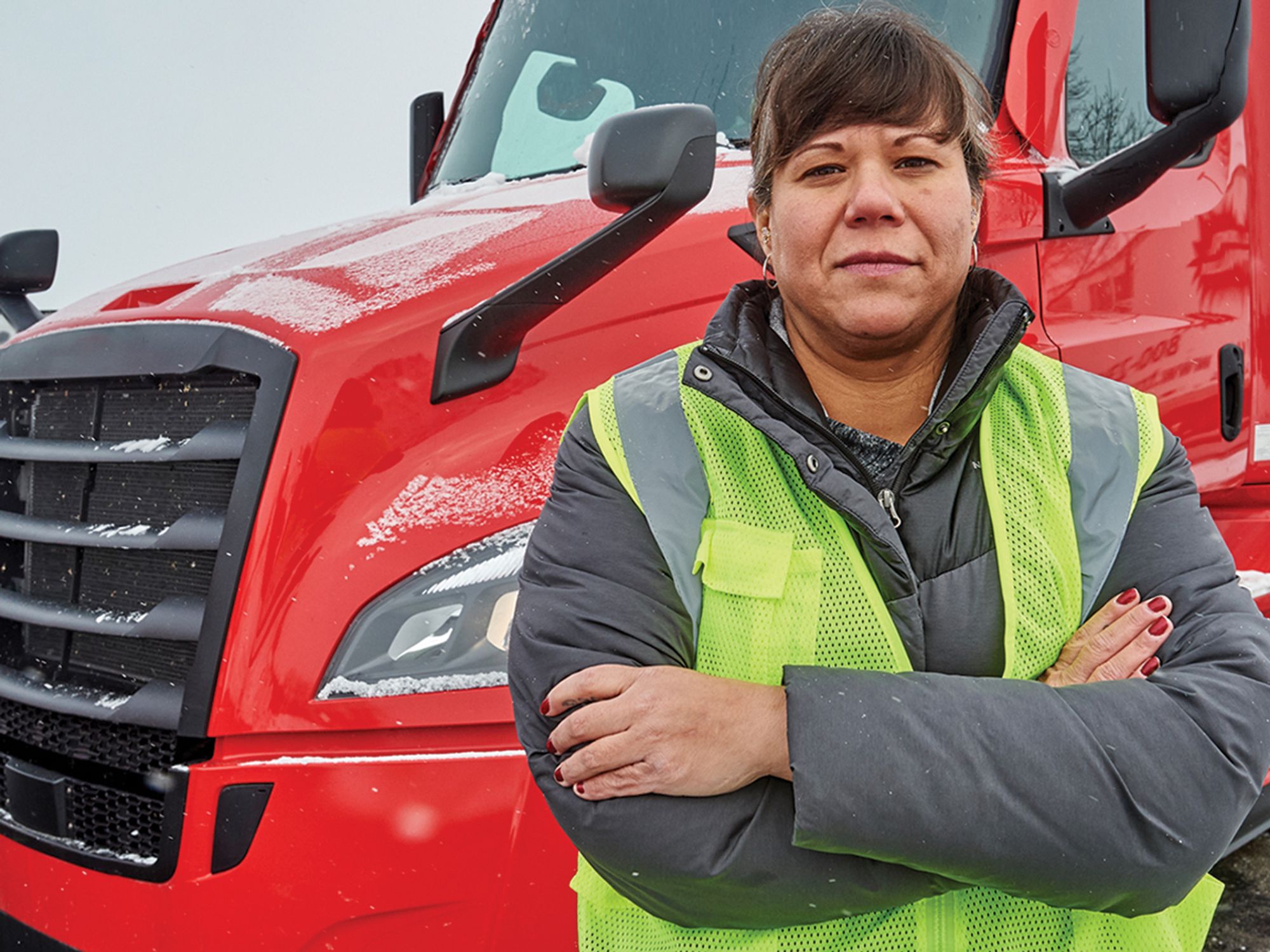
- Various definitions clarify key terms involving entry-level driver training compliance.
Commercial driver’s license (CDL): A license issued to an individual by a state or other jurisdiction of domicile, in accordance with the standards contained in 49 CFR 383, to an individual who authorizes the individual to operate a class of commercial motor vehicles.
Commercial motor vehicle (CMV): A motor vehicle or combination of motor vehicles used in commerce to transport passengers or property if the motor vehicle is a:
- Combination Vehicle (Group A) — Having a gross combination weight rating (GCWR) or gross combination weight (GCW) of 26,001 pounds or more, whichever is greater. The towed unit(s) must have a gross vehicle weight rating (GVWR) or gross vehicle weight (GVW) of more than 10,000 pounds, whichever is greater; or
- Heavy Straight Vehicle (Group B) — Having a GVWR or GVW of 26,001 pounds or more, whichever is greater; or
- Small Vehicle (Group C) — Does not meet Group A or B requirements but is either:
- Designed to transport 16 or more passengers, including the driver; or
- Of any size and is used in the transportation of hazardous materials as defined in 383.5.
Entry-level driver: An individual who must complete the CDL skills test requirements under 383.71 prior to receiving a CDL for the first time; upgrading to a Class A or Class B CDL, or obtaining a passenger or school bus endorsement for the first time. An individual must complete the CDL knowledge test requirements to obtain a hazardous materials endorsement.
Range: An area that:
- Must be free of obstructions,
- Enables the driver to maneuver safely and free from interference from other vehicles and hazards, and
- Has adequate sight lines.
Theory instruction: Knowledge instruction on the operation of a CMV and related matters provided by a theory instructor through lectures, demonstrations, audio-visual presentations, computer-based instruction, driving simulation devices, online training, or similar means.
:
entry-level-driver-training
FOUNDATIONAL LEARNING
What key definitions apply?
InstituteCommercial drivers license CDLFleet SafetyEntry-Level driver trainingEntry-level driver trainingCommercial drivers license CDLFocus AreaUSAEnglishAnalysisTransportationIn Depth (Level 3)
['Entry-Level driver training', 'Commercial drivers license CDL']
- Various definitions clarify key terms involving entry-level driver training compliance.
Commercial driver’s license (CDL): A license issued to an individual by a state or other jurisdiction of domicile, in accordance with the standards contained in 49 CFR 383, to an individual who authorizes the individual to operate a class of commercial motor vehicles.
Commercial motor vehicle (CMV): A motor vehicle or combination of motor vehicles used in commerce to transport passengers or property if the motor vehicle is a:
- Combination Vehicle (Group A) — Having a gross combination weight rating (GCWR) or gross combination weight (GCW) of 26,001 pounds or more, whichever is greater. The towed unit(s) must have a gross vehicle weight rating (GVWR) or gross vehicle weight (GVW) of more than 10,000 pounds, whichever is greater; or
- Heavy Straight Vehicle (Group B) — Having a GVWR or GVW of 26,001 pounds or more, whichever is greater; or
- Small Vehicle (Group C) — Does not meet Group A or B requirements but is either:
- Designed to transport 16 or more passengers, including the driver; or
- Of any size and is used in the transportation of hazardous materials as defined in 383.5.
Entry-level driver: An individual who must complete the CDL skills test requirements under 383.71 prior to receiving a CDL for the first time; upgrading to a Class A or Class B CDL, or obtaining a passenger or school bus endorsement for the first time. An individual must complete the CDL knowledge test requirements to obtain a hazardous materials endorsement.
Range: An area that:
- Must be free of obstructions,
- Enables the driver to maneuver safely and free from interference from other vehicles and hazards, and
- Has adequate sight lines.
Theory instruction: Knowledge instruction on the operation of a CMV and related matters provided by a theory instructor through lectures, demonstrations, audio-visual presentations, computer-based instruction, driving simulation devices, online training, or similar means.
2656867456
2656870292
UPGRADE TO CONTINUE READING
RELATED TOPICS
J. J. Keller is the trusted source for DOT / Transportation, OSHA / Workplace Safety, Human Resources, Construction Safety and Hazmat / Hazardous Materials regulation compliance products and services. J. J. Keller helps you increase safety awareness, reduce risk, follow best practices, improve safety training, and stay current with changing regulations.
Copyright 2026 J. J. Keller & Associate, Inc. For re-use options please contact copyright@jjkeller.com or call 800-558-5011.