Compliance Just Got Easier: Stay ahead of regulatory changes with instant notifications on updates that matter.
['Personal Protective Equipment']
['Foot Protection']
09/02/2026

Copyright 2026 J. J. Keller & Associate, Inc. For re-use options please contact copyright@jjkeller.com or call 800-558-5011.
:
|
InstitutePersonal Protective EquipmentSafety & HealthIn Depth Sub Topics (Level 4)General Industry SafetyUSAEnglishAnalysisFocus AreaFoot Protection
What are the types of foot protection?
['Personal Protective Equipment']
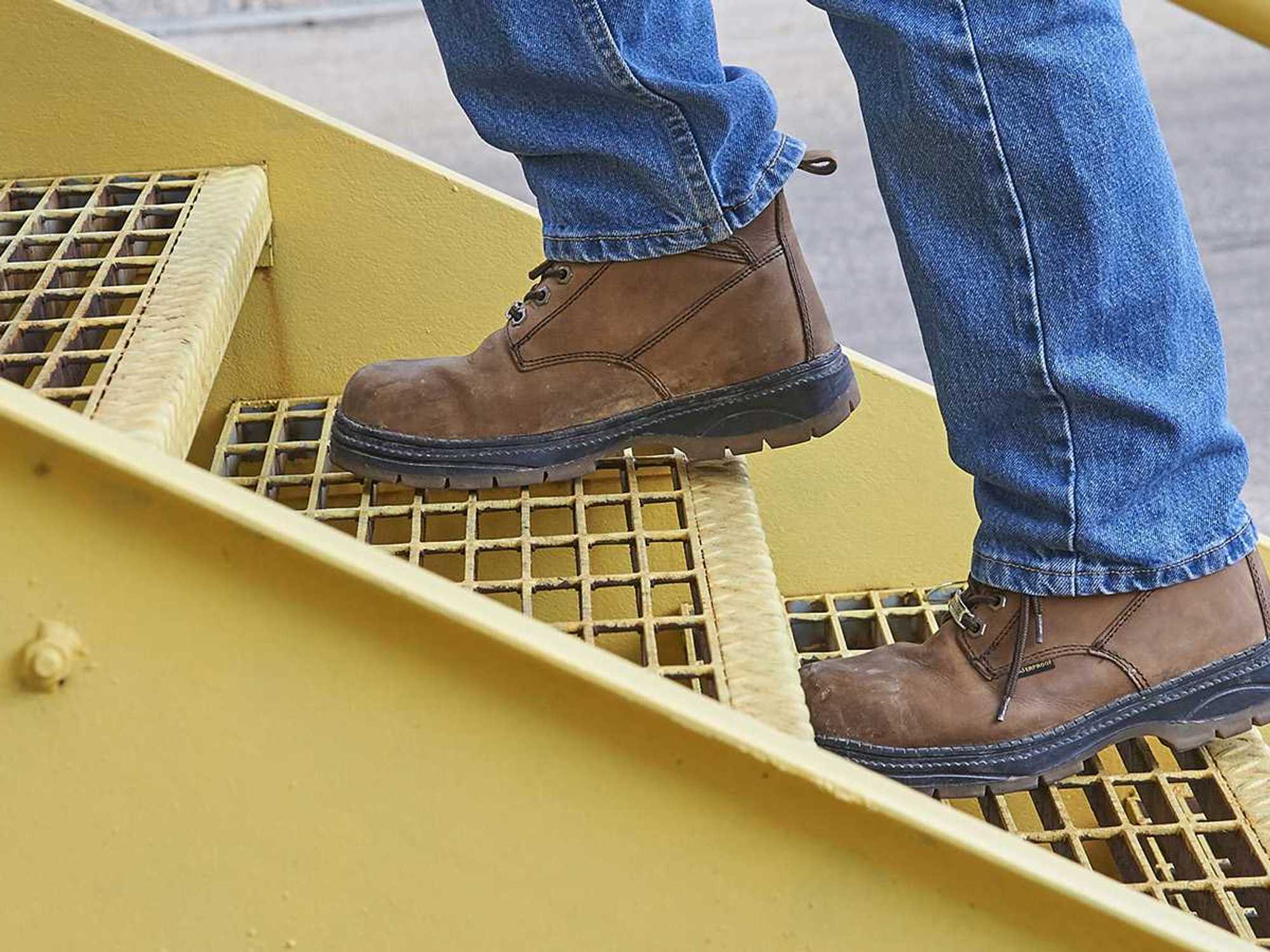
- Types of foot protection include various styles of safety shoes, boots, and guards.
- Employers must train employees on the use and care of the specific type of foot protection that they will be using.
Safety shoes or boots with impact protection would be required for carrying or handling materials such as packages, objects, parts, or heavy tools which could be dropped, and for other activities where objects might fall onto the feet.
Safety shoes or boots with compression protection would be required for work activities involving equipment or materials (such as and heavy pipes) which could potentially roll over employees’ feet.
Safety shoes or boots with puncture protection would be required where sharp objects could be stepped on, causing a foot injury.
For protection of feet and legs from falling or rolling objects, sharp objects, hot tar, hot surfaces, and wet slippery surfaces workers should use appropriate footguards, safety shoes, or boots and leggings.
Aluminum alloy, fiberglass, or galvanized steel footguards can be worn over usual work shoes, although they present the possibility of catching on something and tripping workers.
Heat-resistant soled shoes protect against hot surfaces like those found in the roofing and paving industries.
Leggings protect the lower leg and feet from molten metal or welding sparks. Safety snaps permit their rapid removal.
Other foot and leg protection
Other options for protective footwear include:
- Shoes and boots with instep protection;
- Insulated boots for protection against extreme temperatures;
- Boots with built-in ankle protection;
- Rubber or plastic safety boots that are effective against water, oil, acids, corrosives, and chemicals;
- Foundry shoes with elastic gores rather than laces to provide easy removal in case sparks or hot metal get inside; and
- Add-on protections such as metatarsal guards, shoe covers, rubber spats, strap-on cleats, and puncture-proof steel inserts.
What are the criteria for foot protection?
The Occupational Health and Safety Administration (OSHA)’s construction regulation at 1926.96 states, “Safety-toe footwear for employees shall meet the requirements and specifications in American National Standard for Men’s Safety-Toe Footwear, Z41.1-1967.” However, the general industry standard at 1910.136 has the following requirements:
- American Society for Testing and Materials (ASTM) F-2412–2005, Standard Test Methods for Foot Protection and ASTM F–2413–2005, Standard Specification for Performance Requirements for Protective Footwear, or
- ANSI Z41-1999 — American National Standard for Personal Protection — Protective Footwear, or
- ANSI Z41-1991 — American National Standard for Personal Protection — Protective Footwear.
OSHA also states, “Protective footwear that the employer demonstrates is at least as effective as protective footwear that is constructed in accordance with one of the above consensus standards will be deemed to be in compliance with the requirements of this section.”
Training, maintenance and inspection requirements
Employers must train their employees on recognizing and avoiding unsafe conditions in the workplace. This includes training employees on how to control or eliminate foot/shin-related hazards. In addition, employers must train their employees on how to properly select, use, and care for personal protective equipment.
- Train employees on the various types of foot protection available on the jobsite and their various uses. In addition, instruct employees on when they must care for their PPE, including how to inspect and maintain the equipment, to protect themselves from injury.
:
personal-protective-equipment
FOUNDATIONAL LEARNING
What are the types of foot protection?
InstitutePersonal Protective EquipmentSafety & HealthIn Depth Sub Topics (Level 4)General Industry SafetyUSAEnglishAnalysisFocus AreaFoot Protection
['Personal Protective Equipment']
- Types of foot protection include various styles of safety shoes, boots, and guards.
- Employers must train employees on the use and care of the specific type of foot protection that they will be using.
Safety shoes or boots with impact protection would be required for carrying or handling materials such as packages, objects, parts, or heavy tools which could be dropped, and for other activities where objects might fall onto the feet.
Safety shoes or boots with compression protection would be required for work activities involving equipment or materials (such as and heavy pipes) which could potentially roll over employees’ feet.
Safety shoes or boots with puncture protection would be required where sharp objects could be stepped on, causing a foot injury.
For protection of feet and legs from falling or rolling objects, sharp objects, hot tar, hot surfaces, and wet slippery surfaces workers should use appropriate footguards, safety shoes, or boots and leggings.
Aluminum alloy, fiberglass, or galvanized steel footguards can be worn over usual work shoes, although they present the possibility of catching on something and tripping workers.
Heat-resistant soled shoes protect against hot surfaces like those found in the roofing and paving industries.
Leggings protect the lower leg and feet from molten metal or welding sparks. Safety snaps permit their rapid removal.
Other foot and leg protection
Other options for protective footwear include:
- Shoes and boots with instep protection;
- Insulated boots for protection against extreme temperatures;
- Boots with built-in ankle protection;
- Rubber or plastic safety boots that are effective against water, oil, acids, corrosives, and chemicals;
- Foundry shoes with elastic gores rather than laces to provide easy removal in case sparks or hot metal get inside; and
- Add-on protections such as metatarsal guards, shoe covers, rubber spats, strap-on cleats, and puncture-proof steel inserts.
What are the criteria for foot protection?
The Occupational Health and Safety Administration (OSHA)’s construction regulation at 1926.96 states, “Safety-toe footwear for employees shall meet the requirements and specifications in American National Standard for Men’s Safety-Toe Footwear, Z41.1-1967.” However, the general industry standard at 1910.136 has the following requirements:
- American Society for Testing and Materials (ASTM) F-2412–2005, Standard Test Methods for Foot Protection and ASTM F–2413–2005, Standard Specification for Performance Requirements for Protective Footwear, or
- ANSI Z41-1999 — American National Standard for Personal Protection — Protective Footwear, or
- ANSI Z41-1991 — American National Standard for Personal Protection — Protective Footwear.
OSHA also states, “Protective footwear that the employer demonstrates is at least as effective as protective footwear that is constructed in accordance with one of the above consensus standards will be deemed to be in compliance with the requirements of this section.”
Training, maintenance and inspection requirements
Employers must train their employees on recognizing and avoiding unsafe conditions in the workplace. This includes training employees on how to control or eliminate foot/shin-related hazards. In addition, employers must train their employees on how to properly select, use, and care for personal protective equipment.
- Train employees on the various types of foot protection available on the jobsite and their various uses. In addition, instruct employees on when they must care for their PPE, including how to inspect and maintain the equipment, to protect themselves from injury.
2656866393
2656869090
UPGRADE TO CONTINUE READING
RELATED TOPICS
J. J. Keller is the trusted source for DOT / Transportation, OSHA / Workplace Safety, Human Resources, Construction Safety and Hazmat / Hazardous Materials regulation compliance products and services. J. J. Keller helps you increase safety awareness, reduce risk, follow best practices, improve safety training, and stay current with changing regulations.
Copyright 2026 J. J. Keller & Associate, Inc. For re-use options please contact copyright@jjkeller.com or call 800-558-5011.