
Ventilation
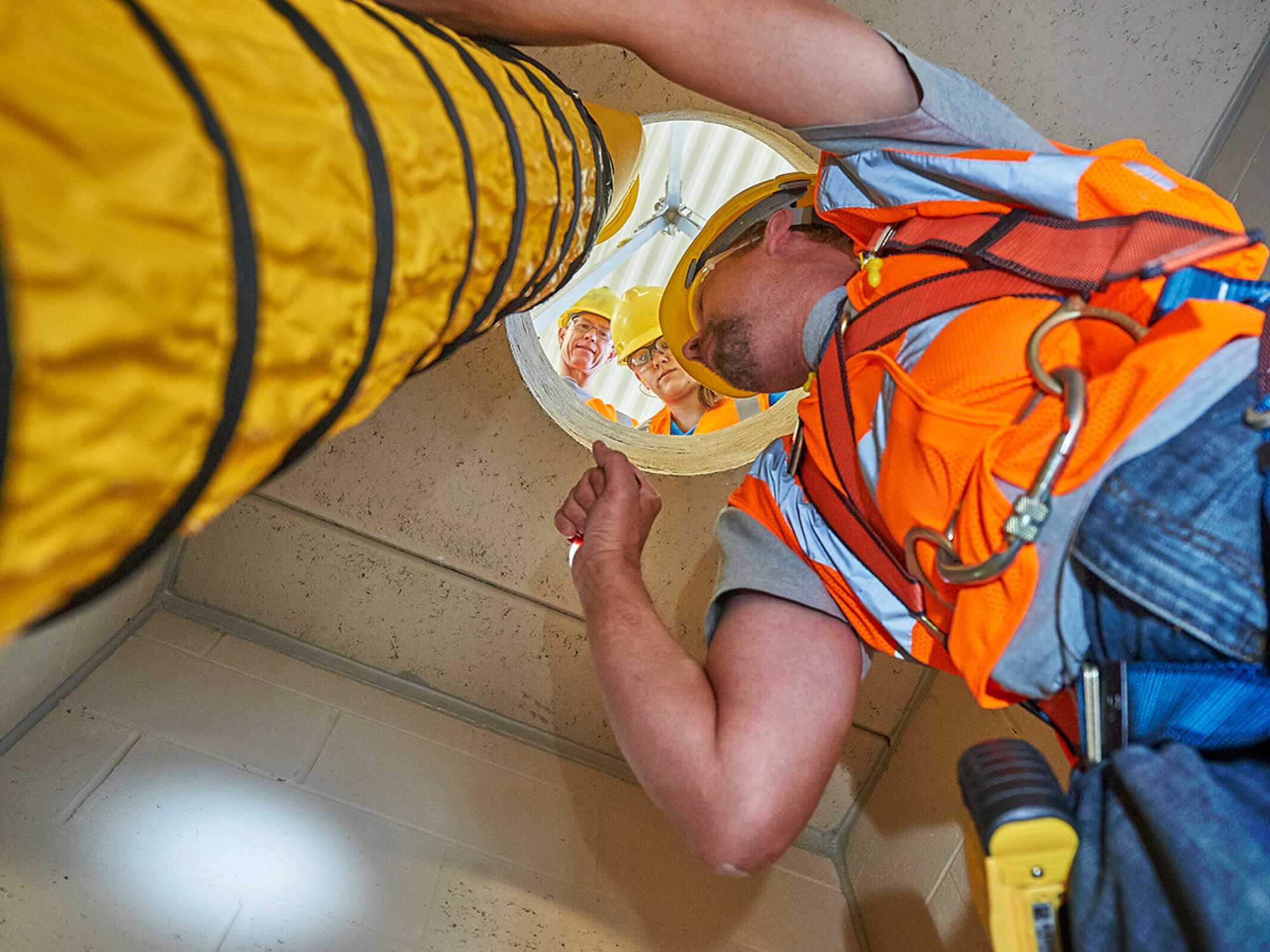
- Ventilation moves fresh air through a confined space to maintain safe oxygen levels and expel harmful gases.
- Choosing the right ventilation depends on several factors.
Ventilation is the process of continuously moving fresh, uncontaminated air through a confined space to offset a hazardous atmosphere. Ventilation dilutes and displaces air contaminants, assures that an adequate supply of oxygen is maintained during entry, and exhausts contaminants formed by processes such as welding, oxy-fuel gas cutting, and abrasive blasting. Ventilation ensures that oxygen levels remain within the required range of 19.5 to 23.5 percent.
Ventilation by a blower or fan may be necessary to remove harmful gases and vapors from a confined space. There are several ventilating methods and equipment options to choose from, depending on the size of openings to the confined space, the gases to be exhausted, and the source of makeup air.
Ventilation equipment should be selected based on the following considerations
- Physical structure of the space,
- Previous contents of the space,
- Natural drafts present in the space,
- Number and location of any openings into the space, and
- Nature of any contaminant-producing tasks that may be performed in the space.
Because ventilating may create the potential for static electricity, it is always necessary to follow appropriate bonding and grounding procedures.
Ventilation specifics
Under certain conditions where flammable gases or vapors have displaced the oxygen level but are too rich to burn, forced air ventilation may dilute them until they are within the flammable range. Typically, an opening is made in the top or side of the space and clean air is blown in. Dilution works best when toxicity levels and concentration levels are low and when contaminants are well distributed.
Ventilation should be continuous where possible, because in many confined spaces, a hazardous atmosphere will return when the flow of air is stopped. Be sure that the source of air intake is not placed where it can draw carbon monoxide (as from an idling vehicle parked close by) or other contaminants into the space.
Employers are required to ventilate the permit space to protect entrants from hazardous atmospheres. Using a special permit space ventilator fan can maintain the atmosphere so it is less hazardous and in best cases not hazardous to entrants’ safety. The ventilator blows a continuous flow of clean air into the space through a hose inserted into the space and forces the contaminated air out.