Compliance Just Got Easier: Stay ahead of regulatory changes with instant notifications on updates that matter.
['Confined Spaces']
['Confined Spaces', 'Permit-Required Confined Spaces', 'Confined Space Hazards', 'Confined Space Entry Permit']
03/12/2026

Copyright 2026 J. J. Keller & Associate, Inc. For re-use options please contact copyright@jjkeller.com or call 800-558-5011.
:
|
InstituteConfined SpacesConfined Space HazardsSafety & HealthConfined SpacesGeneral Industry SafetyPermit-Required Confined SpacesConfined Space Entry PermitEnglishAnalysisFocus AreaCompliance and Exceptions (Level 2)USA
How do regulations differ between general industry and construction?
['Confined Spaces']
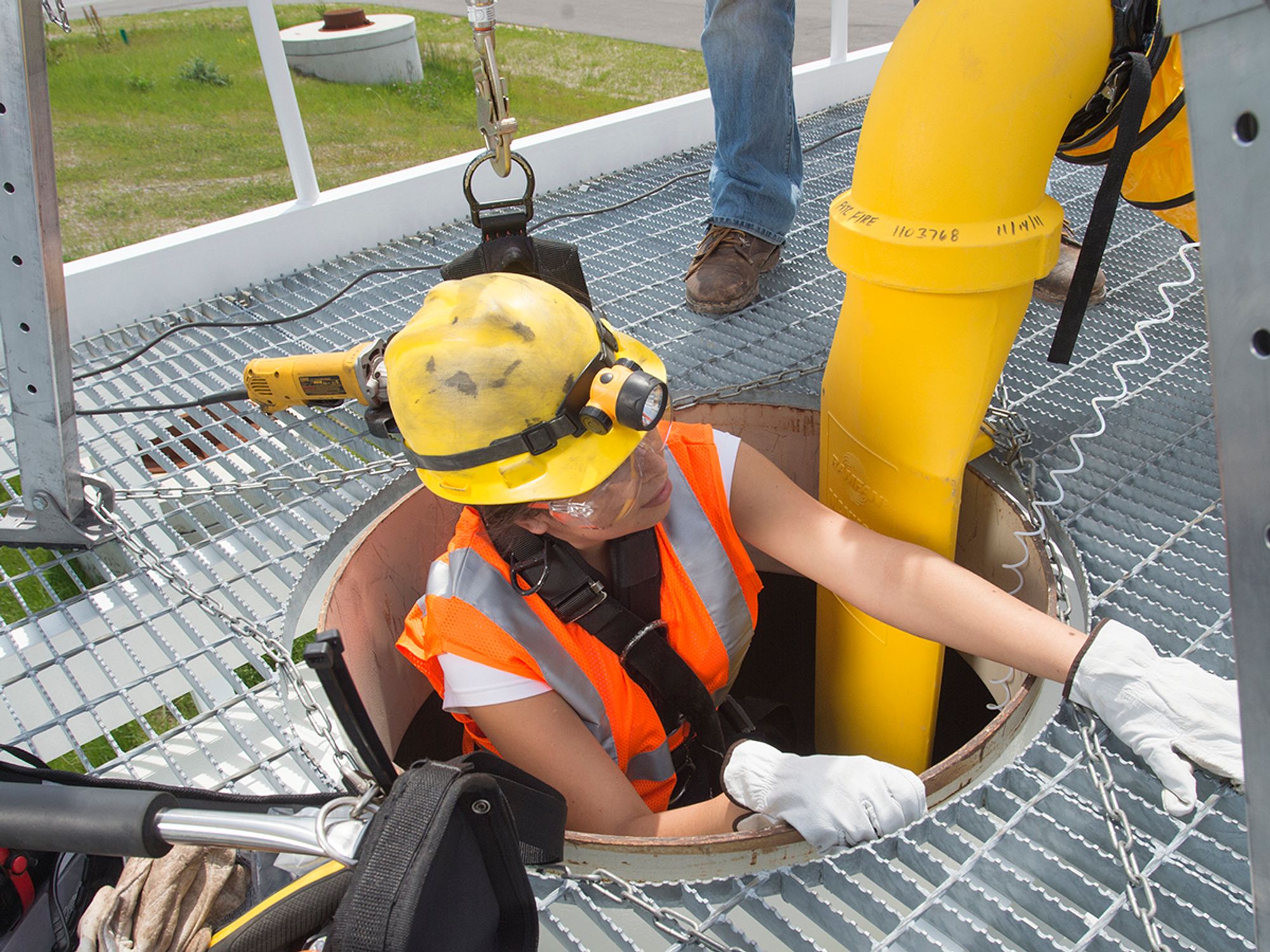
- There are five key differences between the regulations for confined spaces in construction and the regulations for confined spaces in general industry.
The Occupational Safety and Health Administration (OSHA) regulates confined spaces in two places:
- The standard for general industry, 29 CFR 1910.146, “Permit-required confined spaces,” and Appendices; and
- The standard for construction, 29 CFR 1926.1200 Subpart AA, “Confined Spaces in Construction.”
While these two standards have much in common, there are five key differences between the confined space regulations for construction and those for general industry:
- For construction, employers must follow additional coordination requirements when multiple employers have workers on a site.
- For construction, employers must ensure that a competent person identifies all confined spaces on a worksite and evaluates whether these spaces are permit spaces.
- For general industry, it is the employer who must identify confined spaces in the workplace and determining which are permit spaces
- For construction, employers must provide continuous monitoring for atmospheric hazards whenever possible.
- For general industry, the atmosphere in a permit space must be monitored as often as is needed to know whether entry conditions remain acceptable during entry.
- For construction, employers must provide continuous monitoring for engulfment hazards and an early-warning system that alerts workers to such hazards early enough for them to evacuate safely.
- For general industry, if isolating a permit space is infeasible, then engulfment hazards must be continuously monitored in the areas where entrants are working.
- For construction, when a prohibited condition arises in or near a permit space, the entry permit may be suspended rather than canceled if that condition is temporary and does not reconfigure the space or create new hazards. Reentry is allowed once the acceptable entry conditions specified on the entry permit are re-established in the space.
- For general industry, the entry permit for a permit space must be canceled immediately when a prohibited condition arises in or near that space. Reentry is prohibited until the prohibited condition is corrected, the permit program is revised, and a new entry permit is produced.
To know whether to follow the OSHA standard for construction or the standard for general industry, an employer must evaluate whether the work to be done in a confined space is considered maintenance or construction work.
If the work to be done in the space is maintenance, which includes activities such as keeping equipment or structures in proper condition without significant alteration, then the employer should refer to the standard for general industry, 1910.146.
If the work to be done in a confined space is considered construction work, meaning work like alteration and/or repair (including painting and decorating), then the employer should refer to the standard for construction, 29 CFR 1926.1200 Subpart AA.
An employer whose workers are engaged in both construction and general industry confined space work will meet OSHA requirements if that employer meets the requirements of 29 CFR 1926.1200 Subpart AA.
:
confined-spaces
confined-spaces
FOUNDATIONAL LEARNING
InstituteConfined SpacesConfined Space HazardsConfined SpacesConfined Space Testing and Protective MeasuresPermit-Required Confined SpacesConfined Space Entry Team DutiesConfined Space Retrieval and RescueEnglishSafety & HealthGeneral Industry SafetyConfined Space Entry PermitAnalysisFocus AreaCompliance and Exceptions (Level 2)USA
Key definitions
InstituteSeverance PayPlant ClosingsSafety & HealthConfined SpacesConfined Space HazardsConfined SpacesGeneral Industry SafetyPermit-Required Confined SpacesConfined Space Entry PermitEnglishAnalysisFocus AreaCompliance and Exceptions (Level 2)USA
What elements are required for a permit space program? (Construction)
InstituteConfined SpacesSafety & HealthConfined SpacesConfined Space Testing and Protective MeasuresGeneral Industry SafetyConfined Space HazardsConfined Space Retrieval and RescueConfined Space Entry PermitEnglishAnalysisFocus AreaCompliance and Exceptions (Level 2)USA
What elements are required for a permit space program? (General Industry)
How do regulations differ between general industry and construction?
InstituteConfined SpacesConfined Space HazardsSafety & HealthConfined SpacesGeneral Industry SafetyPermit-Required Confined SpacesConfined Space Entry PermitEnglishAnalysisFocus AreaCompliance and Exceptions (Level 2)USA
['Confined Spaces']
- There are five key differences between the regulations for confined spaces in construction and the regulations for confined spaces in general industry.
The Occupational Safety and Health Administration (OSHA) regulates confined spaces in two places:
- The standard for general industry, 29 CFR 1910.146, “Permit-required confined spaces,” and Appendices; and
- The standard for construction, 29 CFR 1926.1200 Subpart AA, “Confined Spaces in Construction.”
While these two standards have much in common, there are five key differences between the confined space regulations for construction and those for general industry:
- For construction, employers must follow additional coordination requirements when multiple employers have workers on a site.
- For construction, employers must ensure that a competent person identifies all confined spaces on a worksite and evaluates whether these spaces are permit spaces.
- For general industry, it is the employer who must identify confined spaces in the workplace and determining which are permit spaces
- For construction, employers must provide continuous monitoring for atmospheric hazards whenever possible.
- For general industry, the atmosphere in a permit space must be monitored as often as is needed to know whether entry conditions remain acceptable during entry.
- For construction, employers must provide continuous monitoring for engulfment hazards and an early-warning system that alerts workers to such hazards early enough for them to evacuate safely.
- For general industry, if isolating a permit space is infeasible, then engulfment hazards must be continuously monitored in the areas where entrants are working.
- For construction, when a prohibited condition arises in or near a permit space, the entry permit may be suspended rather than canceled if that condition is temporary and does not reconfigure the space or create new hazards. Reentry is allowed once the acceptable entry conditions specified on the entry permit are re-established in the space.
- For general industry, the entry permit for a permit space must be canceled immediately when a prohibited condition arises in or near that space. Reentry is prohibited until the prohibited condition is corrected, the permit program is revised, and a new entry permit is produced.
To know whether to follow the OSHA standard for construction or the standard for general industry, an employer must evaluate whether the work to be done in a confined space is considered maintenance or construction work.
If the work to be done in the space is maintenance, which includes activities such as keeping equipment or structures in proper condition without significant alteration, then the employer should refer to the standard for general industry, 1910.146.
If the work to be done in a confined space is considered construction work, meaning work like alteration and/or repair (including painting and decorating), then the employer should refer to the standard for construction, 29 CFR 1926.1200 Subpart AA.
An employer whose workers are engaged in both construction and general industry confined space work will meet OSHA requirements if that employer meets the requirements of 29 CFR 1926.1200 Subpart AA.
2656868585
2656866958
UPGRADE TO CONTINUE READING
RELATED TOPICS
J. J. Keller is the trusted source for DOT / Transportation, OSHA / Workplace Safety, Human Resources, Construction Safety and Hazmat / Hazardous Materials regulation compliance products and services. J. J. Keller helps you increase safety awareness, reduce risk, follow best practices, improve safety training, and stay current with changing regulations.
Copyright 2026 J. J. Keller & Associate, Inc. For re-use options please contact copyright@jjkeller.com or call 800-558-5011.