Compliance Just Got Easier: Stay ahead of regulatory changes with instant notifications on updates that matter.
['Pesticides']
['Pesticide Management', 'Pesticides']
09/16/2025

Copyright 2026 J. J. Keller & Associate, Inc. For re-use options please contact copyright@jjkeller.com or call 800-558-5011.
:
|
InstitutePesticidesPesticidesIn Depth Sub Topics (Level 4)EnvironmentalPesticide ManagementEnglishAnalysisFocus AreaPesticidesUSA
Triple rinsing
['Pesticides']
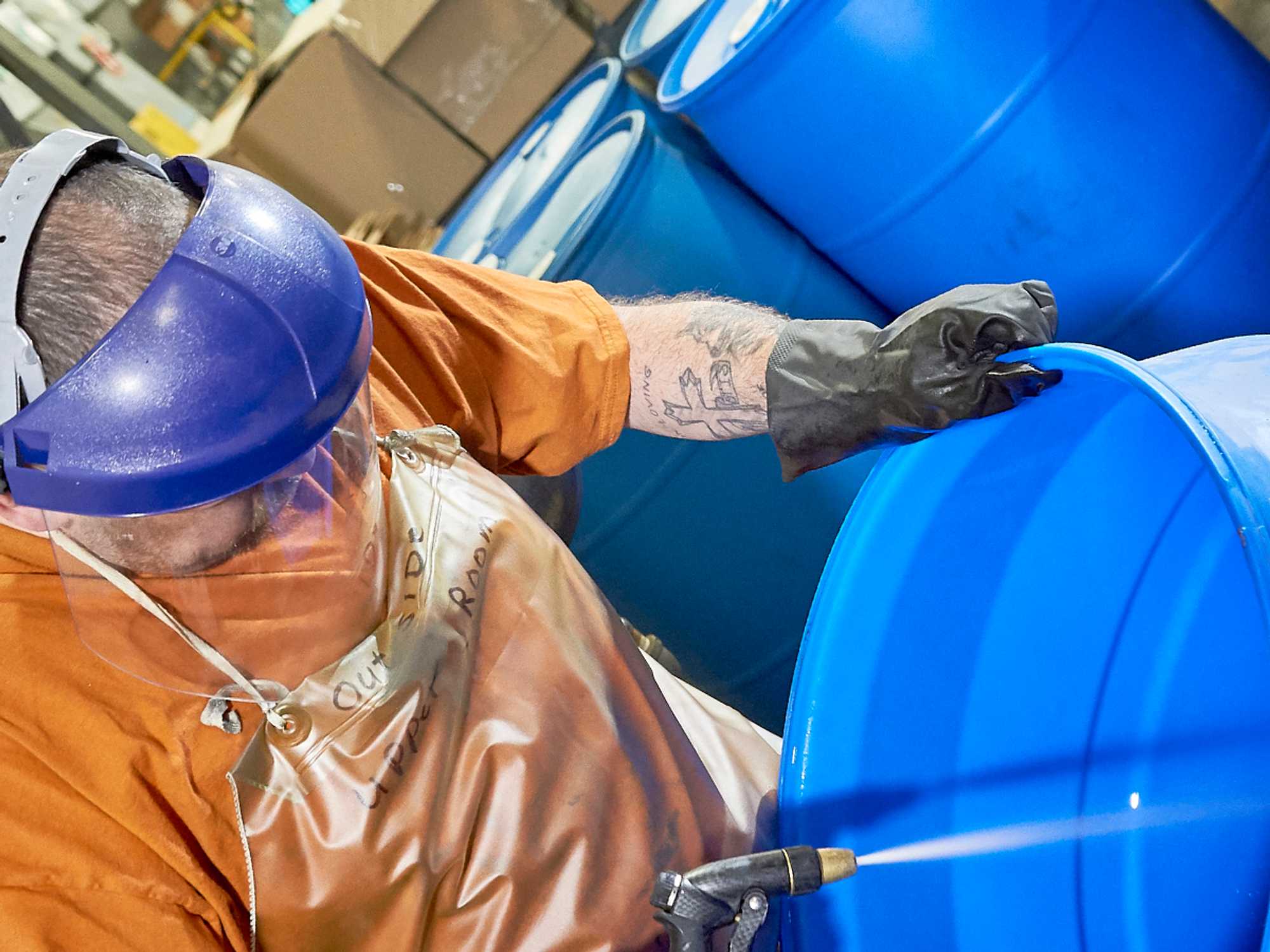
- The procedure for rinsing containers should begin immediately after emptying the contents into the application equipment.
- Triple and pressure rinsing pesticide containers are not viable options in certain situations.
Triple rinsing is defined by a 1974 federal regulation as the “flushing of containers three times, each time using a volume of the normal diluent equal to approximately ten percent of the container’s capacity, and adding the rinse liquid to the spray mixture.” Pesticide labels on metal, plastic, and glass containers reflect this federal definition when directing applicators to triple rinse or the equivalent.
Triple rinsing process
- The same personal protective equipment (PPE) worn while handling the pesticide concentrate during the mixing process should be worn while rinsing containers.
- The procedure for rinsing containers should begin immediately after emptying the contents into the application equipment. Allowing the residue to dry in the empty containers for even a few hours will reduce the effectiveness of the procedure. If the company can’t rinse them immediately, leave the caps on the containers until prepared to do so. This will help prevent the pesticide from drying inside the containers.
- Pour the pesticide into the application equipment where the spray mix is created and let the pesticide container drain for an additional 30 to 60 seconds. This step greatly enhances the ability to remove the residue during the triple rinsing process.
- Add clean water (or other diluent specified on the label) equal to 10 to 25 percent of the container’s volume and secure the cap.
- Shake or roll the container so that the interior surfaces will be rinsed.
- Pour the rinsate into the spray mix and allow the container to drain for an additional 30 seconds. This completes the first cycle.
- Repeat the procedures outlined in steps 4 to 6. This completes the second cycle.
- Again, repeat steps 4 to 6. If the rinsate still appears cloudy or milky, keep repeating until the water looks clear, indicating a thorough rinse. If the pesticide is an emulsifiable concentrate (EC) or a liquid flowable (LF), multiple rinses are always advisable.
- Render all plastic and metal containers unusable by puncturing or crushing.
- The final step is to dispose of the empty containers in a sanitary landfill or offer them for recycling.
Technically, if the steps above are done properly for each pesticide container, the rinsate should all be in the spray mix in the application equipment. However, if any rinsate is left over, dispose of it properly in accordance with the product labeling and federal and state laws and regulations.
When rinsing is not an option
Triple and pressure rinsing pesticide containers are not viable options in certain situations. Thorough removal of pesticide products packaged in bags and aerosol spray cans may be accomplished by taking the following steps:
| Container type | Pesticide removal steps |
|---|---|
| Multi-layered bags |
|
| Aerosol spray cans |
|
:
pesticides
pesticides
pesticides
FOUNDATIONAL LEARNING
InstitutePesticide Applicator CertificationPesticidesPesticidesPesticide Registration and LabelingFederal Insecticide, Fungicide and Rodenticide ActEnvironmentalPesticidesPesticide ManagementEnglishAnalysisFocus AreaCompliance and Exceptions (Level 2)USA
Laws and regulations that apply to pesticides
- The procedure for rinsing containers should begin immediately after emptying the contents into the application equipment.
- Triple and pressure rinsing pesticide containers are not viable options in certain situations.
Triple rinsing is defined by a 1974 federal regulation as the “flushing of containers three times, each time using a volume of the normal diluent equal to approximately ten percent of the container’s capacity, and adding the rinse liquid to the spray mixture.” Pesticide labels on metal, plastic, and glass containers reflect this federal definition when directing applicators to triple rinse or the equivalent.
Triple rinsing process
- The same personal protective equipment (PPE) worn while handling the pesticide concentrate during the mixing process should be worn while rinsing containers.
- The procedure for rinsing containers should begin immediately after emptying the contents into the application equipment. Allowing the residue to dry in the empty containers for even a few hours will reduce the effectiveness of the procedure. If the company can’t rinse them immediately, leave the caps on the containers until prepared to do so. This will help prevent the pesticide from drying inside the containers.
- Pour the pesticide into the application equipment where the spray mix is created and let the pesticide container drain for an additional 30 to 60 seconds. This step greatly enhances the ability to remove the residue during the triple rinsing process.
- Add clean water (or other diluent specified on the label) equal to 10 to 25 percent of the container’s volume and secure the cap.
- Shake or roll the container so that the interior surfaces will be rinsed.
- Pour the rinsate into the spray mix and allow the container to drain for an additional 30 seconds. This completes the first cycle.
- Repeat the procedures outlined in steps 4 to 6. This completes the second cycle.
- Again, repeat steps 4 to 6. If the rinsate still appears cloudy or milky, keep repeating until the water looks clear, indicating a thorough rinse. If the pesticide is an emulsifiable concentrate (EC) or a liquid flowable (LF), multiple rinses are always advisable.
- Render all plastic and metal containers unusable by puncturing or crushing.
- The final step is to dispose of the empty containers in a sanitary landfill or offer them for recycling.
Technically, if the steps above are done properly for each pesticide container, the rinsate should all be in the spray mix in the application equipment. However, if any rinsate is left over, dispose of it properly in accordance with the product labeling and federal and state laws and regulations.
When rinsing is not an option
Triple and pressure rinsing pesticide containers are not viable options in certain situations. Thorough removal of pesticide products packaged in bags and aerosol spray cans may be accomplished by taking the following steps:
| Container type | Pesticide removal steps |
|---|---|
| Multi-layered bags |
|
| Aerosol spray cans |
|
2656867407
2656867836
UPGRADE TO CONTINUE READING
RELATED TOPICS
J. J. Keller is the trusted source for DOT / Transportation, OSHA / Workplace Safety, Human Resources, Construction Safety and Hazmat / Hazardous Materials regulation compliance products and services. J. J. Keller helps you increase safety awareness, reduce risk, follow best practices, improve safety training, and stay current with changing regulations.
Copyright 2026 J. J. Keller & Associate, Inc. For re-use options please contact copyright@jjkeller.com or call 800-558-5011.