Compliance Just Got Easier: Stay ahead of regulatory changes with instant notifications on updates that matter.
['First Aid and Medical']
['Eyewashes and Showers', 'First Aid and Medical']
04/30/2026

Copyright 2026 J. J. Keller & Associate, Inc. For re-use options please contact copyright@jjkeller.com or call 800-558-5011.
:
|
InstituteAnalysisSafety & HealthIn Depth Sub Topics (Level 4)First Aid and MedicalGeneral Industry SafetyEyewashes and ShowersEnglishFirst Aid and MedicalFocus AreaUSA
Training
['First Aid and Medical']
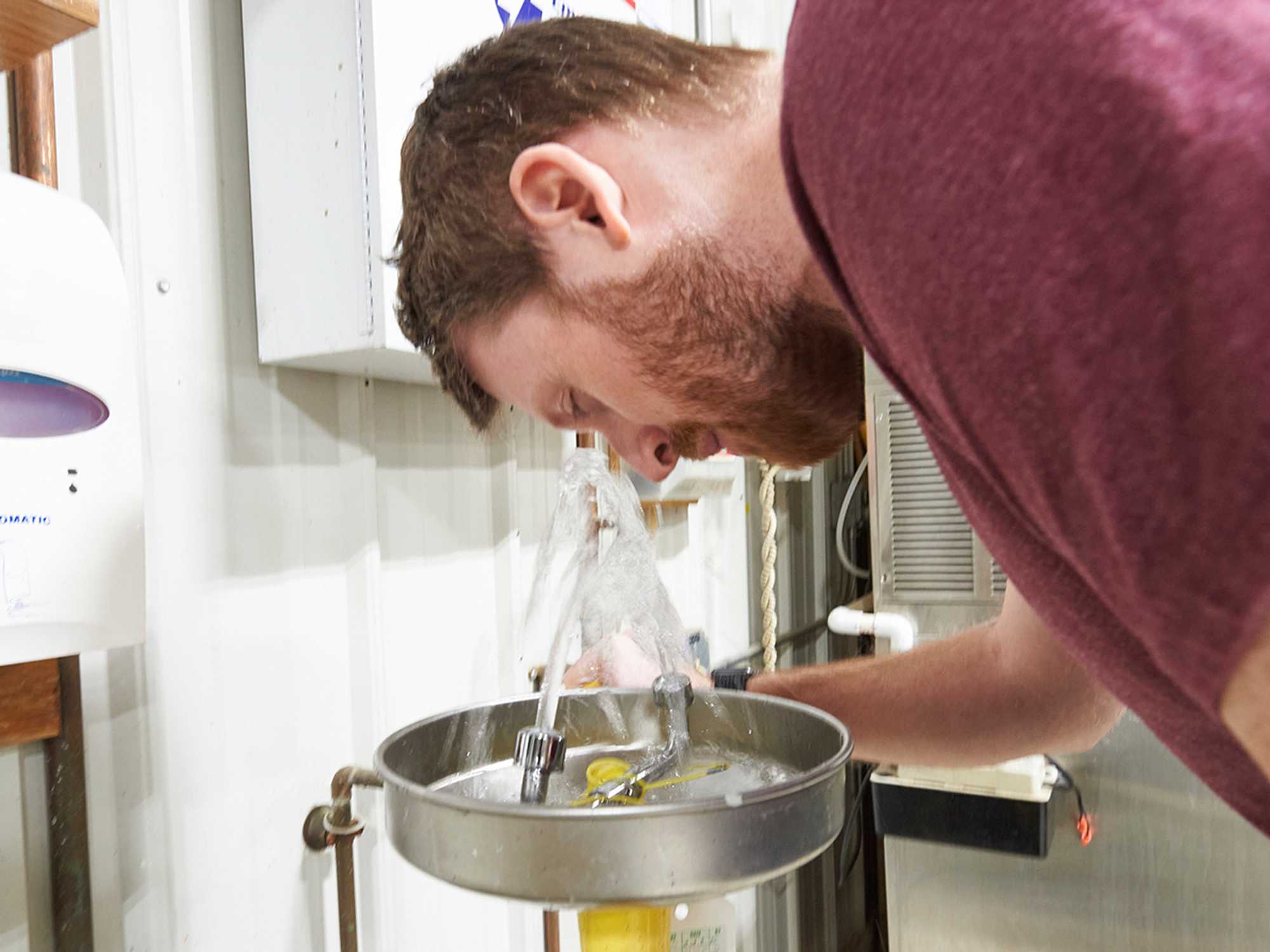
- ANSI/ISEA Z358.1 explains that employees must be informed of eyewash/shower locations and trained in their use, if they may be subjected to injurious materials.
- When training employees, review the employee handout, and stress workplace emergency procedures, especially how to activate the emergency medical system.
- Explain to employees why it is so important to properly assist fellow employees in distress to reach the eyewash/shower station.
While OSHA has no specific training requirements for eyewashes/showers, American National Standards Institute (ANSI) / International Safety Equipment Association (ISEA) Z358.1, American National Standard for Emergency Eyewash and Shower Equipment, explains that employees must be informed of eyewash/shower locations and trained in their use, if they may be subjected to injurious materials. OSHA often refers employers to this consensus standard for firm guidance.
Training tips
When training employees, review the employee handout, and stress workplace emergency procedures, especially how to activate the emergency medical system.
- Teach in a language that the trainees understand. If a trainee’s vocabulary is limited, account for that limitation. Translators may be needed.
- Show employees locations of emergency eyewash/shower stations.
- Explain when they might have to use it.
- Demonstrate how to activate the eyewash/shower and review proper use.
- Remind employees to flush eyes and skin for at least 15 minutes.
- Emphasize the importance of keeping the path to the equipment free of obstacles.
- Explain why it is important to properly assist fellow employees in distress to reach the eyewash/shower station.
:
first-aid-and-medical
first-aid-and-medical
FOUNDATIONAL LEARNING
- ANSI/ISEA Z358.1 explains that employees must be informed of eyewash/shower locations and trained in their use, if they may be subjected to injurious materials.
- When training employees, review the employee handout, and stress workplace emergency procedures, especially how to activate the emergency medical system.
- Explain to employees why it is so important to properly assist fellow employees in distress to reach the eyewash/shower station.
While OSHA has no specific training requirements for eyewashes/showers, American National Standards Institute (ANSI) / International Safety Equipment Association (ISEA) Z358.1, American National Standard for Emergency Eyewash and Shower Equipment, explains that employees must be informed of eyewash/shower locations and trained in their use, if they may be subjected to injurious materials. OSHA often refers employers to this consensus standard for firm guidance.
Training tips
When training employees, review the employee handout, and stress workplace emergency procedures, especially how to activate the emergency medical system.
- Teach in a language that the trainees understand. If a trainee’s vocabulary is limited, account for that limitation. Translators may be needed.
- Show employees locations of emergency eyewash/shower stations.
- Explain when they might have to use it.
- Demonstrate how to activate the eyewash/shower and review proper use.
- Remind employees to flush eyes and skin for at least 15 minutes.
- Emphasize the importance of keeping the path to the equipment free of obstacles.
- Explain why it is important to properly assist fellow employees in distress to reach the eyewash/shower station.
2656869040
2656871369
UPGRADE TO CONTINUE READING
RELATED TOPICS
J. J. Keller is the trusted source for DOT / Transportation, OSHA / Workplace Safety, Human Resources, Construction Safety and Hazmat / Hazardous Materials regulation compliance products and services. J. J. Keller helps you increase safety awareness, reduce risk, follow best practices, improve safety training, and stay current with changing regulations.
Copyright 2026 J. J. Keller & Associate, Inc. For re-use options please contact copyright@jjkeller.com or call 800-558-5011.