Compliance Just Got Easier: Stay ahead of regulatory changes with instant notifications on updates that matter.
['Confined Spaces']
['Confined Spaces', 'Confined Space Retrieval and Rescue']
03/12/2026

Copyright 2026 J. J. Keller & Associate, Inc. For re-use options please contact copyright@jjkeller.com or call 800-558-5011.
:
|
InstituteConfined SpacesSafety & HealthConfined SpacesGeneral Industry SafetyConfined Space Retrieval and RescueUSAEnglishAnalysisFocus AreaIn Depth (Level 3)
Retrieval devices, lifelines, and other devices
['Confined Spaces']
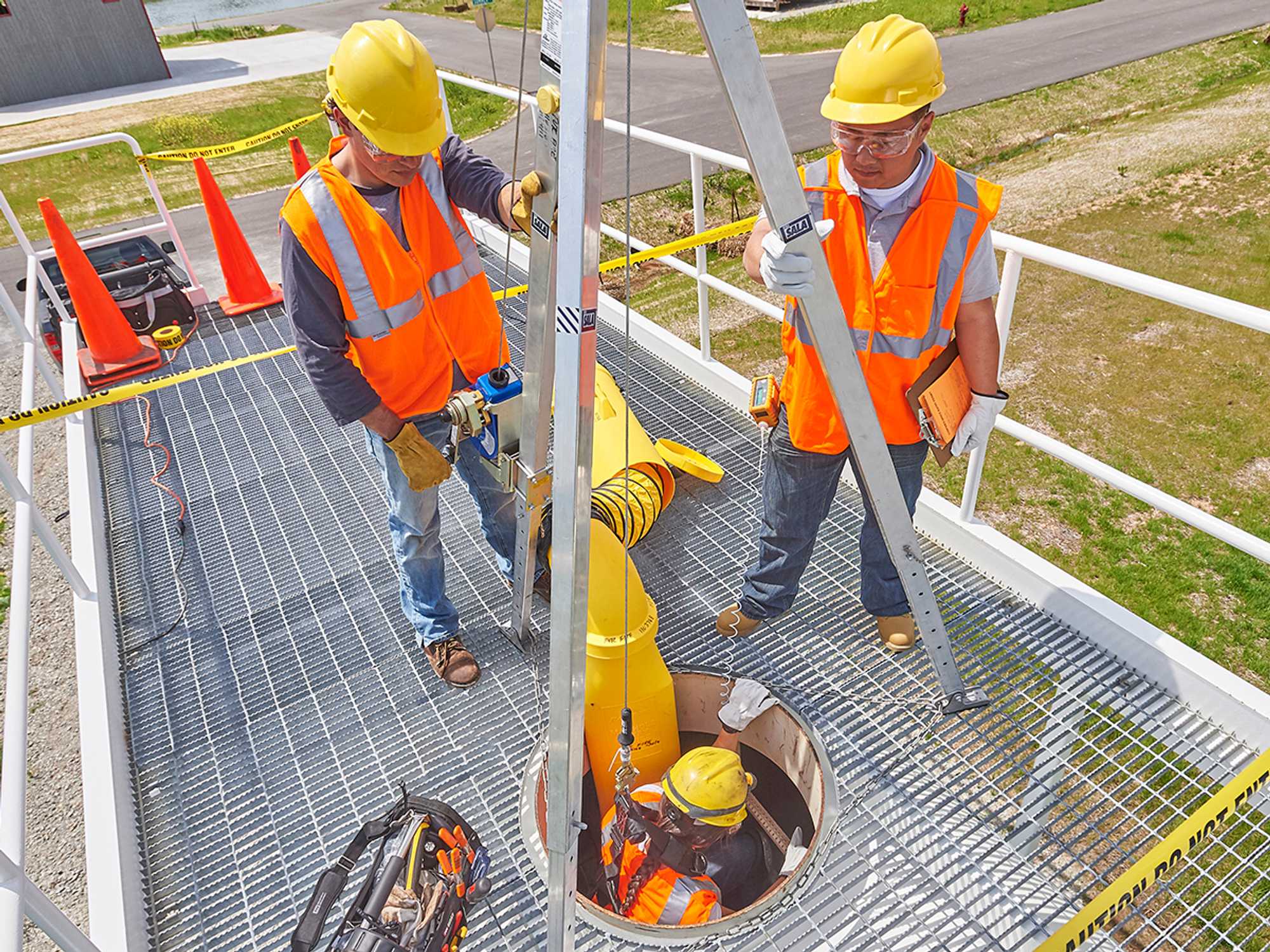
- The two main types of retrieval devices are the cable system and the rope system.
- Several other retrieval devices are appropriate for specific confined space configurations.
There are two main types of mechanical retrieval devices. One is a mounted tripod or davit arm that uses a cable mechanism to lift an entrant. This system requires low maintenance and is relatively easy for an attendant to use. The cable system is appropriate if flexibility is not required.
The other retrieval device allows for flexibility, using a rope instead of cable. Disadvantages of the rope system include the increased maintenance and a higher level of difficulty to operate.
Lifelines and other devices
Lifelines with self-retracting features are appropriate if retrieval can be accomplished using a ladder or other similar devices. These lines help protect an entrant from falling. However, not all types of lifelines are appropriate for confined space entry because some have no capabilities for retrieval.
Manufacturers provide accessories such as tripods to complete this entry and retrieval system. A portable davit arm is also an excellent piece of equipment to use for retrieval; however, if the space is entered frequently, a fixed davit arm is more effective.
Other devices are available for specific confined space configurations. Horizontal entries often use column extraction systems. Forklift davit arms can be very useful in locations that are difficult to reach and field operations may require a vehicle hitch mount davit arm. If an entrant needs to be lowered into a space, a cable winch may be used.
:
confined-spaces
confined-spaces
FOUNDATIONAL LEARNING
InstituteConfined SpacesConfined Space HazardsConfined SpacesConfined Space Testing and Protective MeasuresPermit-Required Confined SpacesConfined Space Entry Team DutiesConfined Space Retrieval and RescueEnglishSafety & HealthGeneral Industry SafetyConfined Space Entry PermitAnalysisFocus AreaCompliance and Exceptions (Level 2)USA
Key definitions
InstituteSeverance PayPlant ClosingsSafety & HealthConfined SpacesConfined SpacesConfined Space HazardsGeneral Industry SafetyPermit-Required Confined SpacesConfined Space Entry PermitEnglishAnalysisFocus AreaCompliance and Exceptions (Level 2)USA
What elements are required for a permit space program? (Construction)
InstituteConfined SpacesSafety & HealthConfined SpacesConfined Space Testing and Protective MeasuresGeneral Industry SafetyConfined Space HazardsConfined Space Retrieval and RescueConfined Space Entry PermitEnglishAnalysisFocus AreaCompliance and Exceptions (Level 2)USA
What elements are required for a permit space program? (General Industry)
Retrieval devices, lifelines, and other devices
InstituteConfined SpacesSafety & HealthConfined SpacesGeneral Industry SafetyConfined Space Retrieval and RescueUSAEnglishAnalysisFocus AreaIn Depth (Level 3)
['Confined Spaces']
- The two main types of retrieval devices are the cable system and the rope system.
- Several other retrieval devices are appropriate for specific confined space configurations.
There are two main types of mechanical retrieval devices. One is a mounted tripod or davit arm that uses a cable mechanism to lift an entrant. This system requires low maintenance and is relatively easy for an attendant to use. The cable system is appropriate if flexibility is not required.
The other retrieval device allows for flexibility, using a rope instead of cable. Disadvantages of the rope system include the increased maintenance and a higher level of difficulty to operate.
Lifelines and other devices
Lifelines with self-retracting features are appropriate if retrieval can be accomplished using a ladder or other similar devices. These lines help protect an entrant from falling. However, not all types of lifelines are appropriate for confined space entry because some have no capabilities for retrieval.
Manufacturers provide accessories such as tripods to complete this entry and retrieval system. A portable davit arm is also an excellent piece of equipment to use for retrieval; however, if the space is entered frequently, a fixed davit arm is more effective.
Other devices are available for specific confined space configurations. Horizontal entries often use column extraction systems. Forklift davit arms can be very useful in locations that are difficult to reach and field operations may require a vehicle hitch mount davit arm. If an entrant needs to be lowered into a space, a cable winch may be used.
2656869523
2656869522
UPGRADE TO CONTINUE READING
RELATED TOPICS
J. J. Keller is the trusted source for DOT / Transportation, OSHA / Workplace Safety, Human Resources, Construction Safety and Hazmat / Hazardous Materials regulation compliance products and services. J. J. Keller helps you increase safety awareness, reduce risk, follow best practices, improve safety training, and stay current with changing regulations.
Copyright 2026 J. J. Keller & Associate, Inc. For re-use options please contact copyright@jjkeller.com or call 800-558-5011.