Compliance Just Got Easier: Stay ahead of regulatory changes with instant notifications on updates that matter.
['Personal Protective Equipment']
['Respiratory Protection']
09/02/2026

Copyright 2026 J. J. Keller & Associate, Inc. For re-use options please contact copyright@jjkeller.com or call 800-558-5011.
:
|
InstitutePersonal Protective EquipmentSafety & HealthGeneral Industry SafetyUSARespiratory ProtectionEnglishAnalysisFocus AreaIn Depth (Level 3)
PPE for respiratory protection
['Personal Protective Equipment']
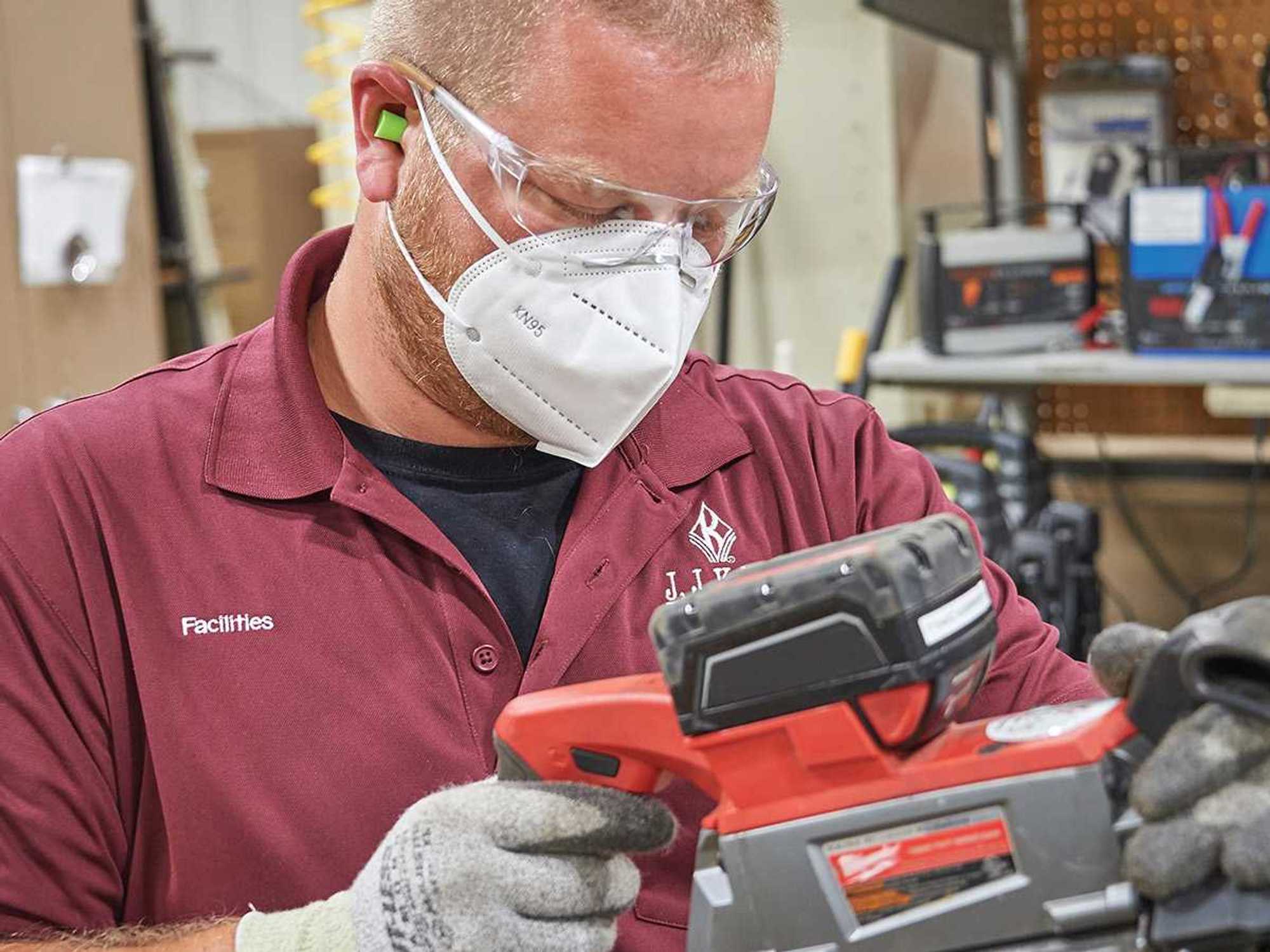
- Employers should eliminate or reduce atmospheric hazards in the workplace such as dust, smoke, fumes, vapors and more.
- Respiratory protection must be supplied to all employees when atmospheric hazards are present.
Hazards to the lungs are not always easy to detect. Some of the most common hazards are the lack of oxygen and the presence of harmful dust, fogs, smokes, mists, fumes, gases, vapors, or sprays including substances that may cause cancer, lung impairment, other diseases, or death.
In these instances, respiratory protection is necessary to prevent these harmful substances from entering the lungs during breathing. Some respirators contain filters to catch and contain the contaminants while others provide a separate supply of breathable air so work can be performed where there is inadequate oxygen, or where greater protection is needed.
Eliminating or reducing atmospheric hazards through engineering controls is the first step an employer should take, such as enclosing or confining the contaminant-producing operation, exhausting the contaminant, or substituting a chemical with a less toxic material. However, in instances where effective engineering controls are not feasible, while those controls are being installed, or during clean-up operations, appropriate respiratory protection must be provided to exposed employees.
The employer needs to understand that respirators do have limitations and are not substitutes for effective engineering controls or work practices. Where respirators are necessary for health protection, a specific written plan and procedures are necessary to ensure the effectiveness of the equipment and the safety of the employees using it.
Employers are responsible for establishing an effective respirator program — different hazards require different respirators — and employees are responsible for wearing the respirators and complying with the employer’s program.
The Occupational Safety and Health Administration (OSHA) standard for respiratory protection is detailed in 1910.134 — Respiratory protection, and appendices (Appendix A — Fit Testing Procedures, Appendix B-1 — User Seal Check Procedures, Appendix B-2 — Respirator Cleaning Procedures, Appendix C — OSHA Respirator Medical Evaluation Questionnaire, and Appendix D — Information for Employees Using Respirators When Not Required Under Standard).
:
personal-protective-equipment
FOUNDATIONAL LEARNING
PPE for respiratory protection
InstitutePersonal Protective EquipmentSafety & HealthGeneral Industry SafetyUSARespiratory ProtectionEnglishAnalysisFocus AreaIn Depth (Level 3)
['Personal Protective Equipment']
- Employers should eliminate or reduce atmospheric hazards in the workplace such as dust, smoke, fumes, vapors and more.
- Respiratory protection must be supplied to all employees when atmospheric hazards are present.
Hazards to the lungs are not always easy to detect. Some of the most common hazards are the lack of oxygen and the presence of harmful dust, fogs, smokes, mists, fumes, gases, vapors, or sprays including substances that may cause cancer, lung impairment, other diseases, or death.
In these instances, respiratory protection is necessary to prevent these harmful substances from entering the lungs during breathing. Some respirators contain filters to catch and contain the contaminants while others provide a separate supply of breathable air so work can be performed where there is inadequate oxygen, or where greater protection is needed.
Eliminating or reducing atmospheric hazards through engineering controls is the first step an employer should take, such as enclosing or confining the contaminant-producing operation, exhausting the contaminant, or substituting a chemical with a less toxic material. However, in instances where effective engineering controls are not feasible, while those controls are being installed, or during clean-up operations, appropriate respiratory protection must be provided to exposed employees.
The employer needs to understand that respirators do have limitations and are not substitutes for effective engineering controls or work practices. Where respirators are necessary for health protection, a specific written plan and procedures are necessary to ensure the effectiveness of the equipment and the safety of the employees using it.
Employers are responsible for establishing an effective respirator program — different hazards require different respirators — and employees are responsible for wearing the respirators and complying with the employer’s program.
The Occupational Safety and Health Administration (OSHA) standard for respiratory protection is detailed in 1910.134 — Respiratory protection, and appendices (Appendix A — Fit Testing Procedures, Appendix B-1 — User Seal Check Procedures, Appendix B-2 — Respirator Cleaning Procedures, Appendix C — OSHA Respirator Medical Evaluation Questionnaire, and Appendix D — Information for Employees Using Respirators When Not Required Under Standard).
2656870437
2656869778
UPGRADE TO CONTINUE READING
RELATED TOPICS
J. J. Keller is the trusted source for DOT / Transportation, OSHA / Workplace Safety, Human Resources, Construction Safety and Hazmat / Hazardous Materials regulation compliance products and services. J. J. Keller helps you increase safety awareness, reduce risk, follow best practices, improve safety training, and stay current with changing regulations.
Copyright 2026 J. J. Keller & Associate, Inc. For re-use options please contact copyright@jjkeller.com or call 800-558-5011.