Compliance Just Got Easier: Stay ahead of regulatory changes with instant notifications on updates that matter.
['Personal Protective Equipment']
['Hearing Protection']
09/02/2026

Copyright 2026 J. J. Keller & Associate, Inc. For re-use options please contact copyright@jjkeller.com or call 800-558-5011.
:
|
InstitutePersonal Protective EquipmentSafety & HealthGeneral Industry SafetyHearing ProtectionUSAEnglishAnalysisFocus AreaIn Depth (Level 3)
PPE for hearing protection
['Personal Protective Equipment']
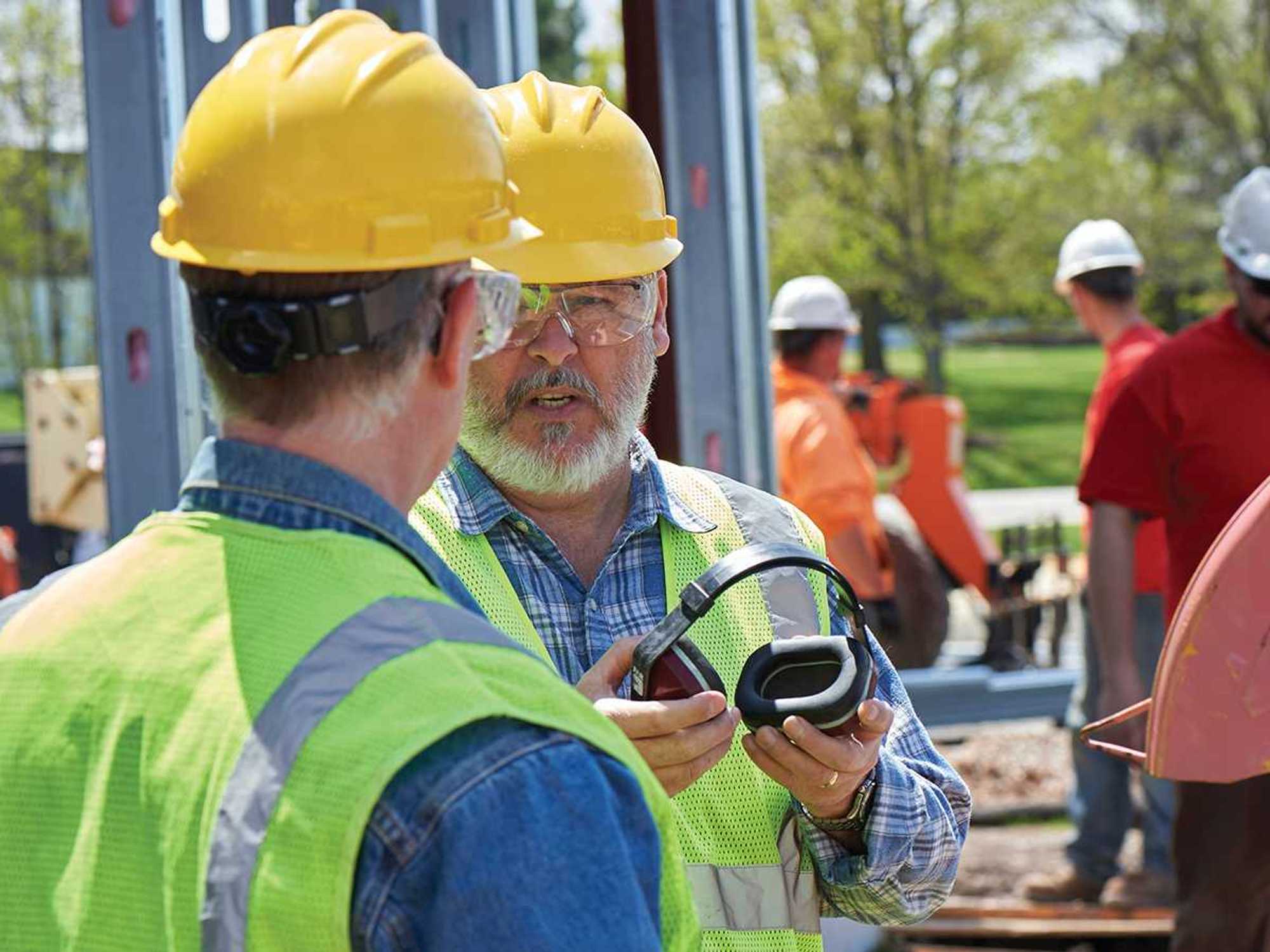
- Employers must provide hearing protection when their employees are exposed to workplace noise at a certain level.
- Employers must develop and administer an effective hearing conservation program for all employees who are exposed to noise at a certain level, to include providing hearing protectors at no charge.
Employers with employees working in areas where there is the possibility of exposure to sound levels exceeding those listed in Table D-2 must comply.
Excessive sound levels on construction sites are recognized by medical professionals and the Occupational Health and Safety Administration (OSHA) as an occupational hazard that can cause temporary or permanent hearing loss, stress, and other physical problems.
OSHA’s standard for hearing protection is detailed in 1926.52.
Employers covered by the standard must:
- Assess the workplace for areas where exposure to sound levels could exceed those listed in Table D-2.
- Implement administrative or engineering controls to control the sound levels.
- If administrative or engineering controls fail to reduce sound levels within the levels Table D-2, select appropriate hearing protection to reduce sound levels.
- Provide and require employees to wear hearing protection at no cost to the employee.
- Implement a hearing conservation program where sound levels exceed the Permissible Noise Exposures in Table D-2.
:
personal-protective-equipment
FOUNDATIONAL LEARNING
PPE for hearing protection
InstitutePersonal Protective EquipmentSafety & HealthGeneral Industry SafetyHearing ProtectionUSAEnglishAnalysisFocus AreaIn Depth (Level 3)
['Personal Protective Equipment']
- Employers must provide hearing protection when their employees are exposed to workplace noise at a certain level.
- Employers must develop and administer an effective hearing conservation program for all employees who are exposed to noise at a certain level, to include providing hearing protectors at no charge.
Employers with employees working in areas where there is the possibility of exposure to sound levels exceeding those listed in Table D-2 must comply.
Excessive sound levels on construction sites are recognized by medical professionals and the Occupational Health and Safety Administration (OSHA) as an occupational hazard that can cause temporary or permanent hearing loss, stress, and other physical problems.
OSHA’s standard for hearing protection is detailed in 1926.52.
Employers covered by the standard must:
- Assess the workplace for areas where exposure to sound levels could exceed those listed in Table D-2.
- Implement administrative or engineering controls to control the sound levels.
- If administrative or engineering controls fail to reduce sound levels within the levels Table D-2, select appropriate hearing protection to reduce sound levels.
- Provide and require employees to wear hearing protection at no cost to the employee.
- Implement a hearing conservation program where sound levels exceed the Permissible Noise Exposures in Table D-2.
2656872685
2656866908
UPGRADE TO CONTINUE READING
RELATED TOPICS
J. J. Keller is the trusted source for DOT / Transportation, OSHA / Workplace Safety, Human Resources, Construction Safety and Hazmat / Hazardous Materials regulation compliance products and services. J. J. Keller helps you increase safety awareness, reduce risk, follow best practices, improve safety training, and stay current with changing regulations.
Copyright 2026 J. J. Keller & Associate, Inc. For re-use options please contact copyright@jjkeller.com or call 800-558-5011.