Compliance Just Got Easier: Stay ahead of regulatory changes with instant notifications on updates that matter.
['Personal Protective Equipment']
['Eye and Face Protection']
09/02/2026

Copyright 2026 J. J. Keller & Associate, Inc. For re-use options please contact copyright@jjkeller.com or call 800-558-5011.
:
|
InstituteEye and Face ProtectionPersonal Protective EquipmentSafety & HealthGeneral Industry SafetyUSAEnglishAnalysisFocus AreaIn Depth (Level 3)
PPE for eye and face protection
['Personal Protective Equipment']
- The OSHA standard for eye and face protection applies to Construction employers whose employees are exposed to certain hazards in the workplace.
- Employers must provide eye and face protection at no cost to employees whenever certain hazards are present.
- Eye and face protection must meet one of three editions of ANSI Z87.1 (2010, 2003, or 1989-Rev1998)
Employees can be exposed to many hazards that pose danger to their eyes and face. The Occupational Health and Safety Administration (OSHA) requires employers to ensure that employees have appropriate eye or face protection if they are exposed to eye or face hazards from flying particles, molten metal, liquid chemicals, acids or caustic liquids, chemical gases or vapors, potentially infected material, or potentially harmful light radiation.
The OSHA standard for eye and face protection is detailed in 1926.102.
What are the PPE requirements for eye and face protection?
OSHA requires employers covered by the standard to:
- Select eye and face protection suitable to the hazard (e.g., impact, heat, chemicals, dust, radiation) that meets one of three editions of American National Standards Institute (ANSI) Z87.1 (2010, 2003, and 1989-Rev1998).
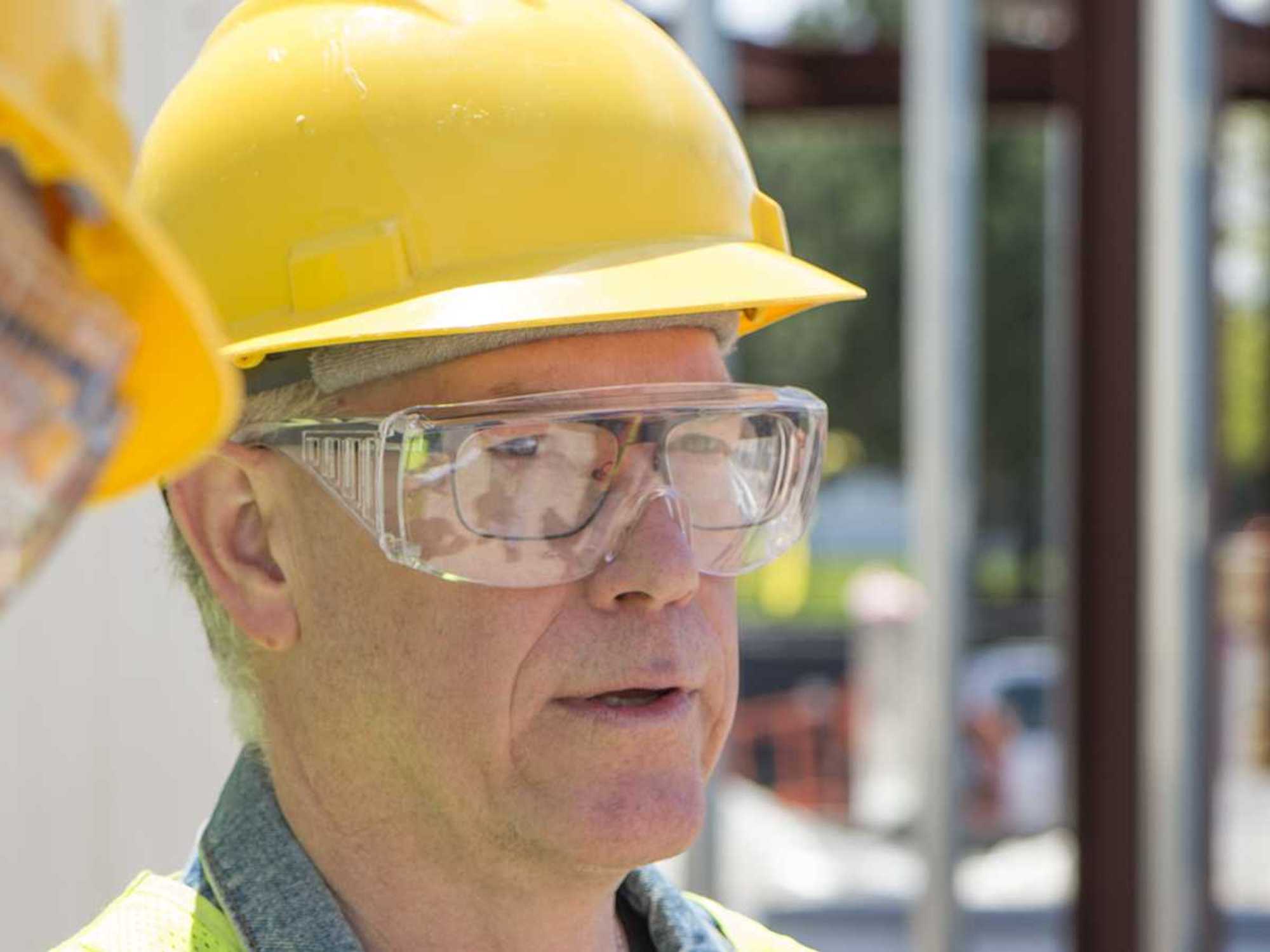
- Ensure employees use eye protection that provides side protection when there is a hazard from flying objects. Detachable side protectors (e.g., clip-on or slide-on side shields) are acceptable.
- Provide eye and face protection at no cost to the employee, except for non-specialty prescription safety eyewear — provided it is allowed to be worn off the job.
- Ensure employees who require corrective lenses either use goggles/spectacles over their regular glasses or use safety spectacles/goggles that incorporate the employee’s prescription.
- Train employees on how to use, care for, and inspect their eye and face protection.
Who must comply?
The OSHA standard for eye and face protection applies to all Construction employers with workers exposed to eye or face hazards from flying particles, molten metal, liquid chemicals, acids or caustic liquids, chemical gases or vapors, potentially infected material, or potentially harmful light radiation.
:
personal-protective-equipment
FOUNDATIONAL LEARNING
PPE for eye and face protection
InstituteEye and Face ProtectionPersonal Protective EquipmentSafety & HealthGeneral Industry SafetyUSAEnglishAnalysisFocus AreaIn Depth (Level 3)
['Personal Protective Equipment']
- The OSHA standard for eye and face protection applies to Construction employers whose employees are exposed to certain hazards in the workplace.
- Employers must provide eye and face protection at no cost to employees whenever certain hazards are present.
- Eye and face protection must meet one of three editions of ANSI Z87.1 (2010, 2003, or 1989-Rev1998)
Employees can be exposed to many hazards that pose danger to their eyes and face. The Occupational Health and Safety Administration (OSHA) requires employers to ensure that employees have appropriate eye or face protection if they are exposed to eye or face hazards from flying particles, molten metal, liquid chemicals, acids or caustic liquids, chemical gases or vapors, potentially infected material, or potentially harmful light radiation.
The OSHA standard for eye and face protection is detailed in 1926.102.
What are the PPE requirements for eye and face protection?
OSHA requires employers covered by the standard to:
- Select eye and face protection suitable to the hazard (e.g., impact, heat, chemicals, dust, radiation) that meets one of three editions of American National Standards Institute (ANSI) Z87.1 (2010, 2003, and 1989-Rev1998).
- Ensure employees use eye protection that provides side protection when there is a hazard from flying objects. Detachable side protectors (e.g., clip-on or slide-on side shields) are acceptable.
- Provide eye and face protection at no cost to the employee, except for non-specialty prescription safety eyewear — provided it is allowed to be worn off the job.
- Ensure employees who require corrective lenses either use goggles/spectacles over their regular glasses or use safety spectacles/goggles that incorporate the employee’s prescription.
- Train employees on how to use, care for, and inspect their eye and face protection.
Who must comply?
The OSHA standard for eye and face protection applies to all Construction employers with workers exposed to eye or face hazards from flying particles, molten metal, liquid chemicals, acids or caustic liquids, chemical gases or vapors, potentially infected material, or potentially harmful light radiation.
2656867263
2656872685
UPGRADE TO CONTINUE READING
RELATED TOPICS
J. J. Keller is the trusted source for DOT / Transportation, OSHA / Workplace Safety, Human Resources, Construction Safety and Hazmat / Hazardous Materials regulation compliance products and services. J. J. Keller helps you increase safety awareness, reduce risk, follow best practices, improve safety training, and stay current with changing regulations.
Copyright 2026 J. J. Keller & Associate, Inc. For re-use options please contact copyright@jjkeller.com or call 800-558-5011.