Compliance Just Got Easier: Stay ahead of regulatory changes with instant notifications on updates that matter.
['Industrial Hygiene']
['Industrial Hygiene', 'Hearing Conservation and Noise']
04/22/2026

Copyright 2026 J. J. Keller & Associate, Inc. For re-use options please contact copyright@jjkeller.com or call 800-558-5011.
:
|
InstituteSafety & HealthIndustrial HygieneIn Depth Sub Topics (Level 4)Hearing Conservation and NoiseGeneral Industry SafetyIndustrial HygieneEnglishAnalysisFocus AreaUSA
Noise surveys
['Industrial Hygiene']
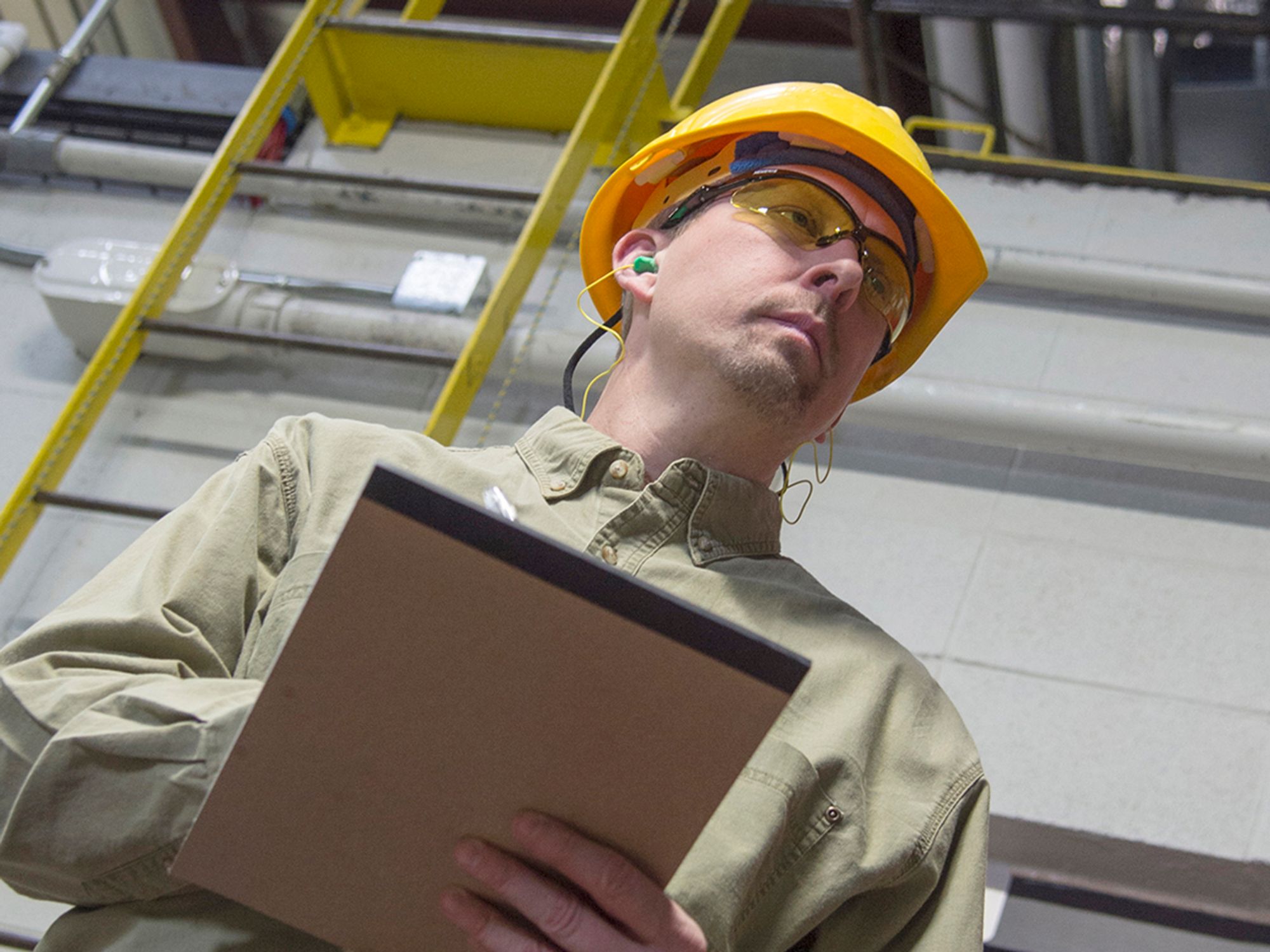
- Employers should engage a trained individual to conduct a walk-around sound survey of their workplaces.
There’s only one way to know if noise has reached a dangerous level — by having a trained person conduct a noise survey. Anyone trained to use a sound level meter and a dosimeter and evaluate the data should be able to perform the survey.
The walk-around survey will screen for noise exposures and determine if additional monitoring is necessary. When screening for noise exposures, sound-level meter measurements and estimates of the duration of exposure are sufficient. The resulting spot readings can be used to determine the need for a more complete evaluation. Survey steps to follow include:
- Touring the facility and developing a detailed understanding of facility operations and potential noise sources. Employers should take the tour with someone who is familiar with plant operations and maintenance requirements. Notes should be taken on a diagram of the floor plan if possible. The employer will need to look for indications that noise may be a problem.
- Using a sound level meter to take spot readings of operations that are questionable. It may be useful to mark the sound levels on a diagram of the floor plan. Notes should be taken regarding what equipment is on or off.
- Estimating exposures by identifying employees and their locations and estimating the length of time they spend in different areas or how long they operate particular equipment or tools.
If the results of the walk-around survey indicate time-weighted average (TWA) exposures of 80 decibels or more, additional noise monitoring should be performed. Employers should take into account the accuracy of the sound level meter when making this estimation. For example, a Type 2 sound level meter has an accuracy of plus or minus 2 decibels.
:
industrial-hygiene
industrial-hygiene
FOUNDATIONAL LEARNING
- Employers should engage a trained individual to conduct a walk-around sound survey of their workplaces.
There’s only one way to know if noise has reached a dangerous level — by having a trained person conduct a noise survey. Anyone trained to use a sound level meter and a dosimeter and evaluate the data should be able to perform the survey.
The walk-around survey will screen for noise exposures and determine if additional monitoring is necessary. When screening for noise exposures, sound-level meter measurements and estimates of the duration of exposure are sufficient. The resulting spot readings can be used to determine the need for a more complete evaluation. Survey steps to follow include:
- Touring the facility and developing a detailed understanding of facility operations and potential noise sources. Employers should take the tour with someone who is familiar with plant operations and maintenance requirements. Notes should be taken on a diagram of the floor plan if possible. The employer will need to look for indications that noise may be a problem.
- Using a sound level meter to take spot readings of operations that are questionable. It may be useful to mark the sound levels on a diagram of the floor plan. Notes should be taken regarding what equipment is on or off.
- Estimating exposures by identifying employees and their locations and estimating the length of time they spend in different areas or how long they operate particular equipment or tools.
If the results of the walk-around survey indicate time-weighted average (TWA) exposures of 80 decibels or more, additional noise monitoring should be performed. Employers should take into account the accuracy of the sound level meter when making this estimation. For example, a Type 2 sound level meter has an accuracy of plus or minus 2 decibels.
2657106394
2657106395
UPGRADE TO CONTINUE READING
RELATED TOPICS
J. J. Keller is the trusted source for DOT / Transportation, OSHA / Workplace Safety, Human Resources, Construction Safety and Hazmat / Hazardous Materials regulation compliance products and services. J. J. Keller helps you increase safety awareness, reduce risk, follow best practices, improve safety training, and stay current with changing regulations.
Copyright 2026 J. J. Keller & Associate, Inc. For re-use options please contact copyright@jjkeller.com or call 800-558-5011.