
Inerting and purging
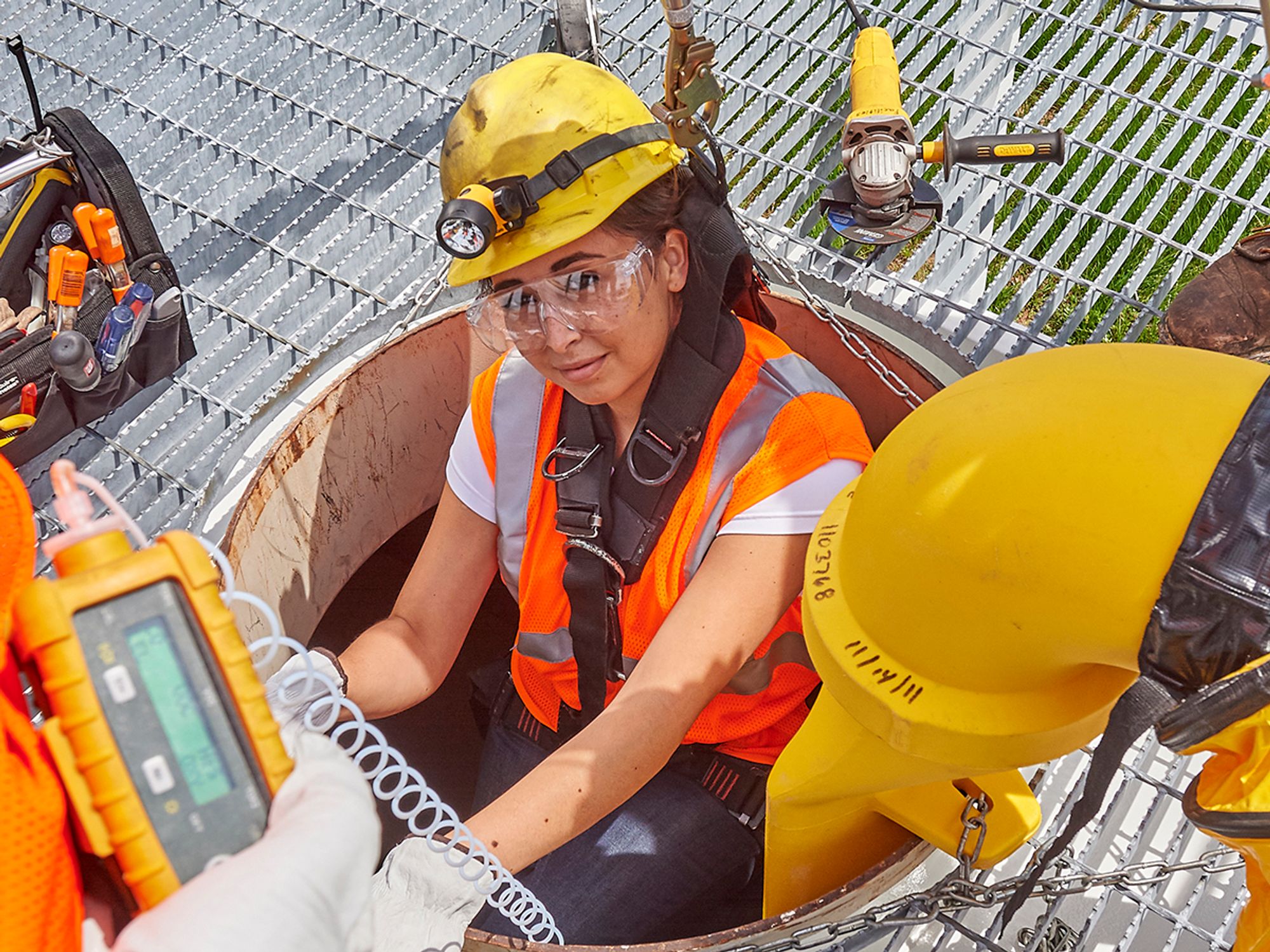
- There are two ways to displace existing old air from a space before beginning ventilation.
Introducing a non-reactive gas is called inerting. Displacing an existing atmosphere with a non-reactive gas, such as nitrogen, results in an atmosphere that is noncombustible. The hazards of fire, explosion, and chemical reaction are often best addressed by inerting. But while this procedure does remove an existing hazard, inerting introduces a new atmospheric hazard by creating a lack of oxygen in the space. Any personnel entering a space where inerting has just occurred must wear some form of air-supplied respiratory equipment.
Purging is the process of initially clearing a confined space of atmospheric contaminants before beginning ventilation. The purpose of purging is to exchange the air in a confined space completely prior to entry. Normally a purge is considered complete when atmospheric tests indicate the air is of suitable quality to sustain the life of entrants.