
Hazard communication
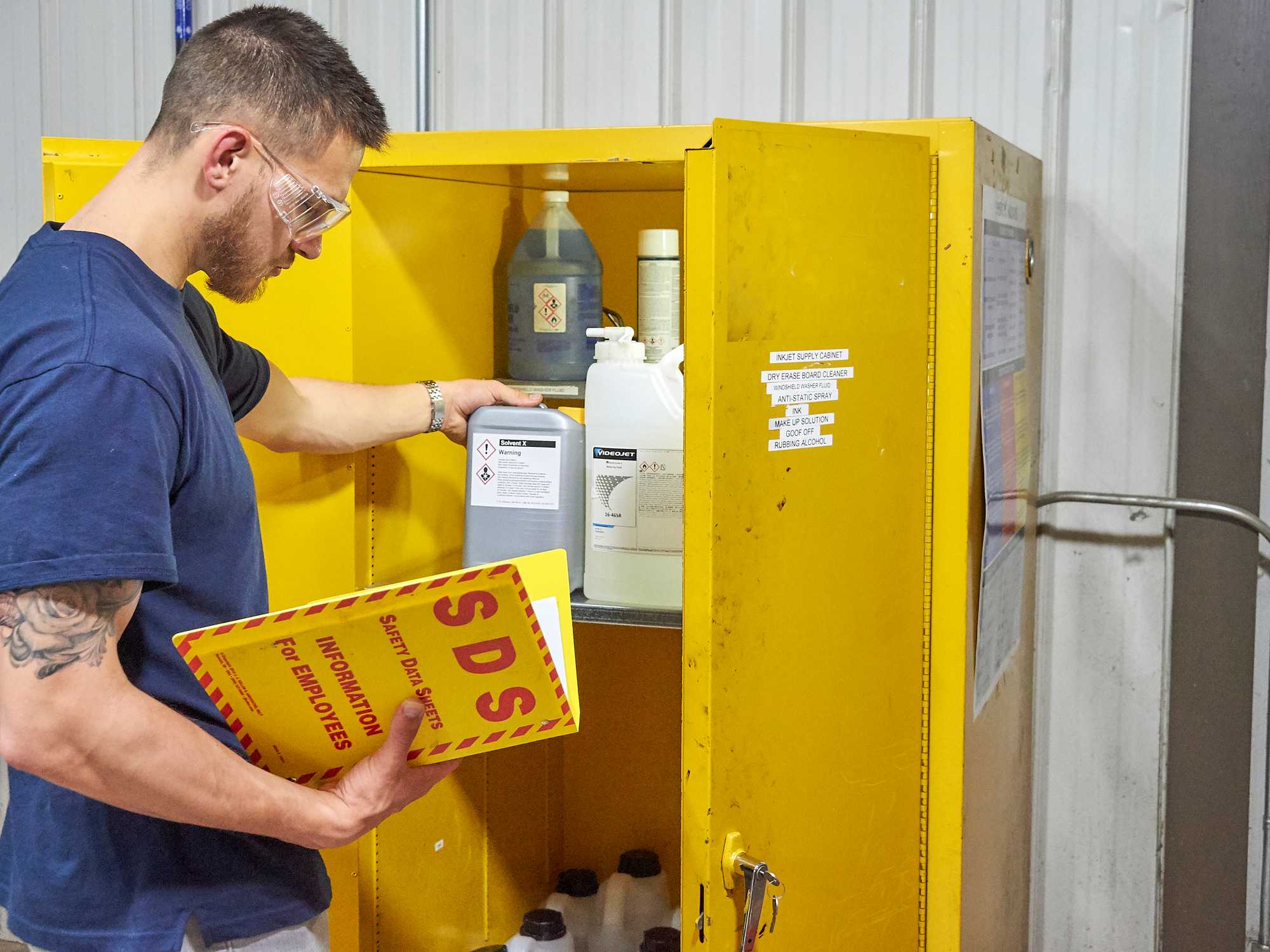
About one in every four workers routinely comes in contact with hazardous chemicals while performing his or her job. In many cases, the chemicals may be no more dangerous than those used at home. But in the workplace, exposure is likely to be greater, concentrations higher, and exposure time longer. Reactions to chemical exposures range from slight skin, eye, or respiratory irritation to life-threatening cancers, blood diseases, and debilitating lung damage.
OSHA developed the Hazard Communication Standard (HCS) to protect workers from these dangerous exposures. The standard was originally based on a simple concept—that employees have both a need and a right to know about the hazards and identities of the chemicals they are exposed to when working. In 2012, OSHA changed the HCS drastically, using the concept that the employees have a “right to understand” about the hazards of chemicals they are exposed to. They also need to know what they can do to protect themselves. Additionally, when employers have information about the chemicals being used, they can take steps to reduce exposures, substitute less hazardous materials, and establish safe work practices to prevent illnesses and injuries caused by these substances.
The HCS establishes uniform requirements to make sure that the hazards of all chemicals imported into, produced, or used in U.S. workplaces are evaluated and classified and that this hazard information is communicated to employers and exposed employees. Basically, the rule incorporates a downstream flow of information. This means that chemical manufacturers have the primary responsibility for generating and disseminating information and chemical users must obtain the information and transmit it to their exposed employees.
Evaluating and classifying chemical hazards involves technical concepts and is a process that requires the professional judgment of experienced experts. That’s why the HCS is designed so that employers who simply use chemicals, rather than produce or import them, are not required to evaluate the hazards of those substances.
Hazard classification is the responsibility of the producers and importers of the materials, who must then pass that information to the purchasers and end-users of the products. Employers that don’t produce or import chemicals need only focus on those parts of the rule that deal with establishing a workplace program and communicating information to their workers. (Note: If employers create mixtures in the workplace, there will be more responsibility and requirements than for employers who simply use chemicals that have already been evaluated and classified.)
Action steps
- Develop, implement, and maintain a written hazard communication program.
- Provide employees with effective information and training on hazardous chemicals in their work area.
- Comply with all hazard communication actions for any chemical which is known to be present in the workplace in such a manner that employees may be exposed under normal conditions of use or in a foreseeable emergency.
- Evaluate chemicals produced in or imported into the workplace to determine if they are hazardous.
- Obtain or develop a Safety Data Sheet or SDS for each hazardous chemical produced or imported.
- Maintain an SDS in the workplace for each hazardous chemical used.
- Make sure all containers of chemicals are labeled as required.
Training action plan
Under the provisions of this standard each employee exposed to hazardous chemicals must receive information about those chemicals through a comprehensive hazard communication program which includes identification of chemical hazards, chemical labeling, and safety data sheets in the training program.
You must provide hazcom training at the time your employees are initially assigned to their jobs, when a new chemical hazard is introduced into the work area or when the employee’s job duties change such that he or she is now exposed to a hazardous chemical.
The training must be comprehensible. If the employees must receive job instructions in a language other than English, then training and information will probably also need to be conducted in a foreign language.
Generally, training content should cover:
- Hazcom and chemical terminology,
- Physical and health hazards of chemicals,
- Written hazard communication program,
- Location of relevant hazcom documents and materials,
- Chemical protective measures,
- Safety data sheets (SDSs), and
- Labeling requirementsHazards of nonroutine tasks and unlabeled pipes related to hazardous chemicals.
Documentation
OSHA does not require training documentation for individual employees regarding hazard communication, but it is a good idea to keep it anyway. Training records can tell you who was trained on what, when, and who conducted the training.
Tips
- The employer does not have to retrain each new hire if that employee has already received training from a former employer, a union, or other entity. However, the employer would have to supply such information as location of SDSs, workplace hazards, labeling systems, and so on.
- An employer can claim trade secret status when it can support such a claim. However, chemical ingredients of public knowledge or of general knowledge in an industry that are disclosed by the goods one markets cannot be claimed as a trade secret.
- Chemicals generated in the work operations, such as welding fumes, dusts, and exhaust fumes, are sources of chemical exposure and must be listed on the chemical inventory.
- The chemical “identity” is any name or term that appears on the label, the SDSs, and the chemical inventory, and thus links these three sources of information.
- SDSs must be readily accessible to employees when they are in their work areas during their workshifts.
- Under the rule, “exposure” or “exposed” means that an employee is subjected to a hazardous chemical in the course of employment through any route of entry and includes potential exposure.
Checklist
Review these hazard communication checklists.
Labeling
- Do you ensure that each container of hazardous chemicals in the workplace is labeled, tagged or marked identifying the chemical it contains?
- Do you ensure that each container of hazardous chemicals is labeled, tagged or marked with the appropriate hazard warnings?
- If you remove or deface labels on incoming containers of hazardous chemicals, do you immediately mark the containers with the required information?
- Do you ensure that labels or other forms of warning are legible, in English, and prominently displayed on the container, or readily available in the work area throughout each work shift?
Safety data sheets
- Do you have a safety data sheet for each hazardous chemical you use?
- Are the sheets written in English?
- Does each sheet include everything that is required in 1910.1200?
- Do you ensure that sheets are readily accessible to employees in the work area during each work shift?
- If employees must travel between workplaces during a work shift, do you sheets in each workplace or at a central location at the primary workplace facility in case of an emergency?
Training
- Are employees provided required hazard communication training?
- Do you provide information to employees as to the location and availability of the written hazard communication program and safety data sheets?
Recordkeeping
- Have you compiled a hazardous chemical inventory?
- Have you documented the employee training that you have done under the Hazcom standard?
Written program
- Have you developed, implemented, and do you maintain a written hazard communication program?
- Does your hazard communication program include a list of the hazardous chemicals known to be present using an identity that is referenced on the appropriate safety data sheet?
- Do you make the written hazard communication program available upon request to the employees or designated representatives in accordance with 1910.20(e)?