Compliance Just Got Easier: Stay ahead of regulatory changes with instant notifications on updates that matter.
['Electrical Safety']
['Electrical Safety Construction Standards', 'Electrical Safety']
05/06/2025

Copyright 2026 J. J. Keller & Associate, Inc. For re-use options please contact copyright@jjkeller.com or call 800-558-5011.
:
|
InstituteSafety & HealthElectrical SafetyElectrical Safety Construction StandardsGeneral Industry SafetyElectrical SafetyFocus AreaEnglishAnalysisIn Depth Sub Topics (Level 4)USA
Grounding
['Electrical Safety']
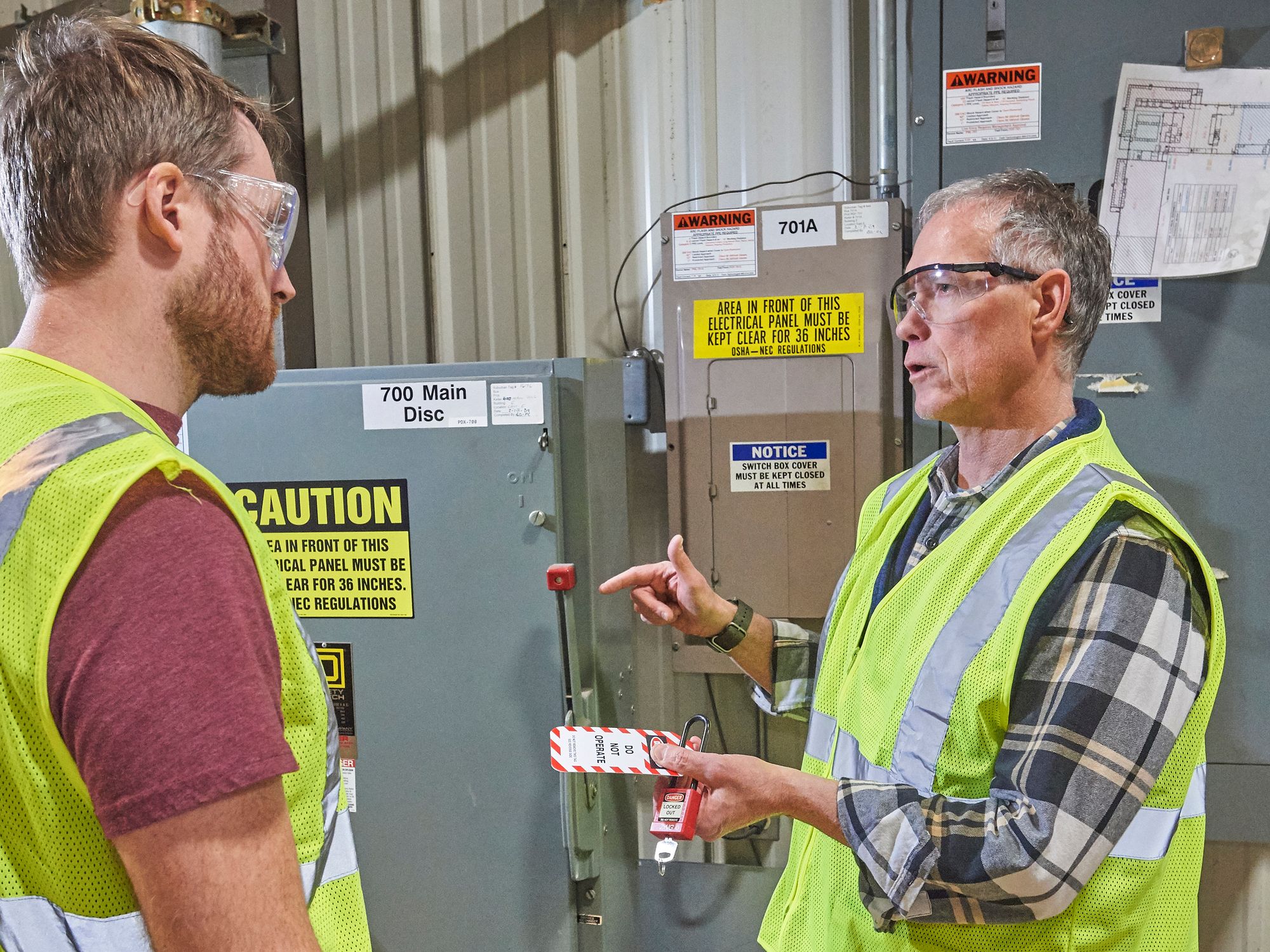
- Grounding provides a low-resistance path for electricity to reach the earth without causing a hazard to workers; it cannot, however, prevent all risk of shock.
Grounding is another method of protecting employees from electric shock; however, it is normally a secondary protective measure. The term “ground” refers to a conductive body, usually the earth, and means a conductive connection, whether intentional or accidental, by which an electric circuit or equipment is connected to earth or the ground plane.
By grounding a tool or electrical system, a low-resistance path to the earth is intentionally created. When properly done, this path offers sufficiently low resistance and has sufficient current carrying capacity to prevent the buildup of voltages that may result in a personnel hazard. This does not guarantee that no one will receive a shock, be injured, or be killed. It will, however, substantially reduce the possibility of such accidents, especially when used in combination with other safety measures discussed in this section.
There are two kinds of grounds required by Design Safety Standards for Electrical Systems (Subpart S). One of these is called the “service or system ground.” In this instance, one wire — called “the neutral conductor” or “grounded conductor” — is grounded. In an ordinary low-voltage circuit, the white (or gray) wire is grounded at the generator or transformer and again at the service entrance of the building. This type of ground is primarily designed to protect machines, tools, and insulation against damage.
To offer enhanced protection to the workers themselves, an additional ground, called the “equipment ground,” must be furnished by providing another path from the tool or machine through which the current can flow to the ground. This additional ground safeguards the electric equipment operator if a malfunction causes the metal frame of the tool to become accidentally energized. The resulting heavy surge of current will then activate the circuit protection devices and open the circuit.
:
electrical-safety
electrical-safety
FOUNDATIONAL LEARNING
- Grounding provides a low-resistance path for electricity to reach the earth without causing a hazard to workers; it cannot, however, prevent all risk of shock.
Grounding is another method of protecting employees from electric shock; however, it is normally a secondary protective measure. The term “ground” refers to a conductive body, usually the earth, and means a conductive connection, whether intentional or accidental, by which an electric circuit or equipment is connected to earth or the ground plane.
By grounding a tool or electrical system, a low-resistance path to the earth is intentionally created. When properly done, this path offers sufficiently low resistance and has sufficient current carrying capacity to prevent the buildup of voltages that may result in a personnel hazard. This does not guarantee that no one will receive a shock, be injured, or be killed. It will, however, substantially reduce the possibility of such accidents, especially when used in combination with other safety measures discussed in this section.
There are two kinds of grounds required by Design Safety Standards for Electrical Systems (Subpart S). One of these is called the “service or system ground.” In this instance, one wire — called “the neutral conductor” or “grounded conductor” — is grounded. In an ordinary low-voltage circuit, the white (or gray) wire is grounded at the generator or transformer and again at the service entrance of the building. This type of ground is primarily designed to protect machines, tools, and insulation against damage.
To offer enhanced protection to the workers themselves, an additional ground, called the “equipment ground,” must be furnished by providing another path from the tool or machine through which the current can flow to the ground. This additional ground safeguards the electric equipment operator if a malfunction causes the metal frame of the tool to become accidentally energized. The resulting heavy surge of current will then activate the circuit protection devices and open the circuit.
2656869234
2656867513
UPGRADE TO CONTINUE READING
RELATED TOPICS
J. J. Keller is the trusted source for DOT / Transportation, OSHA / Workplace Safety, Human Resources, Construction Safety and Hazmat / Hazardous Materials regulation compliance products and services. J. J. Keller helps you increase safety awareness, reduce risk, follow best practices, improve safety training, and stay current with changing regulations.
Copyright 2026 J. J. Keller & Associate, Inc. For re-use options please contact copyright@jjkeller.com or call 800-558-5011.