
- The three stages of EPA’s process for ensuring the safety of existing chemicals are prioritization, risk evaluation, and risk management.
The Environmental Protection Agency (EPA) evaluates chemicals under the Toxic Substances Control Act (TSCA) to determine whether they meet the unreasonable risk threshold for regulation, and to determine how to regulate chemicals that meet that threshold. Section 6 of TSCA establishes a framework and a timetable for EPA to prioritize which existing chemicals to evaluate for risks.
Overview
TSCA, as amended, requires EPA to evaluate the safety of existing chemicals via a three-stage process. The three stages of EPA’s process for ensuring the safety of existing chemicals are prioritization, risk evaluation, and risk management. The Act also includes a variety of new EPA authorities to drive forward progress on evaluating and ensuring the safety of existing chemicals.
The following flowchart provides an overview of the process for prioritization, risk evaluation, and risk management of existing chemicals, including the key decisions to be made or actions taken at each step:
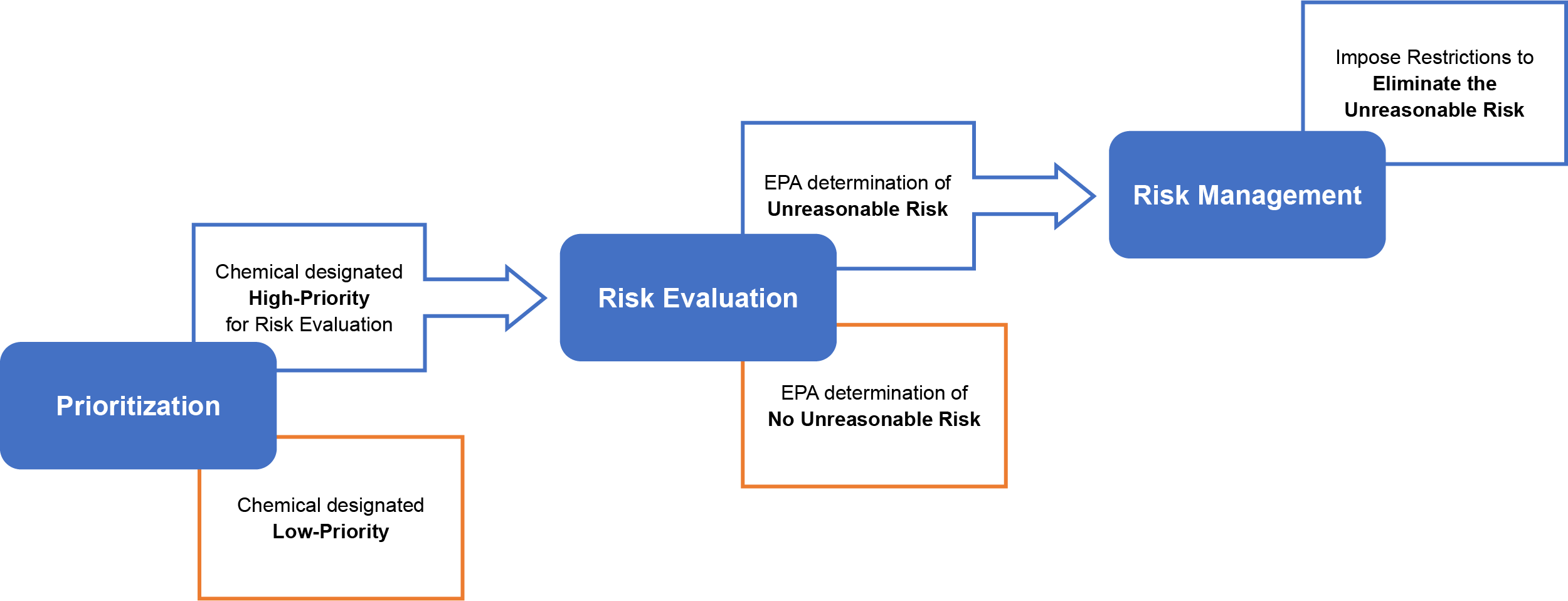
Once a chemical is in the process, which starts with proposed prioritization of a chemical, statutory deadlines are triggered for EPA to complete each stage (prioritization, risk evaluation, and risk management) of the process.