Compliance Just Got Easier: Stay ahead of regulatory changes with instant notifications on updates that matter.
['Vehicle Technology']
['Vehicle Technology']
02/10/2026

Copyright 2026 J. J. Keller & Associate, Inc. For re-use options please contact copyright@jjkeller.com or call 800-558-5011.
:
|
InstituteIn Depth Sub Topics (Level 4)TransportationVehicle TechnologyVehicle TechnologyFleet OperationsEnglishAnalysisFocus AreaUSA
Do carriers need a driver’s permission to use a dashcam?
['Vehicle Technology']
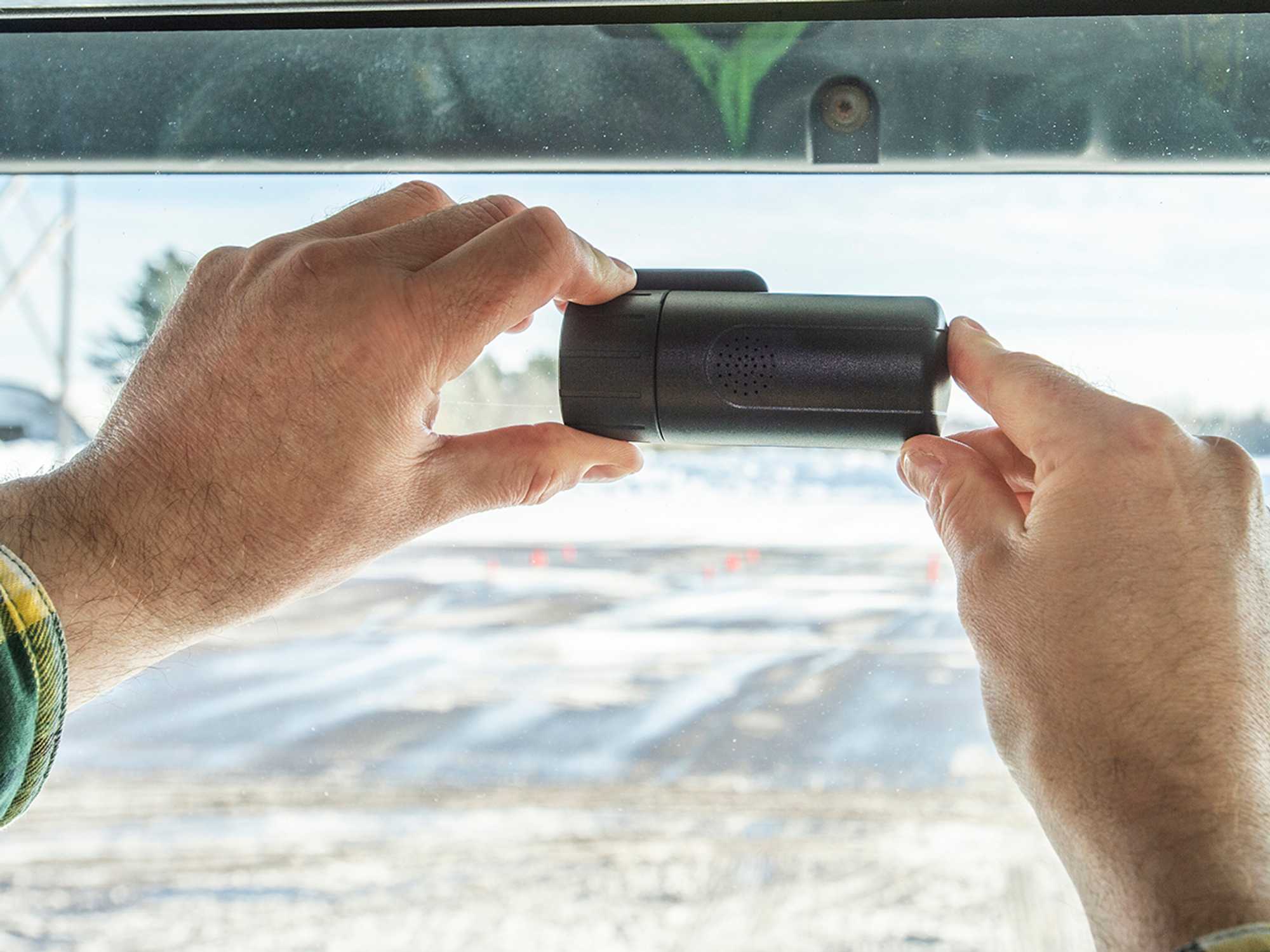
- Dashcams are like workplace surveillance cameras, they can record what is occurring in front of the truck and in the cab but, like restrictions on cameras in restrooms, are not permitted in the sleeper berth.
- In some labor union environments, there may be a need to negotiate the use of the dashcam before proceeding with installation.
- For the owner-operator whose truck and services are leased to a motor carrier, the use of a dashcam is a term of the contract to be negotiated.
Dashcams are becoming a popular risk management tool with motor carriers. The devices can record not only what is happening in front of the truck, but also what is occurring in the cab. Some drivers resist the use of dashcams, and the driver-facing units often result in claims of invasion of privacy.
Carriers need to know if a release is needed from the driver to install a dashcam in the vehicle.
Does a right to privacy exist?
Since the Federal Motor Carrier Safety Administration (FMCSA) does not mandate dashcams, the answer lies in employment and privacy laws. No current state or federal law or regulation prohibits a carrier from installing cameras in its trucks.
The devices are equivalent to surveillance cameras in the workplace. Of course, cameras are not permitted in the sleeper berth. This is similar to the restrictions placed on surveillance cameras in restrooms, locker rooms, and other compromising locations at an employer’s facility.
Does a right to refuse exist?
Of course, a driver always has the right to refuse the installation of a dashcam. By refusing installation, a driver is not in violation of any FMCSA regulations. However, company policy will dictate how the carrier proceeds with a reluctant driver.
The refusal is no different than failing to follow any other corporate policy that is not required by regulation. However, in some labor union environments, there may be a need to negotiate the use of the equipment before proceeding with installation. For the owner-operator whose truck and services are leased to a motor carrier, the installation of a dashcam is a term of the contract to be negotiated. The decision to use (or not use) a contractor who fails to agree to a carrier’s terms is a matter of personal preference.
What does the carrier’s policy state?
If a carrier plans on using dashcams, it will need a dashcam policy. The policy should include discipline and corrective actions for those drivers who refuse installation or try to disable or tamper with the equipment.
What about the use of biometric information?
If the method of unsafe driving behavior detection or even the sign-on to a device, time clocks, or access to a truck yard or terminal building requires the use and/or storage of biometric data, a driver may have to provide prior written consent, depending on the state. If approval is not received, the carrier may be the target of litigation that has nothing to do with a crash.
Several states have enacted biometric-specific laws or have privacy laws that include biometric information privacy. Illinois took the lead in biometric privacy laws when it enacted the Biometric Information Privacy Act (BIPA) in 2008. This law remains the toughest of its kind in the U.S. BIPA allows the collection of biometric data, but written consent is required to do so.
If drivers sign on to devices (ELDs, dashcams, company tablets) or enter carrier truck yards with biometric data used to enter, consent should be received ahead of using biometrics. Penalties could add up quickly.
:
vehicle-technology
vehicle-technology
FOUNDATIONAL LEARNING
Do carriers need a driver’s permission to use a dashcam?
InstituteIn Depth Sub Topics (Level 4)TransportationVehicle TechnologyVehicle TechnologyFleet OperationsEnglishAnalysisFocus AreaUSA
['Vehicle Technology']
- Dashcams are like workplace surveillance cameras, they can record what is occurring in front of the truck and in the cab but, like restrictions on cameras in restrooms, are not permitted in the sleeper berth.
- In some labor union environments, there may be a need to negotiate the use of the dashcam before proceeding with installation.
- For the owner-operator whose truck and services are leased to a motor carrier, the use of a dashcam is a term of the contract to be negotiated.
Dashcams are becoming a popular risk management tool with motor carriers. The devices can record not only what is happening in front of the truck, but also what is occurring in the cab. Some drivers resist the use of dashcams, and the driver-facing units often result in claims of invasion of privacy.
Carriers need to know if a release is needed from the driver to install a dashcam in the vehicle.
Does a right to privacy exist?
Since the Federal Motor Carrier Safety Administration (FMCSA) does not mandate dashcams, the answer lies in employment and privacy laws. No current state or federal law or regulation prohibits a carrier from installing cameras in its trucks.
The devices are equivalent to surveillance cameras in the workplace. Of course, cameras are not permitted in the sleeper berth. This is similar to the restrictions placed on surveillance cameras in restrooms, locker rooms, and other compromising locations at an employer’s facility.
Does a right to refuse exist?
Of course, a driver always has the right to refuse the installation of a dashcam. By refusing installation, a driver is not in violation of any FMCSA regulations. However, company policy will dictate how the carrier proceeds with a reluctant driver.
The refusal is no different than failing to follow any other corporate policy that is not required by regulation. However, in some labor union environments, there may be a need to negotiate the use of the equipment before proceeding with installation. For the owner-operator whose truck and services are leased to a motor carrier, the installation of a dashcam is a term of the contract to be negotiated. The decision to use (or not use) a contractor who fails to agree to a carrier’s terms is a matter of personal preference.
What does the carrier’s policy state?
If a carrier plans on using dashcams, it will need a dashcam policy. The policy should include discipline and corrective actions for those drivers who refuse installation or try to disable or tamper with the equipment.
What about the use of biometric information?
If the method of unsafe driving behavior detection or even the sign-on to a device, time clocks, or access to a truck yard or terminal building requires the use and/or storage of biometric data, a driver may have to provide prior written consent, depending on the state. If approval is not received, the carrier may be the target of litigation that has nothing to do with a crash.
Several states have enacted biometric-specific laws or have privacy laws that include biometric information privacy. Illinois took the lead in biometric privacy laws when it enacted the Biometric Information Privacy Act (BIPA) in 2008. This law remains the toughest of its kind in the U.S. BIPA allows the collection of biometric data, but written consent is required to do so.
If drivers sign on to devices (ELDs, dashcams, company tablets) or enter carrier truck yards with biometric data used to enter, consent should be received ahead of using biometrics. Penalties could add up quickly.
2656867975
2656867971
UPGRADE TO CONTINUE READING
RELATED TOPICS
J. J. Keller is the trusted source for DOT / Transportation, OSHA / Workplace Safety, Human Resources, Construction Safety and Hazmat / Hazardous Materials regulation compliance products and services. J. J. Keller helps you increase safety awareness, reduce risk, follow best practices, improve safety training, and stay current with changing regulations.
Copyright 2026 J. J. Keller & Associate, Inc. For re-use options please contact copyright@jjkeller.com or call 800-558-5011.