
Asbestos
- TSCA Title II AHERA program governs the management of asbestos in K-12 schools.
- TSCA section 6 WPR protects state and local government employees who are not protected by the federal OSHA asbestos standards.
- EPA has issued a risk evaluation of asbestos and is working toward a supplemental risk evaluation. The risk management step comes after risk evaluation.
Asbestos is a mineral fiber that occurs in rock and soil. Exposure to asbestos increases risk of developing lung disease. That risk is made worse by smoking. In general, the greater the exposure to asbestos, the greater the chance of developing harmful health effects.
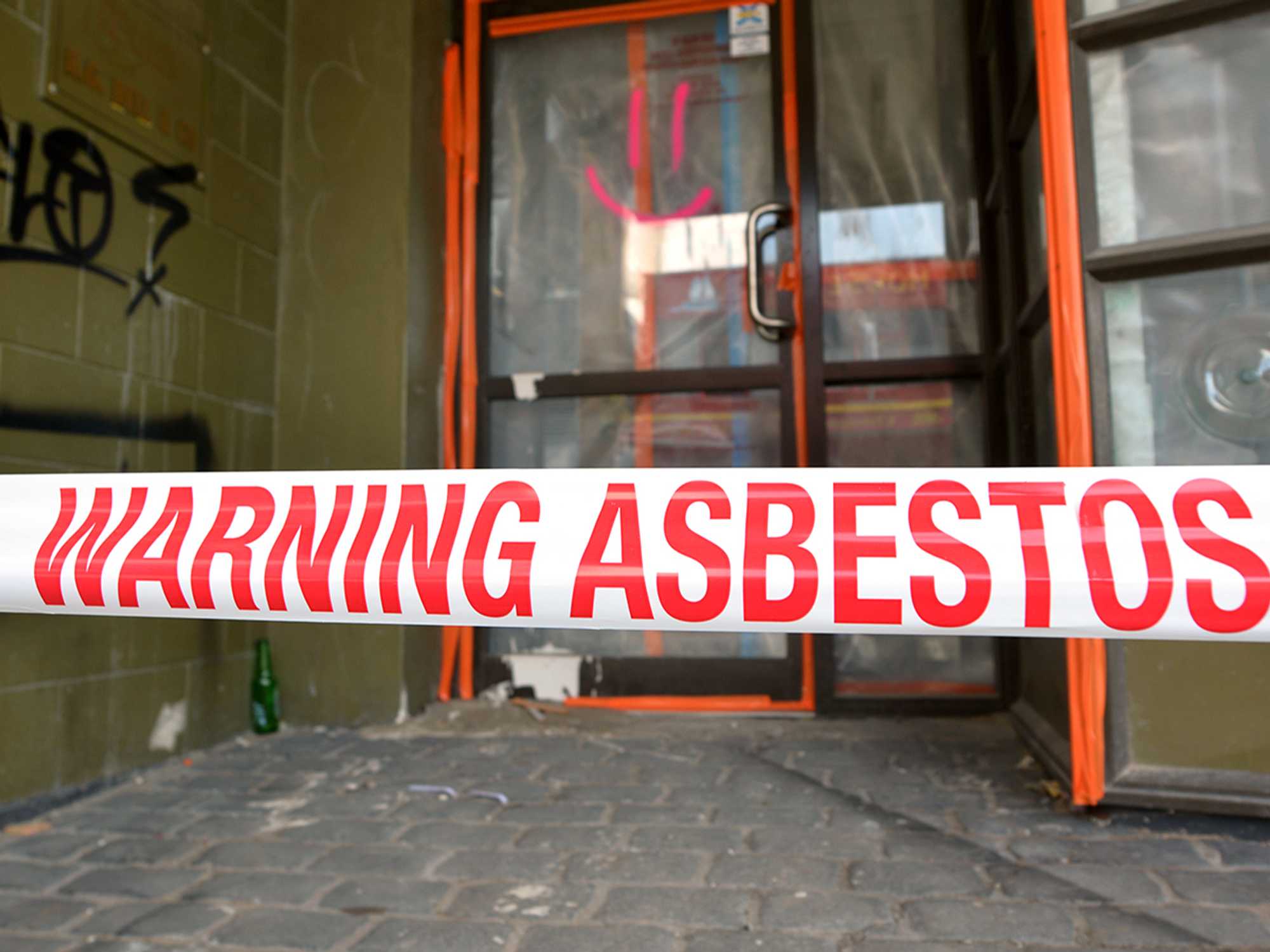
Asbestos fibers may be released into the air by the disturbance of asbestos-containing material during product use, demolition work, building or home maintenance, repair, and remodeling. In general, exposure may occur only when the asbestos-containing material is disturbed or damaged in some way to release particles and fibers into the air. Where asbestos may be found, includes the following:
- Attic and wall insulation containing vermiculite,
- Vinyl floor tiles and the backing on vinyl sheet flooring and adhesives,
- Roofing and siding shingles,
- Textured paint and patching compounds used on walls and ceilings,
- Walls and floors around wood-burning stoves protected with asbestos paper, millboard, or cement sheets,
- Hot water and steam pipes coated with asbestos material or covered with an asbestos blanket or tape,
- Oil and coal furnaces and door gaskets with asbestos insulation,
- Heat-resistant fabrics, and
- Automobile clutches and brakes.
Asbestos in schools
The Toxic Substances Control Act (TSCA) Title II Asbestos Hazard Emergency Response Act (AHERA) program (also called the Asbestos in Schools Program) governs the management of asbestos in Kindergarten through Grade 12 schools. The objective of AHERA compliance monitoring is to ensure regulatory compliance and, thereby, minimize the risk of exposure to asbestos in schools. Implementing regulations are found at 40 CFR 763 and require public school districts and non-profit schools to:
- Perform an original inspection to determine whether asbestos-containing materials are present and then re-inspect asbestos-containing material in each school every three years;
- Develop, maintain, and update an asbestos management plan and keep a copy at the school;
- Provide yearly notification to parent, teacher, and employee organizations on the availability of the school’s asbestos management plan and any asbestos-related actions taken or planned in the school;
- Designate a contact person to ensure the responsibilities of the public school district or the non-profit school are properly implemented;
- Perform periodic surveillance of known or suspected asbestos-containing building material;
- Ensure that trained and licensed professionals perform inspections and take response actions; and Provide custodial staff with asbestos-awareness training.
These legal requirements are founded on the principle of “in-place” management of asbestos-containing material. Removal of these materials is not usually necessary unless the material is severely damaged or will be disturbed by a building demolition or renovation project.
Other TSCA actions related to asbestos
The TSCA section 6 Worker Protection Rule (WPR) protects state and local government employees who are not protected by the federal Occupational Safety and Health Administration (OSHA) asbestos standards.
Other actions to protect the public from exposure to asbestos under the TSCA include the following:
- July 1989 partial ban — In 1989, the Environmental Protection Agency (EPA) attempted to ban most asbestos-containing products by issuing a final rule under section 6 of TSCA. However, most of the original ban on the manufacture, importation, processing, or distribution in commerce for the majority of the asbestos-containing products originally covered in the 1989 final rule was overturned in 1991 by the Fifth Circuit Court of Appeals. As a result, the 1989 asbestos regulation only bans new uses of asbestos in products that would be initiated for the first time after August 25, 1989, and bans five other specific product types.
- April 2019 restrictions on discontinued uses of asbestos rule — This rule aims to ensure that asbestos products that are no longer on the market cannot return to commerce without EPA evaluating them and putting in place any necessary restrictions or prohibiting use. The uses covered under this rule were not already prohibited under TSCA and could have returned to the market at any time. The rule closed that loophole.
- December 2020 final risk evaluation for asbestos, part 1: chrysotile asbestos — This risk evaluation found unreasonable risks to human health for ongoing uses of chrysotile asbestos and no unreasonable risk to the environment from any condition of use. EPA is moving immediately to risk management for the ongoing chrysotile asbestos use where unreasonable risk was found and will work as quickly as possible to propose and finalize actions to protect against the unreasonable risks.
- December 2021 draft scope for risk evaluation for asbestos, part 2: supplemental evaluation including legacy uses and associated disposals of asbestos — The draft scope includes the conditions of use, hazards, exposures, and the potentially exposed or susceptible subpopulations that EPA plans to consider in conducting the risk evaluation for this chemical substance. For part 2 of the risk evaluation for asbestos, EPA:
- Has adopted the definition of asbestos as defined by TSCA Title II Section 202 as the “asbestiform varieties of six fiber types – chrysotile (serpentine), crocidolite (riebeckite), amosite (cummingtonite-grunerite), anthophyllite, tremolite or actinolite.”
- Will consider Libby Amphibole Asbestos (and its tremolite, winchite, and richterite constituents).
- Will assess the relevant conditions of use of asbestos in talc or talc-containing products, because talc has been implicated as a potential source of asbestos exposure.
- July 25, 2023, final rule (with 12/5/2023 final rule correction) to require asbestos reporting and recordkeeping — This rule adds 40 CFR 704.180, as authorized under TSCA section 8(a)(1). Certain persons that manufactured (including imported) or processed asbestos (including as an impurity) in the four years previous to the rulemaking must report certain exposure-related information, including quantities of asbestos manufactured or processed, types of use, and employee data. The rule also covers asbestos-containing articles and where asbestos is a component of a mixture. Information must be reported during the three-month data submission period beginning February 24, 2024, and ending May 24, 2024. This is a one-time reporting requirement, and reported information will be used by EPA and other federal agencies in considering potential actions involving asbestos, including EPA’s TSCA risk evaluation and risk management activities. The final rule also requires a five-year recordkeeping period, beginning on the last date of the submission period. See 704.180 for details. Instructions for how to report using EPA’s CDX-based tool are available on EPA’s “TSCA Section 8(a)(1) Reporting and Recordkeeping Requirements for Asbestos” webpage.
It should be noted that asbestos is also regulated by other EPA, OSHA, Mine Safety and Health Administration (MSHA), and Department of Transportation (DOT) regulations, and these regulations are beyond the scope of TSCA. EPA regulation 40 CFR 61 Subpart M offers a list of these other regulations.