Compliance Just Got Easier: Stay ahead of regulatory changes with instant notifications on updates that matter.
['Hours of Service']
['Sleeper berth', '14-hour rule', 'Hours of Service']
12/07/2023

Copyright 2026 J. J. Keller & Associate, Inc. For re-use options please contact copyright@jjkeller.com or call 800-558-5011.
:
|
InstituteFleet SafetySleeper berthHours of ServiceHours of Service14-hour ruleTransportationUSAEnglishAnalysisFocus AreaIn Depth (Level 3)
10-hour break requirement
['Hours of Service']
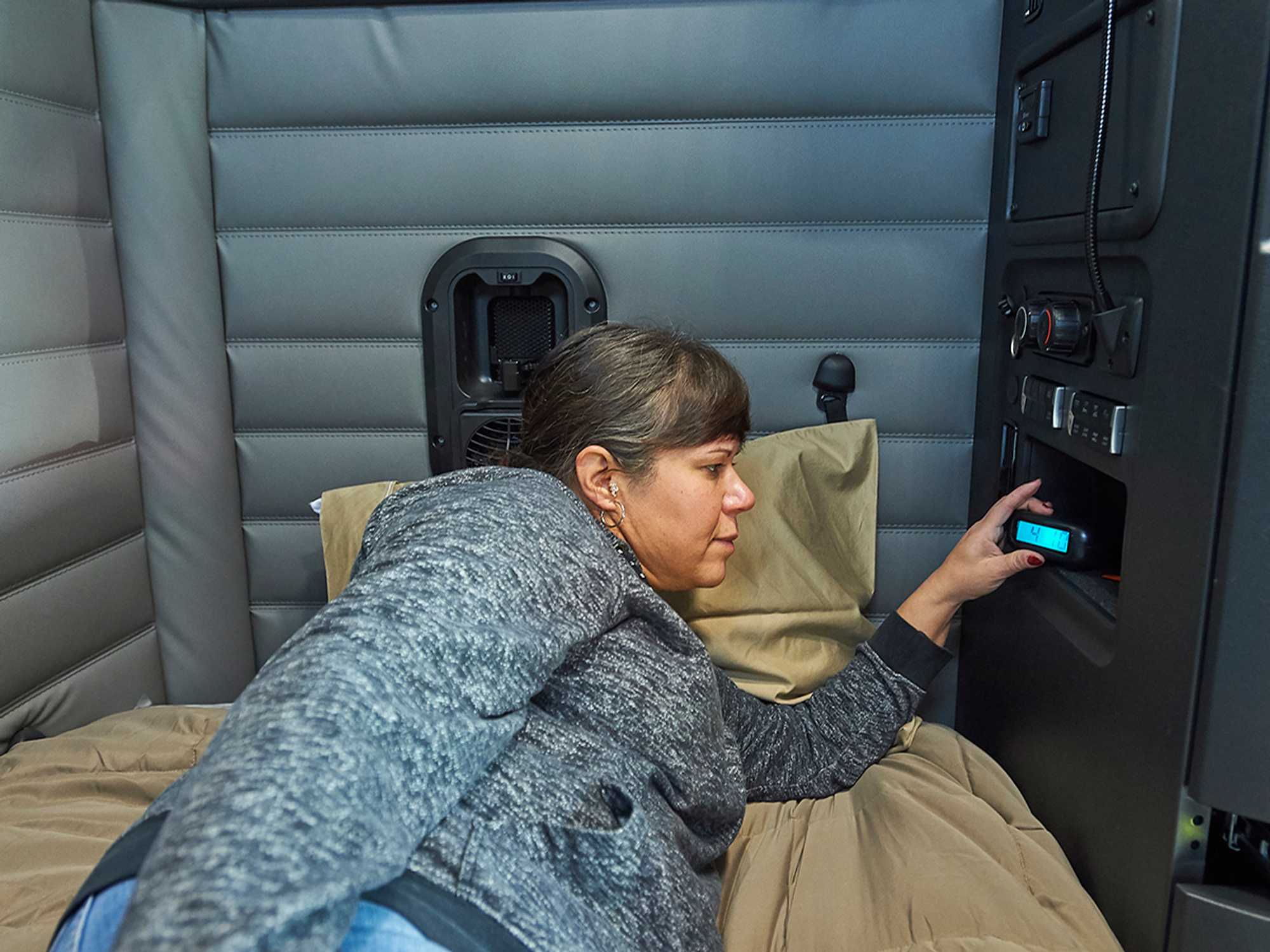
- Property-carrying CMV drivers must have at least 10 consecutive hours off duty, in a sleeper berth, or a combination of off-duty/sleeper-berth time to be eligible to drive 11 hours in the next 14-hour period.
- Spending 10 non-consecutive hours of rest in two separate periods, with driving or other on-duty time in between, can meet the 10-hour rest requirement but does not provide the driver with the eligibility to drive a full 11 hours in a 14-hour period.
Drivers who operate property-carrying commercial motor vehicles (CMVs) must have at least 10 consecutive hours off duty and/or in a sleeper berth before getting behind the wheel. Having a 10-hour break makes a driver eligible for a full 11 hours of driving time within the next 14-hour period. Without this restorative 10-hour break, a driver will not be able to maximize use of the 11- and 14-hour rules.
Key points
There are four ways to obtain the required 10 hours of rest:
- Spending 10 consecutive hours off duty (any time that is not “on duty,” “driving,” or in a sleeper berth).
- Spending 10 consecutive hours in a sleeper berth.
- Spending 10 consecutive hours using any combination of off-duty and sleeper-berth time.
- Spending 10 non-consecutive hours of rest in two separate periods, with driving or other on-duty time in between. One of the two periods must be at least seven consecutive hours in a sleeper berth and the other must be at least two hours off duty and/or in a sleeper berth, and the two periods must add up to at least 10 hours. Using this option does not provide the driver will a full 11- and 14-hour allowance after completing the 10 hours of rest. This option is referred to as the split-sleeper exception or split-break provision.
The following graphics depict the four basic ways for drivers to obtain the 10 hours of required rest:
Option 1: 10 consecutive hours off duty. This cannot include any on-duty activities, such as performing compensated work for a non-motor carrier (i.e., working a second job).
Option 2: 10 consecutive hours in a sleeper berth.
Option 3: 10 consecutive hours combining sleeper-berth and off-duty periods.
Option 4: 10 non-consecutive hours of rest in two separate periods. One period must be at least seven consecutive hours in a sleeper berth, the other must be at least two consecutive hours off duty, in a sleeper berth, or using a combination of the two, and these two “qualifying” breaks must add up to at least 10 hours.
Other ways to obtain 10 hours of rest while in a vehicle
Drivers can obtain off-duty time — even 10 or more consecutive hours off duty — by resting in or on a parked vehicle, unless the driver is required to attend to cargo or perform any other work. For example, a driver could sleep in a parked pickup truck for 10 hours, if necessary, and this would satisfy the 10-hour break requirement.
Drivers in sleeper cabs can go “off duty” for up to three hours while riding in the passenger seat of a moving, property-carrying CMV, as long as it’s immediately before or after a period of seven or more consecutive hours in the sleeper berth. If the consecutive break (sleeper-berth time plus riding time) equals 10 hours or more, it resets the 11- and 14-hour limits. If less than 10, the passenger-seat time counts against the 14-hour limit.
:
hours-of-service
hours-of-service
FOUNDATIONAL LEARNING
10-hour break requirement
InstituteFleet SafetySleeper berthHours of ServiceHours of Service14-hour ruleTransportationUSAEnglishAnalysisFocus AreaIn Depth (Level 3)
['Hours of Service']
- Property-carrying CMV drivers must have at least 10 consecutive hours off duty, in a sleeper berth, or a combination of off-duty/sleeper-berth time to be eligible to drive 11 hours in the next 14-hour period.
- Spending 10 non-consecutive hours of rest in two separate periods, with driving or other on-duty time in between, can meet the 10-hour rest requirement but does not provide the driver with the eligibility to drive a full 11 hours in a 14-hour period.
Drivers who operate property-carrying commercial motor vehicles (CMVs) must have at least 10 consecutive hours off duty and/or in a sleeper berth before getting behind the wheel. Having a 10-hour break makes a driver eligible for a full 11 hours of driving time within the next 14-hour period. Without this restorative 10-hour break, a driver will not be able to maximize use of the 11- and 14-hour rules.
Key points
There are four ways to obtain the required 10 hours of rest:
- Spending 10 consecutive hours off duty (any time that is not “on duty,” “driving,” or in a sleeper berth).
- Spending 10 consecutive hours in a sleeper berth.
- Spending 10 consecutive hours using any combination of off-duty and sleeper-berth time.
- Spending 10 non-consecutive hours of rest in two separate periods, with driving or other on-duty time in between. One of the two periods must be at least seven consecutive hours in a sleeper berth and the other must be at least two hours off duty and/or in a sleeper berth, and the two periods must add up to at least 10 hours. Using this option does not provide the driver will a full 11- and 14-hour allowance after completing the 10 hours of rest. This option is referred to as the split-sleeper exception or split-break provision.
The following graphics depict the four basic ways for drivers to obtain the 10 hours of required rest:
Option 1: 10 consecutive hours off duty. This cannot include any on-duty activities, such as performing compensated work for a non-motor carrier (i.e., working a second job).
Option 2: 10 consecutive hours in a sleeper berth.
Option 3: 10 consecutive hours combining sleeper-berth and off-duty periods.
Option 4: 10 non-consecutive hours of rest in two separate periods. One period must be at least seven consecutive hours in a sleeper berth, the other must be at least two consecutive hours off duty, in a sleeper berth, or using a combination of the two, and these two “qualifying” breaks must add up to at least 10 hours.
Other ways to obtain 10 hours of rest while in a vehicle
Drivers can obtain off-duty time — even 10 or more consecutive hours off duty — by resting in or on a parked vehicle, unless the driver is required to attend to cargo or perform any other work. For example, a driver could sleep in a parked pickup truck for 10 hours, if necessary, and this would satisfy the 10-hour break requirement.
Drivers in sleeper cabs can go “off duty” for up to three hours while riding in the passenger seat of a moving, property-carrying CMV, as long as it’s immediately before or after a period of seven or more consecutive hours in the sleeper berth. If the consecutive break (sleeper-berth time plus riding time) equals 10 hours or more, it resets the 11- and 14-hour limits. If less than 10, the passenger-seat time counts against the 14-hour limit.
2656949801
2656866405
UPGRADE TO CONTINUE READING
RELATED TOPICS
J. J. Keller is the trusted source for DOT / Transportation, OSHA / Workplace Safety, Human Resources, Construction Safety and Hazmat / Hazardous Materials regulation compliance products and services. J. J. Keller helps you increase safety awareness, reduce risk, follow best practices, improve safety training, and stay current with changing regulations.
Copyright 2026 J. J. Keller & Associate, Inc. For re-use options please contact copyright@jjkeller.com or call 800-558-5011.