Compliance Just Got Easier: Stay ahead of regulatory changes with instant notifications on updates that matter.
['Registration and Permits - Motor Carrier']
['Individual vehicle mileage report (IVMR)', 'Registration', 'International Registration Plan (IRP)']
10/08/2024

Copyright 2026 J. J. Keller & Associate, Inc. For re-use options please contact copyright@jjkeller.com or call 800-558-5011.
:
|
InstituteIndividual vehicle mileage report (IVMR)International Registration Plan (IRP)In Depth (Level 3)RegistrationEnglishAnalysisFocus AreaRegistration and Permits - Motor CarrierUSA
Individual vehicle mileage report (IVMR)
['Registration and Permits - Motor Carrier']
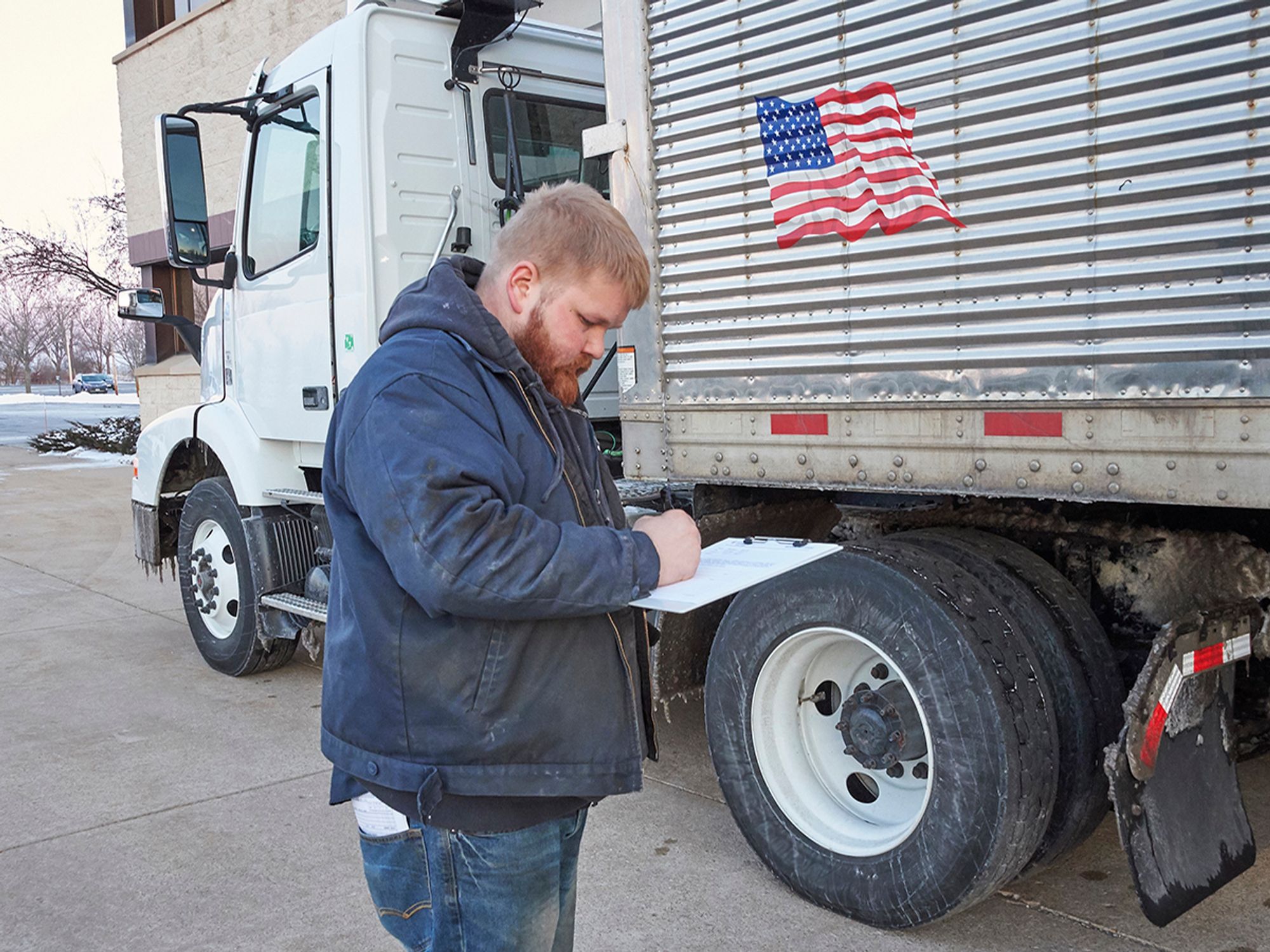
- Source documents under the International Registration Plan (IRP) include Individual Vehicle Mileage Records (IVMR) or Individual Vehicle Distance Records (IVDR).
- IVMRs can be created using a paper form or may be electronic.
- Monthly, quarterly, and yearly summaries are prepared from the IVMR information.
A recommended source document under the International Registration Plan (IRP) is an Individual Vehicle Mileage Record (IVMR) or Individual Vehicle Distance Record (IVDR). IVMRs can be created using a paper form or may be created using an Electronic Logging Device (ELD) or Global Positioning System (GPS).
If an IVMR is captured on paper, it must include:
- The beginning and ending dates of the trip to which the records pertain;
- Trip origin and destination;
- Route of travel;
- Beginning and ending reading from the odometer, hubometer, engine control module (ECM), or similar device for the trip;
- Total trip miles or kilometers;
- Miles/kilometers by jurisdiction; and
- Unit number or vehicle identification number.
Distance records produced wholly or partly by a vehicle-tracking system, including a system based on a GPS, must contain certain elements.
When the vehicle’s engine is on, the vehicle-tracking system that utilizes latitudes and longitudes must create and maintain a record at a minimum of:
- Every 15 minutes for IRP, and
- Every 10 minutes for IFTA.
Records must contain the following elements:
- Vehicle identification number or vehicle unit number,
- Date and time of each system reading,
- Latitude and longitude to include a minimum of 4 decimal places (0.0001) of each system reading, and
- Odometer reading from the ECM of each system reading. If no ECM odometer is available, a beginning and ending dashboard odometer or hubometer for the trip is acceptable.
The data must be accessible in an electronic spreadsheet format such as XLS, XLSX, CSV, or Delimited text file.
IVMRs should be accurately and legibly prepared. IRP requires reported distance for the actual routes traveled by each vehicle for each trip. When recording the mileage of an apportioned vehicle, all movement such as interstate, intrastate, interprovincial, and intra-provincial, must be included, as well as loaded, empty, dead-head and/or bobtail miles or kilometers.
Monthly, quarterly, and yearly summaries are prepared from the IVMR information. Computer summaries are not acceptable at face value and must always be supported by IVMRs or original ELD/GPS data during an audit.
:
registration-and-permits-motor-carrier
FOUNDATIONAL LEARNING
Individual vehicle mileage report (IVMR)
InstituteIndividual vehicle mileage report (IVMR)International Registration Plan (IRP)In Depth (Level 3)RegistrationEnglishAnalysisFocus AreaRegistration and Permits - Motor CarrierUSA
['Registration and Permits - Motor Carrier']
- Source documents under the International Registration Plan (IRP) include Individual Vehicle Mileage Records (IVMR) or Individual Vehicle Distance Records (IVDR).
- IVMRs can be created using a paper form or may be electronic.
- Monthly, quarterly, and yearly summaries are prepared from the IVMR information.
A recommended source document under the International Registration Plan (IRP) is an Individual Vehicle Mileage Record (IVMR) or Individual Vehicle Distance Record (IVDR). IVMRs can be created using a paper form or may be created using an Electronic Logging Device (ELD) or Global Positioning System (GPS).
If an IVMR is captured on paper, it must include:
- The beginning and ending dates of the trip to which the records pertain;
- Trip origin and destination;
- Route of travel;
- Beginning and ending reading from the odometer, hubometer, engine control module (ECM), or similar device for the trip;
- Total trip miles or kilometers;
- Miles/kilometers by jurisdiction; and
- Unit number or vehicle identification number.
Distance records produced wholly or partly by a vehicle-tracking system, including a system based on a GPS, must contain certain elements.
When the vehicle’s engine is on, the vehicle-tracking system that utilizes latitudes and longitudes must create and maintain a record at a minimum of:
- Every 15 minutes for IRP, and
- Every 10 minutes for IFTA.
Records must contain the following elements:
- Vehicle identification number or vehicle unit number,
- Date and time of each system reading,
- Latitude and longitude to include a minimum of 4 decimal places (0.0001) of each system reading, and
- Odometer reading from the ECM of each system reading. If no ECM odometer is available, a beginning and ending dashboard odometer or hubometer for the trip is acceptable.
The data must be accessible in an electronic spreadsheet format such as XLS, XLSX, CSV, or Delimited text file.
IVMRs should be accurately and legibly prepared. IRP requires reported distance for the actual routes traveled by each vehicle for each trip. When recording the mileage of an apportioned vehicle, all movement such as interstate, intrastate, interprovincial, and intra-provincial, must be included, as well as loaded, empty, dead-head and/or bobtail miles or kilometers.
Monthly, quarterly, and yearly summaries are prepared from the IVMR information. Computer summaries are not acceptable at face value and must always be supported by IVMRs or original ELD/GPS data during an audit.
2656870939
2656868821
UPGRADE TO CONTINUE READING
J. J. Keller is the trusted source for DOT / Transportation, OSHA / Workplace Safety, Human Resources, Construction Safety and Hazmat / Hazardous Materials regulation compliance products and services. J. J. Keller helps you increase safety awareness, reduce risk, follow best practices, improve safety training, and stay current with changing regulations.
Copyright 2026 J. J. Keller & Associate, Inc. For re-use options please contact copyright@jjkeller.com or call 800-558-5011.