
Double-walled or vaulted tanks or containers
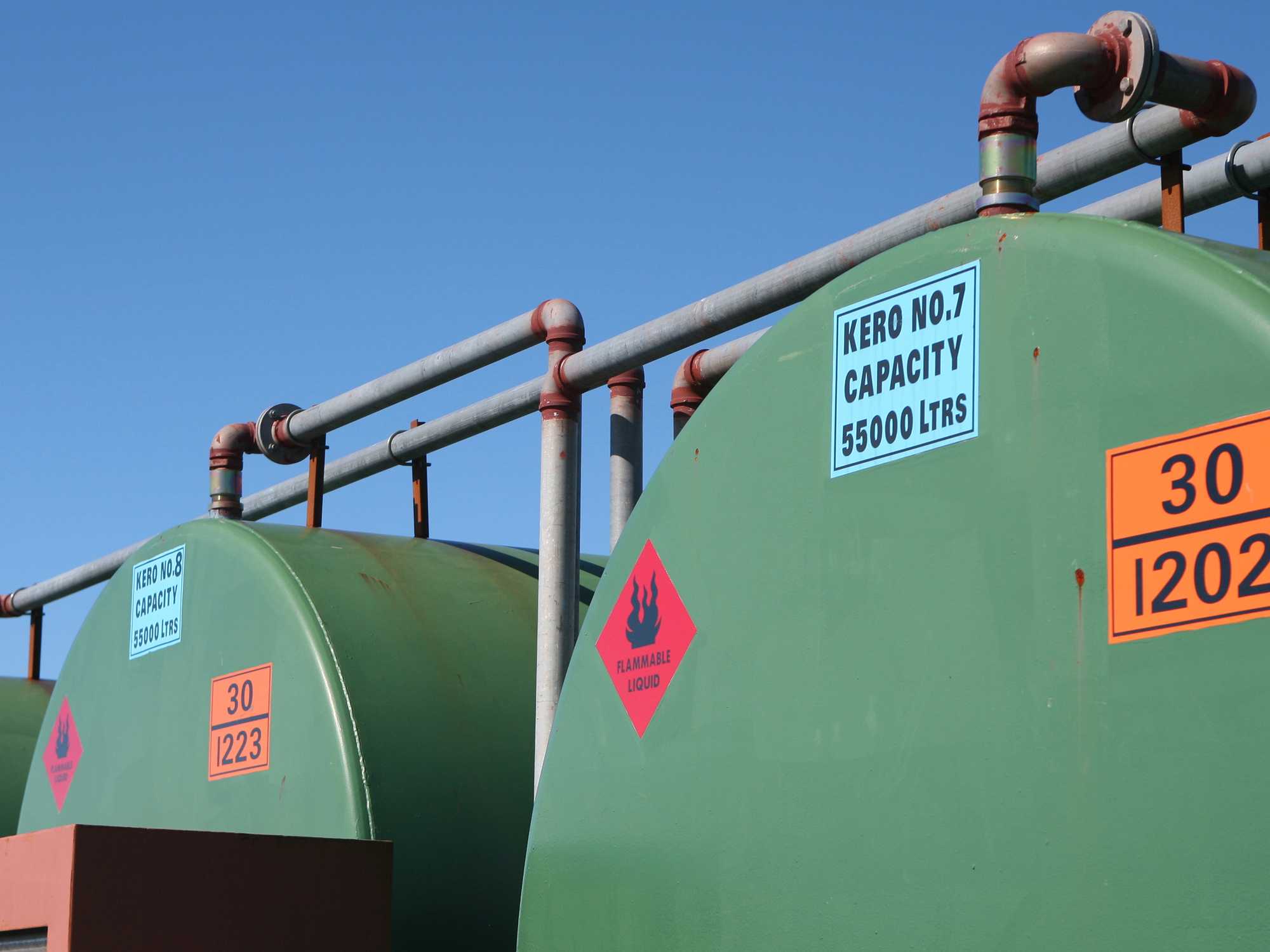
- Double-walled and vaulted tanks are subject to secondary container requirements.
- In the case of double-walled tanks, those that meet qualifying criteria generally comply with secondary containment requirements.
Double-walled or vaulted tanks are subject to secondary containment requirements. Double-walled tank and vaulted tank are defined in Covered facilities.
In the case of vaulted tanks, the Spill Prevention, Control, and Countermeasure (SPCC) Plan preparer must determine whether the vault meets the requirements for secondary containment in Part 112.7(c). This determination should include an evaluation of drainage systems and of sumps or pumps which could cause a discharge of oil outside the vault. Industry standards for vaulted tanks often require the vaults to be liquid tight, which if sized correctly, may meet the secondary containment requirement. There might also be other examples of such alternative systems.
The Environmental Protection Agency (EPA) issued two memorandums to address how the secondary containment requirements of 112.7(c) apply to double-walled tanks. In the first memo, issued April 29, 1992, EPA described that shop-fabricated aboveground double-walled tanks that meet certain industry construction standards, with capacities less than 12,000 gallons, installed and operated with protective measures such as overfill alarms, flow shutoff or restrictor devices, and constant monitoring of product transfers would generally comply with the secondary containment requirements of 112.7(c).
As an alternative to the overfill prevention measures to contain discharges from a double-walled tank, active or passive measures of secondary containment may be used to contain overfills from tank vents that may occur during transfer operations. The 1992 memo was amended on August 9, 2002, to remove the 12,000-gallon tank capacity limitation and to discuss additional SPCC requirements that apply to double-walled tanks.
Shop-fabricated double-wall ASTs, regardless of size, may generally satisfy not only the secondary containment requirements of 112.7(c), but also the specific secondary containment requirements for sizing secondary containment for bulk storage containers found at 112.8(c)(2). Double-walled tanks typically do not require additional freeboard for precipitation when the interstice is not exposed to precipitation. Double-walled tanks that store animal fats or vegetable oils may generally satisfy the secondary containment requirements of 112.12(c)(2).
Double-walled tanks with fittings or openings (e.g., a manway) located below the liquid level of the container may require additional secondary containment to conform with industry standards and/or local codes.
Summary of required elements from the double-walled tank memos:
The use of certain shop-built double-wall aboveground storage tanks (ASTs) serve as an “equivalent” preventive system for purposes of the general secondary containment requirements of 112.7(c) when they include the following elements:
- Containers are shop fabricated;
- The inner tank is an Underwriter Laboratories (UL) listed steel tank;
- The outer tank is constructed in accordance with nationally accepted industry standards (e.g., American Petroleum Institute (API), Steel Tank Institute (STI), the American Concrete Institute);
- The tank is equipped with the following overfill prevention measures to contain overfills from tank vents:
- Overfill alarm, and
- Automatic flow restrictor or flow shut-off; and
- All product transfers are constantly monitored.
As an alternative to the overfill prevention measure described in the fourth bullet above, the container may be equipped with either active or passive secondary containment methods to address the typical failure mode and the most likely quantity of oil that would be discharged from the tank’s vents during transfer operations.
Inspection requirements for double-walled tanks
Section 112.8(c)(6) requires the owner or operator to conduct integrity testing on a regular schedule and whenever repairs are made. The section also requires the owner or operator to frequently inspect the outside of the container for signs of deterioration, discharges, or accumulation of oil inside diked areas (for a double-walled tank, this inspection requirement applies to the inner tank).
Other applicable secondary containment requirements
While shop-fabricated double-wall ASTs may satisfy the requirements of 112.7(c) and 112.8(c)(2), such tanks, associated appurtenances/piping and transfer activities are also subject to other applicable SPCC requirements. For example, the facility owner or operator must satisfy 112.7(h) requirements for tank car and tank truck loading/unloading racks if the facility transfers oil in bulk to double-wall tanks from highway vehicles or railroad cars. If such transfers occur, where loading/unloading area drainage does not flow into a catchment basin or treatment facility designed to handle spills, a quick drainage system must be used. The containment system must be designed to hold at least the maximum capacity of any single compartment of a tank car or tank truck loaded or unloaded at the facility. Transfer areas (those not associated with a loading/unloading rack) need to comply with the general secondary containment requirements in 112.7(c).
Additionally, any piping, equipment, or device not contained within a double-walled AST is subject to the general secondary containment requirements of 112.7(c). If a facility drainage system will be used to comply with secondary containment then the piping, equipment or device is also subject to requirements of 112.8(b) or 112.12(b).