Compliance Just Got Easier: Stay ahead of regulatory changes with instant notifications on updates that matter.
['Waste']
['Waste Generators', 'Waste Identification', 'Hazardous Waste', 'Waste', 'Waste Management']
08/29/2024

Copyright 2026 J. J. Keller & Associate, Inc. For re-use options please contact copyright@jjkeller.com or call 800-558-5011.
:
|
InstituteHazardous WasteWaste IdentificationWaste GeneratorsWaste/HazWasteWasteWasteWaste ManagementEnvironmentalFocus AreaEnglishAnalysisIn Depth Sub Topics (Level 4)USA
Department of Transportation (DOT) placarding requirements
['Waste']
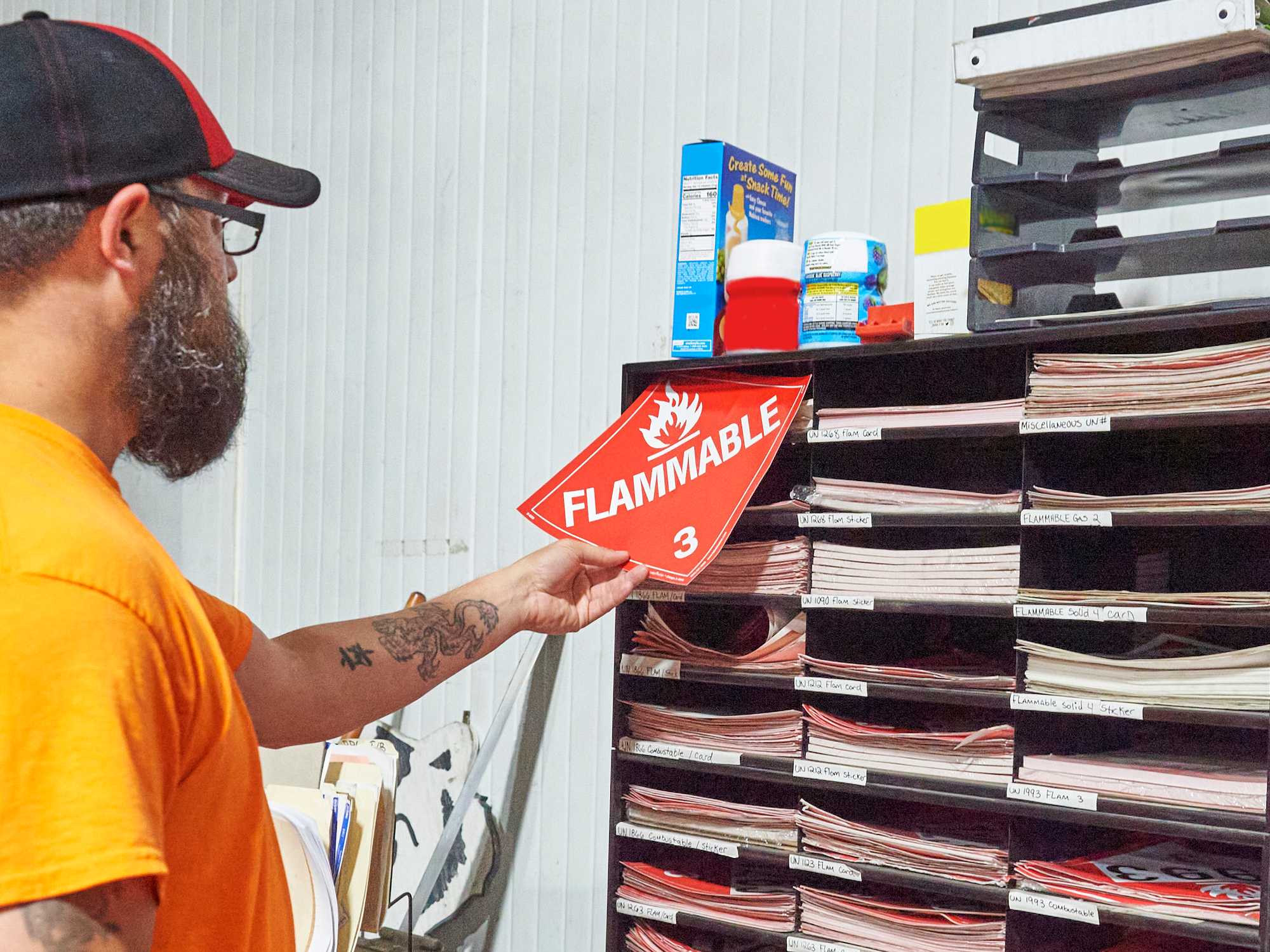
- Placarding requirements, placement, and exceptions vary according to the category of the material being transported and the type of packaging containing the material.
Hazardous materials placards correspond very closely with the shape, color and design of the hazardous materials warning labels. However, placards are much larger than labels. Placards alert persons to the potential dangers associated with the particular hazardous material contained in a motor vehicle, rail car, freight container, cargo tank, or portable tank.
The placarding requirements apply to each person who offers for transport or transports hazardous materials. The placarding requirements do not apply to the following materials:
- Infectious substances (Division 6.2).
- Materials classed as Other Regulated Material (ORM-D).
- Materials authorized to be transported as a limited quantity (when properly identified on the shipping papers or marked in accordance with 172.315).
- Materials packaged as “small quantities” (under the provisions of 173.4, 173.4a, or 173.4b).
- Materials prepared in accordance with 173.13 (Exceptions for Classes 3, 8, 9, and Division 4.1, 4.2, 4.3, 5.1, 6.1).
- Combustible liquids in non-bulk packagings. (172.500)
Placards are used to identify the hazard or hazards of materials contained in bulk packagings, freight containers, unit load devices, transport vehicles, or rail cars.
The responsibility for affixing or supplying placards varies according to the mode of transport and the type of packaging used to transport the hazardous material.
Placarding tables
Placarding requirements, placement, and exceptions vary according to the category of the material (hazard class, division, packing group or description) being transported and the type of packaging (bulk or non-bulk) containing the material. Each bulk packaging, freight container, unit load device, transport vehicle, or rail car containing hazardous material must be placarded on each side and each end (with some exceptions) with the type of placards specified in Table 1 or Table 2 of 172.504.
To determine what placards are required, a facility must know:
- The type of packaging (bulk or non-bulk) containing the hazardous material(s).
- The hazard category (class, division, packing group, or description) and subsidiary hazard(s) of the hazardous material(s) present.
- The weight of non-bulk packages in each hazard category.
The most dangerous categories of hazardous materials are located in Table 1. Any quantity of material falling within the categories listed in Table 1 must be placarded.
:
waste
waste
FOUNDATIONAL LEARNING
Department of Transportation (DOT) placarding requirements
InstituteHazardous WasteWaste IdentificationWaste GeneratorsWaste/HazWasteWasteWasteWaste ManagementEnvironmentalFocus AreaEnglishAnalysisIn Depth Sub Topics (Level 4)USA
['Waste']
- Placarding requirements, placement, and exceptions vary according to the category of the material being transported and the type of packaging containing the material.
Hazardous materials placards correspond very closely with the shape, color and design of the hazardous materials warning labels. However, placards are much larger than labels. Placards alert persons to the potential dangers associated with the particular hazardous material contained in a motor vehicle, rail car, freight container, cargo tank, or portable tank.
The placarding requirements apply to each person who offers for transport or transports hazardous materials. The placarding requirements do not apply to the following materials:
- Infectious substances (Division 6.2).
- Materials classed as Other Regulated Material (ORM-D).
- Materials authorized to be transported as a limited quantity (when properly identified on the shipping papers or marked in accordance with 172.315).
- Materials packaged as “small quantities” (under the provisions of 173.4, 173.4a, or 173.4b).
- Materials prepared in accordance with 173.13 (Exceptions for Classes 3, 8, 9, and Division 4.1, 4.2, 4.3, 5.1, 6.1).
- Combustible liquids in non-bulk packagings. (172.500)
Placards are used to identify the hazard or hazards of materials contained in bulk packagings, freight containers, unit load devices, transport vehicles, or rail cars.
The responsibility for affixing or supplying placards varies according to the mode of transport and the type of packaging used to transport the hazardous material.
Placarding tables
Placarding requirements, placement, and exceptions vary according to the category of the material (hazard class, division, packing group or description) being transported and the type of packaging (bulk or non-bulk) containing the material. Each bulk packaging, freight container, unit load device, transport vehicle, or rail car containing hazardous material must be placarded on each side and each end (with some exceptions) with the type of placards specified in Table 1 or Table 2 of 172.504.
To determine what placards are required, a facility must know:
- The type of packaging (bulk or non-bulk) containing the hazardous material(s).
- The hazard category (class, division, packing group, or description) and subsidiary hazard(s) of the hazardous material(s) present.
- The weight of non-bulk packages in each hazard category.
The most dangerous categories of hazardous materials are located in Table 1. Any quantity of material falling within the categories listed in Table 1 must be placarded.
2657104775
2657105180
UPGRADE TO CONTINUE READING
RELATED TOPICS
J. J. Keller is the trusted source for DOT / Transportation, OSHA / Workplace Safety, Human Resources, Construction Safety and Hazmat / Hazardous Materials regulation compliance products and services. J. J. Keller helps you increase safety awareness, reduce risk, follow best practices, improve safety training, and stay current with changing regulations.
Copyright 2026 J. J. Keller & Associate, Inc. For re-use options please contact copyright@jjkeller.com or call 800-558-5011.