
CA Diesel Vehicles
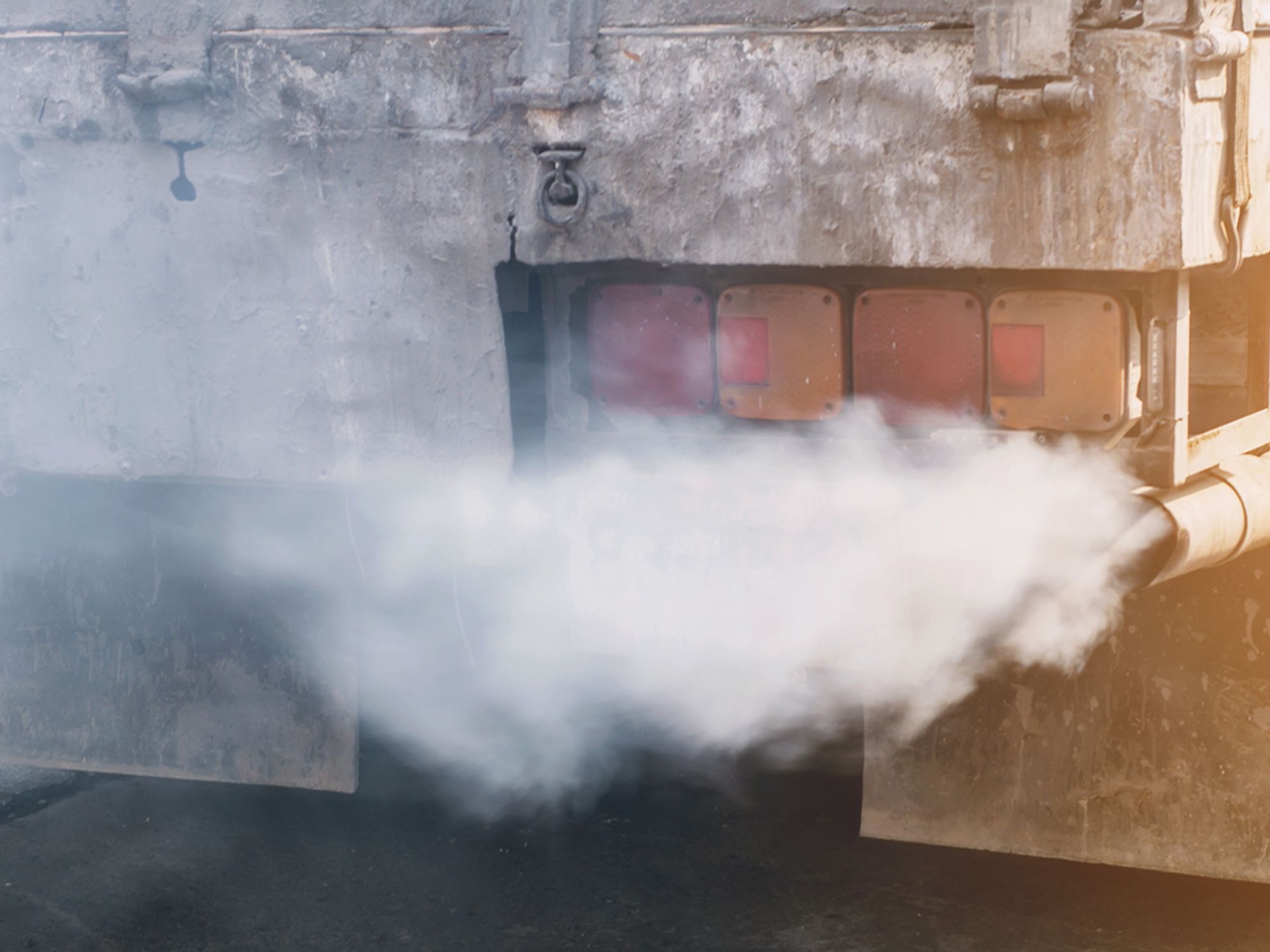
The U.S. Environmental Protection Agency (U.S. EPA) and California Air Resources Board (CARB) both regulate the emissions from diesel-powered vehicles. U.S. EPA regulations apply nationwide, and the CARB regulations apply to vehicles operating in California.
U.S. EPA
U.S. EPA has traditionally:
- Placed emissions limits on vehicle emissions that manufacturers must meet, and
- Enforced rules that make it illegal to tamper with the emissions systems on vehicles.
The emissions limits placed on diesel power vehicles over the years (since the 1990s) have required a reduction in:
- PM emissions — Particulate matter (PM), also known as diesel particulate matter, is the solid emission released by a diesel-powered vehicle. Additionally called diesel soot, PM emissions are the black exhaust that older diesel vehicles release.
- NOx emissions — Nitrogen oxides (NOx) and other gaseous exhaust emissions are released from an internal combustion engine that are damaging to the atmosphere.
- CO2 emissions — Carbon dioxide (CO2) is a gaseous exhaust that is released from an internal combustion engine that is damaging to the atmosphere.
Major changes in the limits and their impact include the following:
- 2007: The required reduction in PM emissions (PM emissions were limited to 0.25 grams per brake horsepower-hour (g/bhp-hr)) led to the installation of diesel particulate filters on most diesel-powered vehicles.
- 2010: The required reduction in specific gases (NOx limited to 1.2 g/bhp-hr based on the manufacturer’s fleet average) led to the installation of selective catalytic reduction (SCR) systems on most diesel-powered vehicles. These systems inject diesel exhaust fluid (DEF) into the exhaust stream, resulting in the NOx being broken into nitrogen and water.
Under the legacy U.S. EPA rules, a vehicle must meet the emissions standards that were in place the year the engine was manufactured and have all the emissions control components on it that were required the year the vehicle was manufactured.
U.S. EPA's Control of Air Pollution from New Motor Vehicles: Heavy-Duty Engine and Vehicle Standards rule was finalized in 2022. These regulations apply to the manufacturers of on-highway heavy-duty trucks and engines and implement more stringent emissions standards over a wider range of operational conditions. Implementation begins with model year (MY) 2027.
Technically, this was the first rule in U.S. EPA's Clean Truck Plan. The second was the more stringent emissions standards for light- and medium-duty trucks, and the third was the Greenhouse Gas (GHG) Emissions Standards for Heavy-Duty Vehicles - Phase 3.
U.S. EPA’s GHG Emissions - Phase 3 final rules are emissions standards new vehicles must meet. The regulations apply to the manufacturers of on-highway heavy-duty trucks. Reductions in emissions required under this rulemaking do not start for day cabs until MY 2028. As of MY 2028, manufacturers must reduce GHG emissions across their day cab offerings by 8 percent. That increases annually until 2032, by which time the manufacturers must decrease GHG across their day cab offerings by 40 percent. Sleeper cab tractors have a delayed timeline.
CARB
CARB regulates air emissions in California. It has several long-standing programs in place and three newer programs.
Advanced Clean Truck (ACT): Under this rule, manufacturers must sell a specific percentage of zero-emission vehicles (ZEVs) to be able to sell vehicles in California. Other states are or will be adopting regulations similar to CARB’s ACT.
Advanced Clean Fleet (ACF): Under this rule, state and local government fleets must register their California fleet (vehicles used in California) in CARB’s TRUCRS system. This program requires covered fleets to begin replacing the internal combustion engine (ICE) units used in their California fleet with ZEVs.
Clean Truck Check (also known as the HD I/M regulations): This program requires all non-gasoline powered ICE vehicles that operate in California with a GVWR of 14,001 pounds or more to be registered in CARB’s Clean Truck Check–Vehicle Inspection System (or CTC-VIS) database. Part of registering includes paying a per-vehicle annual compliance fee ($30 in 2023 and 2024). This program also requires vehicle owners or operators to upload onboard diagnostic (OBD) downloads twice a year to CARB, proving that the vehicle is operating within its designed emissions parameters. The OBD download/upload must be done by a CARB-licensed HD I/M tester. Becoming a licensed tester involves taking a CARB training class, passing the final exam, and acquiring the approved equipment.
Truck and Bus regulation: This requires all diesel-powered vehicles with a GVWR of 14,001 pounds to have a MY 2010 or newer engine.
Greenhouse Gas Reduction: This program requires van-type trailers that are over 50 feet in length and the tractors pulling them to have full aerodynamics and low rolling resistance tires.
Drayage Truck regulation: All trucks that operate into, out of, and inside of rail ramps and ports (called drayage trucks) must be registered in the CARB Drayage Truck database and be equipped with a 2010 or newer engine. These trucks are also subject to ACF requirements.
Periodic Smoke Inspection Program (PSIP): This regulation requires fleet owners/operators to have their California-based diesel-powered vehicles with a GVWR of 6,001 pounds or more undergo an annual smoke opacity test once the vehicle reaches four years old (based on model year). This program will remain in place until the Clean Truck Check program is fully implemented in 2025.
Transport Refrigeration Unit (TRU) regulations: To operate in California, a diesel-powered TRU must meet the ULETRU emissions standards, be registered in CARB’s ARBER database, and display an ARB-assigned ID number. TRUs from MY 2023 and newer must meet the next round of PM standards and use Lower Global Warming Refrigerant. Fleets that use truck-mounted reefers (TRUs on straight trucks) must begin transitioning away from diesel reefers and to zero-emission reefers.