
CA Clean Truck Check (HD I/M)
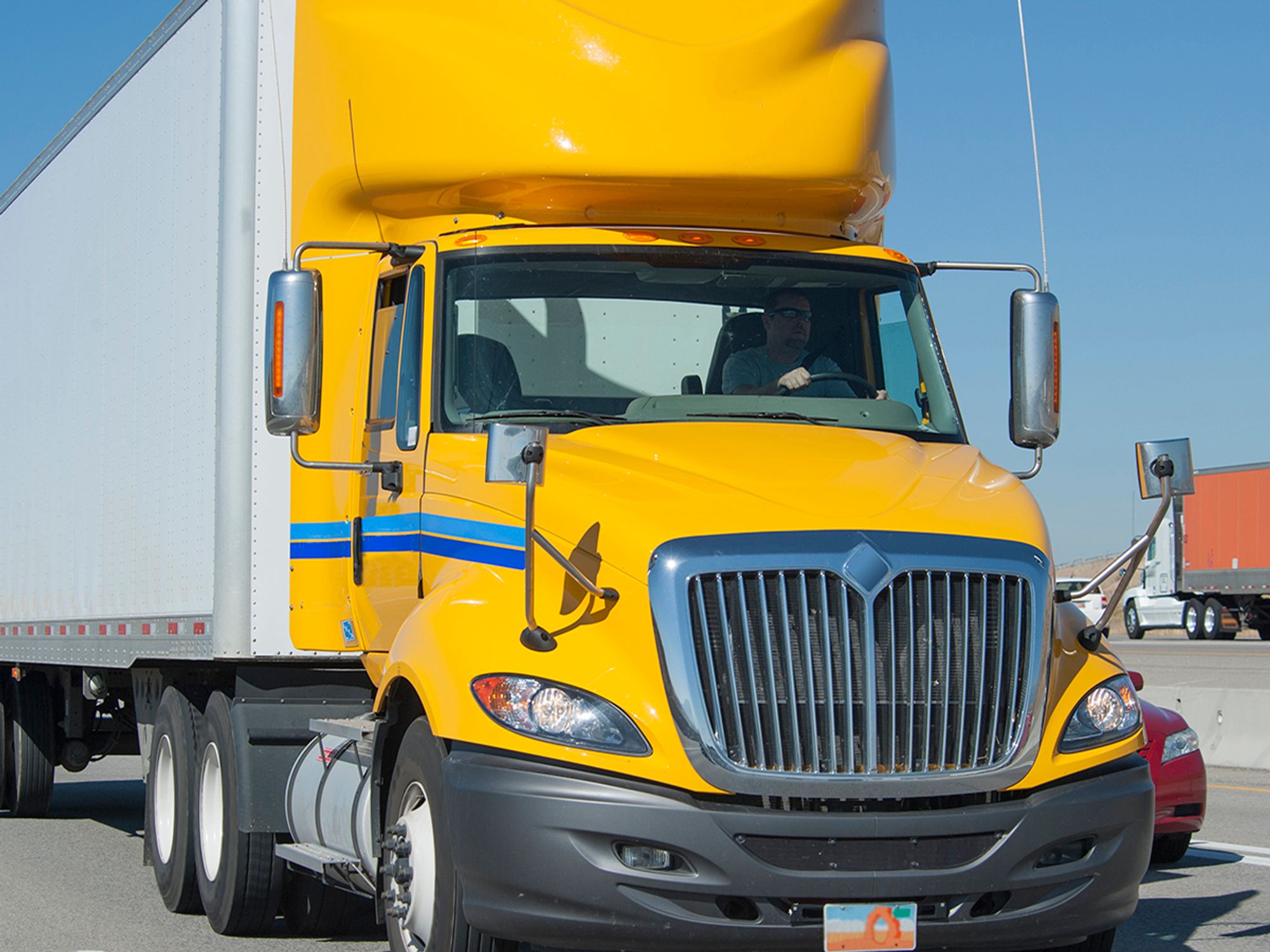
Under the California Air Resources Board’s (CARB’s) Clean Truck Check (CTC) regulation (originally known as the Heavy-Duty Inspection and Maintenance regulation, or HD I/M, regulation), owners of vehicles with a gross vehicle weight rating (GVWR) of 14,001 pounds or more that operate in California and are powered by a non-gasoline engine must register the vehicle in CARB’s Clean Truck Check–Vehicle Inspection System (CTC-VIS) database, pay an annual compliance fee, and upload onboard diagnostic (OBD) data to CARB twice a year.
Registration
The Clean Truck Check program requires all non-gasoline-powered internal combustion engine (ICE) vehicles that operate in California with a GVWR of 14,001 pounds or more to be registered in CARB’s CTC-VIS database. Part of registering includes paying a per-vehicle annual compliance fee ($30 per vehicle for 2023 and 2024). Here is the schedule for the fees:
- 2023 fees were due by January 31, 2024.
- 2024 fees were due between July and December 2024.
- 2025 fees are due between January and June 2025.
The month the registration fee is due is based on the “compliance months.” For a California-registered vehicle, the compliance months will be based on the month the vehicle registration expires and six months later. Here is a table that shows this:
| DMV registration expiration month | Jan | Feb | Mar | Apr | May | Jun | Jul | Aug | Sep | Oct | Nov | Dec |
| 2024 compliance fee deadline month | Jul | Aug | Sep | Oct | Nov | Dec | Jul | Aug | Sep | Oct | Nov | Dec |
| 2025 & beyond semi-annual testing & annual fee deadline month | Jan | Feb | Mar | Apr | May | Jun | Jul | Aug | Sep | Oct | Nov | Dec |
| Jul | Aug | Sep | Oct | Nov | Dec | Jan | Feb | Mar | Apr | May | Jun |
| Last number of VIN | 0 | 1 | 2 | 3 | 4 | 5 | 6 | 7 | 8 | 9 |
| 2024 compliance fee deadline month | Oct | Nov | Dec | Jul | Aug | Dep | Oct | Nov | Dec | Jul |
| 2025 & beyond semi-annual testing & Annual fee deadline month | Apr | May | Jun | Jan | Feb | Mar | Apr | May | Jun | Jan |
| Oct | Nov | Dec | Jul | Aug | Sep | Oct | Nov | Dec | Jul |
Emissions tests/OBD downloads
Vehicle owners or operators must upload onboard diagnostic (OBD) downloads twice a year to CARB. The purpose of this test is to prove the vehicle is operating within its designed emissions parameters.
If the vehicle does not have an acceptable OBD system, such as the vehicle has an engine older than model year 2013, the tester must do a smoke opacity test and visual inspection of all emissions components.
The OBD/smoke opacity test submissions are due based on the vehicle's plate expiration date (if registered/plated in California) or the last digit of the VIN (if registered/plated in another state). See the compliance months tables above. The test and submission can be done up to 90 days in advance of the due date.
The OBD or smoke opacity test must be done by a CARB-licensed HD I/M tester. Becoming a licensed tester involves completing the CARB Heavy Duty Inspection and Maintenance Tester Course, passing the final examination, and being issued an HD I/M Tester Identification Number by CARB. Licensed testers must use CARB-approved electronic OBD download devices or smoke opacity testers.
If the vehicle has a malfunction indicator lamp or an active trouble code related to emissions, the vehicle will not pass the test and must be repaired.
Also, if the vehicle had a diagnostic trouble code that was reset prior to the test, the software the tester uses will verify that the vehicle has done at least five warm-up cycles without the trouble code returning. If the trouble code was a permanent diagnostic trouble code, the vehicle must have undergone at least 15 warm-up cycles without the trouble code returning to pass the test.
Exemptions from the Clean Truck Check program include:
- Zero-emission vehicles,
- Military tactical vehicles,
- Emergency vehicles,
- Historical vehicles,
- New vehicles with engines certified to the most stringent optional NOx standard (only during the first four years of Clean Truck Check implementation),
- Motorhomes registered outside of California,
- Vehicles operating under an experimental permit, and
- Vehicles operating in California under a five-day temporary pass.