Compliance Just Got Easier: Stay ahead of regulatory changes with instant notifications on updates that matter.

Copyright 2026 J. J. Keller & Associate, Inc. For re-use options please contact copyright@jjkeller.com or call 800-558-5011.

Regulatory Compliance News & Updates
Keep up to date on the latest
developments affecting OSHA, DOT,
EPA, and DOL regulatory compliance.
Safety & Compliance News
FEATURED NEWS

2026-06-03T05:00:00Z
NewsPersonal Protective EquipmentBenzeneMethylene ChlorideFormaldehydeWalking Working SurfacesWalking Working SurfacesCarcinogensEnglishAsbestosCadmiumIndustry NewsIndustry NewsLeadSafety & HealthConstruction SafetyGeneral Industry SafetyMaritime SafetyAcrylonitrileSafety Color CodingCotton DustEthylene OxideRespiratory ProtectionSigns and MarkingsCoke Oven EmissionsFocus AreaToxic and Hazardous Substances - OSHAUSA
OSHA to hold public hearings on multiple proposed rules
OSHA will hold a series of informal, virtual public hearings on multiple proposed rules beginning on August 19, 2026. The majority relate to respiratory protection requirements for different chemical substances. All of the proposed rules were published in the Federal Register on July 1, 2025, except for the Walking-Working Surfaces proposal, which was published on April 6, 2026.
| Standards Impacted 29 CFR | Standard Name |
| 1910.1044 | 1,2-dibromo-3-chloropropane |
| 1910.1051 | 1, 3- Butadiene |
| 1910.1003 | 13 Carcinogens (4- Nitrobiphenyl, etc.) |
| 1910.1045 | Acrylonitrile |
| 1910.1001 | Asbestos |
| 1910.1028 | Benzene |
| 1910.1027 and 1926.1127 | Cadmium |
| 1910.1029 | Coke Oven Emissions |
| 1910.1043 | Cotton Dust |
| 1910.1047 | Ethylene Oxide |
| 1910.1048 | Formaldehyde |
| 1910.1018 | Inorganic Arsenic |
| 1910.1025 and 1926.62 | Lead |
| 1910.1052 | Methylene Chloride |
| 1910.1050 and 1926.60 | Methylenedianiline |
| 1910.1017 | Vinyl Chloride |
| 1910.134 | Respiratory Protection |
| 1910.144, 1910.262, 1910.265, and 1915.90 | Safety Color Code for Marking Physical Hazards |
| 1910.28 | Walking-Working Surfaces |
The hearings are open to the public, but only individuals who file a Notice of Intention to Appear (NOITA) may testify, provide documentary evidence, or ask questions. For more information, see www.osha.gov/deregulatory-rulemaking.
Keep reading...Show less
RECENT INDUSTRY HIGHLIGHTS
2026-06-03T05:00:00Z
NewsWater PermittingChange NoticesChange NoticeWater ProgramsWater QualityIndustrial WastewaterFloridaEnvironmentalWater ProgramsEnglishFocus AreaCWA Compliance
Florida amends on-site sewage treatment and disposal rules
Effective date: June 8, 2026
This applies to: On-site sewage treatment and disposal systems (OSTDS)
Description of change: The Florida Department of Environmental Protection amended the regulatory requirements for OSTDS. In addition to streamlining specific permit application processing procedures, the final rule amends the requirements for:
- Installing and locating OSTDS,
- Abandoning OSTDS,
- Treatment receptacle construction standards,
- Registration requirements for septic tanks and Master Septic Tank Contractors,
- Registration certificate renewals,
- Discipline and penalties for registered persons,
- Certification of partnerships and corporations as septic tank contracting businesses, and
- Service and registration fees.
Related state info: Industrial water permitting — Florida
Keep reading...Show less
2026-06-03T05:00:00Z
NewsIndustry NewsExceptions - HazmatHazmat SafetyHazmatIn-Depth ArticleFocus AreaEnglishTransportationUSA
Small packages can lead to big problems
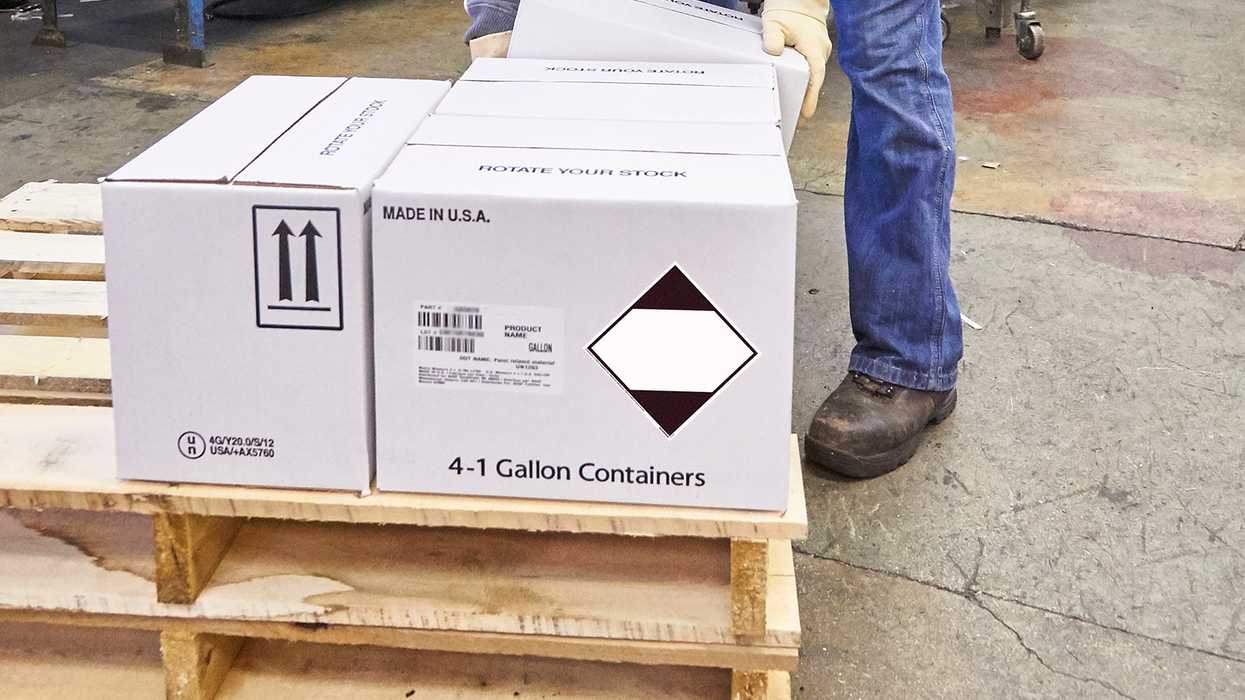
Small packages don’t always get the same level of attention as larger hazmat shipments. They’re quicker to prepare, usually move through the system faster, and can seem lower risk at first glance. However, that’s when problems can start to show up. When limited quantities and other exceptions are involved, it’s easy to assume the requirements are reduced across the board, which isn’t the case in most situations.
These shipments still have rules that need to be followed. When those rules are misunderstood or not applied in the right way, small packages can create the same compliance issues as larger shipments. In some cases, they can be even more confusing because the requirements look different than standard hazmat shipments.
Limited quantity mistakes
Limited quantity provisions are designed to provide relief from certain requirements, but they don’t eliminate all of them. One of the most common issues is misidentifying whether a material meets the limited quantity exception. That decision must be based on the hazard class, packing group, and the quantity of the inner and outer package. If any of those don’t meet the limits, the shipment can’t move under the exception.
Another frequent problem is assuming that once a shipment qualifies as a limited quantity, everything else becomes optional, which is not the case. Marking requirements still apply, and in many cases, the limited quantity mark is either missing or not applied in the correct way. Orientation arrows get overlooked on liquids, and packaging requirements don’t always get the attention they should.
Misused exceptions
Exceptions can be helpful, but only when they’re used correctly. A common mistake is applying an exception from memory or based on how something was handled in the past. Over time, those habits can drift away from what the regulations allow. It’s also not unusual to see exceptions applied to materials that don’t qualify in the first place.
There’s also confusion around how exceptions affect other requirements. Reduced marking or labeling under one exception doesn’t automatically apply to everything. Shipping papers, packaging standards, hazard communication, and training requirements all need to be reviewed together. When one piece is assumed instead of verified, it can lead to gaps in compliance.
Simple checks
The best way to avoid these issues is to slow down just enough to verify the basic requirements. Start by confirming that the material actually meets the criteria for a limited quantity or other exception. That includes checking the hazard class, packing group, and quantity limits against the regulations instead of relying on memory.
From there, take a close look at the package. Make sure the correct marks are applied and clearly visible, check for orientation arrows when required, and confirm the packaging meets the applicable standard. It also helps to step back and look at the full shipment to make sure all remaining requirements are still being met.
Small packages can move quickly, but that doesn’t mean they should move without a second look. In the end, it comes down to consistency. Using exceptions correctly, applying the right markings, and double checking the details can keep small packages from turning into bigger compliance issues.
Key to remember: Small packages can create big compliance issues when limited quantity rules and exceptions are misunderstood or applied incorrectly. Take some extra time to verify the requirements before they turn into violations down the road.
Keep reading...Show less
2026-06-03T05:00:00Z
NewsChange NoticesChange NoticeWater ProgramsIndustrial WastewaterEnvironmentalCWA ComplianceEnglishMichiganFocus Area
Michigan adds requirements to wastewater collection systems
Effective date: April 29, 2026
This applies to: Wastewater collection systems with more than 50 connections and retention treatment basin (RTB) facilities
Description of change: The Michigan Department of Environment, Great Lakes, and Energy amended regulations for wastewater collection systems and RTB facilities by requiring:
- Facility classification, and
- Collection system operators to have system-specific certification (and recertify every 3 years).
The rules also streamline wastewater construction permitting, clarifying requirements for privately owned, publicly used systems when applying for Part 41 Permits.
Related state info: Industrial water permitting — Michigan
Keep reading...Show less
2026-06-03T05:00:00Z
NewsAir QualityAir ProgramsAir EmissionsChange NoticesChange NoticeColoradoCAA ComplianceEnvironmentalAir PermittingFocus AreaEnglishAir ProgramsStationary Emission Sources
Colorado finalizes emission regulations for priority toxic air contaminants
Effective date: June 14, 2026
This applies to: New, modified, and existing stationary sources of priority toxic air contaminants (PTACs)
Description of change: The Colorado Air Quality Control Commission adopted state-level emission control requirements for PTACs. The rules apply to specific source categories of stationary sources that emit one or more PTAC, including benzene, hexavalent chromium, ethylene oxide (EtO), formaldehyde, and hydrogen sulfide. The commission revised Regulation Numbers 24, 26, and 30.
Regulated sources must reduce emissions by implementing new technologies, adjusting work practices, and using fewer toxic materials. The revisions add regulations for emissions of:
- Benzene from petroleum refineries,
- Formaldehyde from stationary spark-ignition reciprocating internal combustion engines and combustion turbines,
- Hexavalent chromium from decorative and functional chrome plating,
- EtO from sterilization facilities, and
- Hydrogen sulfide from asphalt processing products, roofing products, and manure digesters.
Various requirements for different PTACs and sources start on June 14, 2026.
Related state info: Clean air operating permits state comparison
Keep reading...Show less


2026-06-03T05:00:00Z
NewsIndustry NewsIndustry NewsProtective SystemsRecordkeepingSafety & HealthConstruction SafetyExcavationsRecordkeepingUSAEnglishFocus AreaCompetent Person
Washington state trenching, excavation rule now in effect
Washington state’s trenching and excavation rule took effect June 1. The rule amends chapter 296-155 WAC, Safety standard for construction work, Part N, Excavation, trenching, and shoring, to require employers to include a risk analysis in their written work plan before any work involving a protective system begins. The work plan can be found on the Washington State Department of Labor & Industries website or employers may create their own.
The adopted rule also:
- Creates a standalone definition section and adds a new definition of "work plan,"
- Requires a competent person to remain onsite during all trenching and excavation work, and
- Addresses recordkeeping and training requirements of the trench excavation work plan.
Keep reading...Show less
Search all news


Got a Compliance Question?
We’ve Got You Covered!
Get clear, reliable answers from experts with 500+ years of combined experience.
J. J. Keller is the trusted source for DOT / Transportation, OSHA / Workplace Safety, Human Resources, Construction Safety and Hazmat / Hazardous Materials regulation compliance products and services. J. J. Keller helps you increase safety awareness, reduce risk, follow best practices, improve safety training, and stay current with changing regulations.
Copyright 2026 J. J. Keller & Associate, Inc. For re-use options please contact copyright@jjkeller.com or call 800-558-5011.