Compliance Just Got Easier: Stay ahead of regulatory changes with instant notifications on updates that matter.
['Commercial drivers license CDL', 'Drug and Alcohol Testing - DOT']
['Driver disqualification']
05/16/2025

Copyright 2026 J. J. Keller & Associate, Inc. For re-use options please contact copyright@jjkeller.com or call 800-558-5011.
Use this exercise to improve inspection skills and teach employees to recognize and prevent workplace hazards.
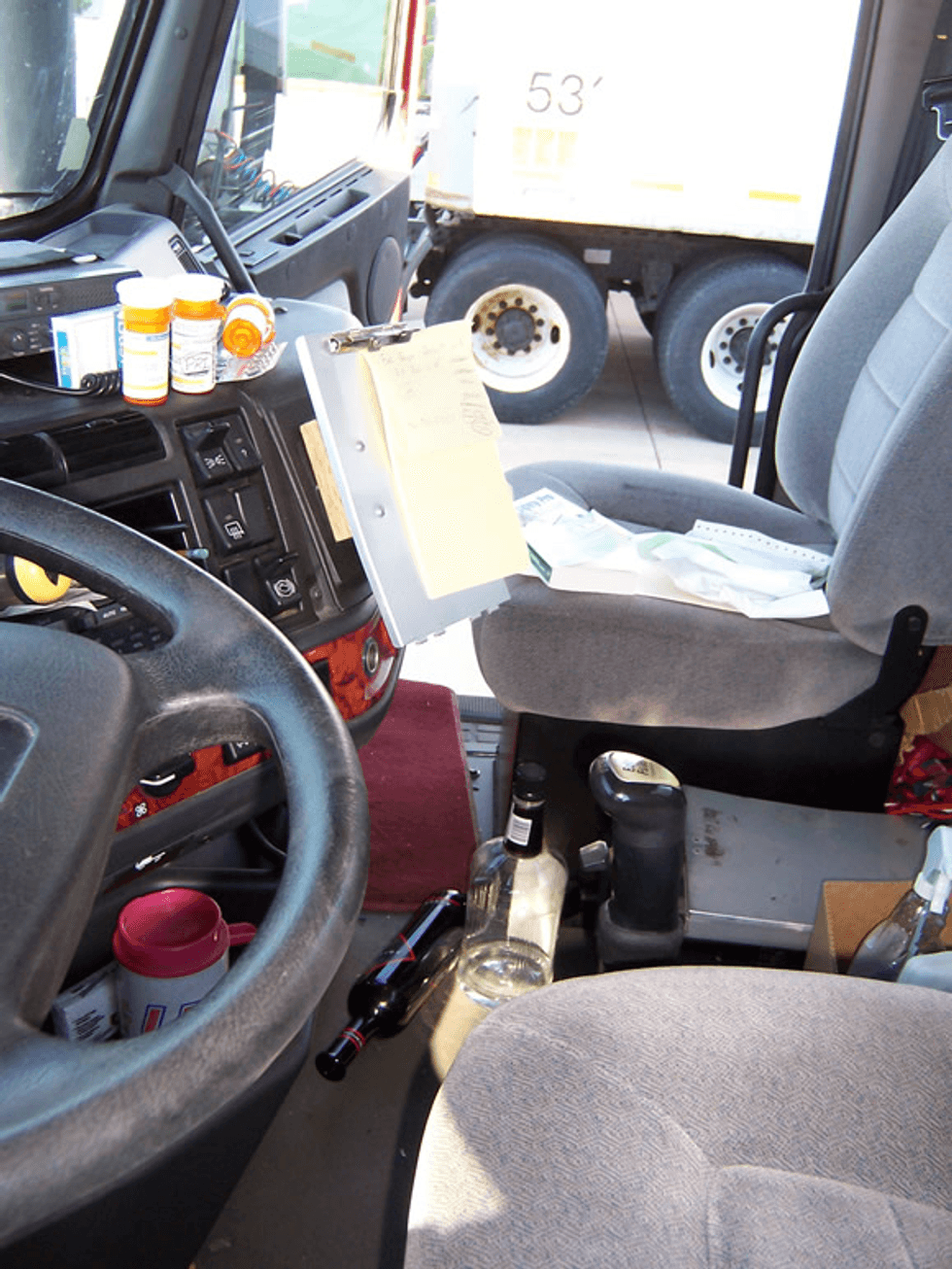
What’s Wrong with this Picture?: Truck Cab Answers
1) Alcohol bottles in the cab. This is a violation of 392.5(a)(3), in addition to any state traffic laws for open intoxicants.
a. Possession of alcohol, open or not, could place the driver out-of-service for 24 hours according to 392.5(c).
b. If the driver, while operating a CMV, is convicted of being under the influence of alcohol as prescribed by state law, or is found to have an alcohol concentration of .04 or greater, the driver will be disqualified under 383.51(b) and 391.15(c)(2)(i)(A) and (B).
2) Prescription bottles. The driver has 3 prescription bottles on the dash. If any of the drugs are a non-Schedule I substance, the driver cannot take the medication and operate a CMV. If it is a non-Schedule I medication, it must be prescribed by a licensed medical practitioner who knows the driver’s job and has notified the driver it will not impair his/her performance behind the wheel. All Schedule I drugs are strictly prohibited. See: 391.15(c)(2)(ii), 383.51(b), 382.213, 391.41(b)(12)(i),and 392.4.
The medical examiner should also have taken into account any interaction between prescriptions that may affect the driver’s ability to operate a commercial motor vehicle.
3) Over-the-counter tablets next to prescription bottles. Even over-the-counter medication can cause drowsiness. Although a driver may not be in violation of any DOT drug or alcohol regulations, he or she should use sound judgment before getting behind the wheel. Anything that causes impairment should prevent him/her from getting behind the controls of the truck according to 392.3.
4) Driver distractions (cigarettes). The package of cigarettes behind the prescription bottles is not a violation of the safety regulations, but could prove to be a distraction. The time it takes to remove a cigarette from a package and light up just might be enough time to miss something on the road ahead, resulting in an accident.
5) Disorganized papers on passenger seat. The driver should have his/her bill of lading and other load-related papers organized and available for review by roadside inspectors and the shipping personnel at his/her destination. Disorganization can be a security risk as well as an administrative mess.
If the driver is hauling hazardous materials, the shipping papers must be accessible (177.817(e)). The driver of a vehicle transporting hazardous materials and each carrier using such vehicles must ensure that the hazardous materials shipping papers are readily available to, and recognizable by, authorities in the event of an accident or required inspection.
The following specific requirements are for hazardous materials shipping papers accompanying a shipment of hazardous materials:
- If a hazardous materials shipping paper is carried with any other papers, it must be clearly distinguished by either distinctively tabbing it or by having it appear first;
- When the driver is at the vehicle controls, the hazardous materials shipping paper must be within immediate reach, when the driver is restrained by the lap belt;
- The hazardous materials shipping paper must be either readily visible to a person entering the driver’s compartment, or in a holder that is mounted on the inside of the door on the driver’s side of the vehicle;
- When the driver is not at the vehicle controls, the hazardous materials shipping paper must be in a holder mounted on the inside of the driver’s door, or on the driver’s seat in the vehicle.
If you see other things wrong in these pictures (please provide exercise title in comments) or have ideas for new pictures, please contact us.
commercial-drivers-license-cdl
Commercial drivers license CDL
Use this exercise to improve inspection skills and teach employees to recognize and prevent workplace hazards.
What’s Wrong with this Picture?: Truck Cab Answers
1) Alcohol bottles in the cab. This is a violation of 392.5(a)(3), in addition to any state traffic laws for open intoxicants.
a. Possession of alcohol, open or not, could place the driver out-of-service for 24 hours according to 392.5(c).
b. If the driver, while operating a CMV, is convicted of being under the influence of alcohol as prescribed by state law, or is found to have an alcohol concentration of .04 or greater, the driver will be disqualified under 383.51(b) and 391.15(c)(2)(i)(A) and (B).
2) Prescription bottles. The driver has 3 prescription bottles on the dash. If any of the drugs are a non-Schedule I substance, the driver cannot take the medication and operate a CMV. If it is a non-Schedule I medication, it must be prescribed by a licensed medical practitioner who knows the driver’s job and has notified the driver it will not impair his/her performance behind the wheel. All Schedule I drugs are strictly prohibited. See: 391.15(c)(2)(ii), 383.51(b), 382.213, 391.41(b)(12)(i),and 392.4.
The medical examiner should also have taken into account any interaction between prescriptions that may affect the driver’s ability to operate a commercial motor vehicle.
3) Over-the-counter tablets next to prescription bottles. Even over-the-counter medication can cause drowsiness. Although a driver may not be in violation of any DOT drug or alcohol regulations, he or she should use sound judgment before getting behind the wheel. Anything that causes impairment should prevent him/her from getting behind the controls of the truck according to 392.3.
4) Driver distractions (cigarettes). The package of cigarettes behind the prescription bottles is not a violation of the safety regulations, but could prove to be a distraction. The time it takes to remove a cigarette from a package and light up just might be enough time to miss something on the road ahead, resulting in an accident.
5) Disorganized papers on passenger seat. The driver should have his/her bill of lading and other load-related papers organized and available for review by roadside inspectors and the shipping personnel at his/her destination. Disorganization can be a security risk as well as an administrative mess.
If the driver is hauling hazardous materials, the shipping papers must be accessible (177.817(e)). The driver of a vehicle transporting hazardous materials and each carrier using such vehicles must ensure that the hazardous materials shipping papers are readily available to, and recognizable by, authorities in the event of an accident or required inspection.
The following specific requirements are for hazardous materials shipping papers accompanying a shipment of hazardous materials:
- If a hazardous materials shipping paper is carried with any other papers, it must be clearly distinguished by either distinctively tabbing it or by having it appear first;
- When the driver is at the vehicle controls, the hazardous materials shipping paper must be within immediate reach, when the driver is restrained by the lap belt;
- The hazardous materials shipping paper must be either readily visible to a person entering the driver’s compartment, or in a holder that is mounted on the inside of the door on the driver’s side of the vehicle;
- When the driver is not at the vehicle controls, the hazardous materials shipping paper must be in a holder mounted on the inside of the driver’s door, or on the driver’s seat in the vehicle.
If you see other things wrong in these pictures (please provide exercise title in comments) or have ideas for new pictures, please contact us.
Use this exercise to improve inspection skills and teach employees to recognize and prevent workplace hazards.
Answer
UPGRADE TO CONTINUE READING