Compliance Just Got Easier: Stay ahead of regulatory changes with instant notifications on updates that matter.
['Hazmat markings, Placards, and Labels']
['Hazmat Labels', 'Hazmat markings', 'Subsidiary hazards - Hazmat', 'Subsidiary labels - Hazmat']
05/13/2026

Copyright 2026 J. J. Keller & Associate, Inc. For re-use options please contact copyright@jjkeller.com or call 800-558-5011.
:
|
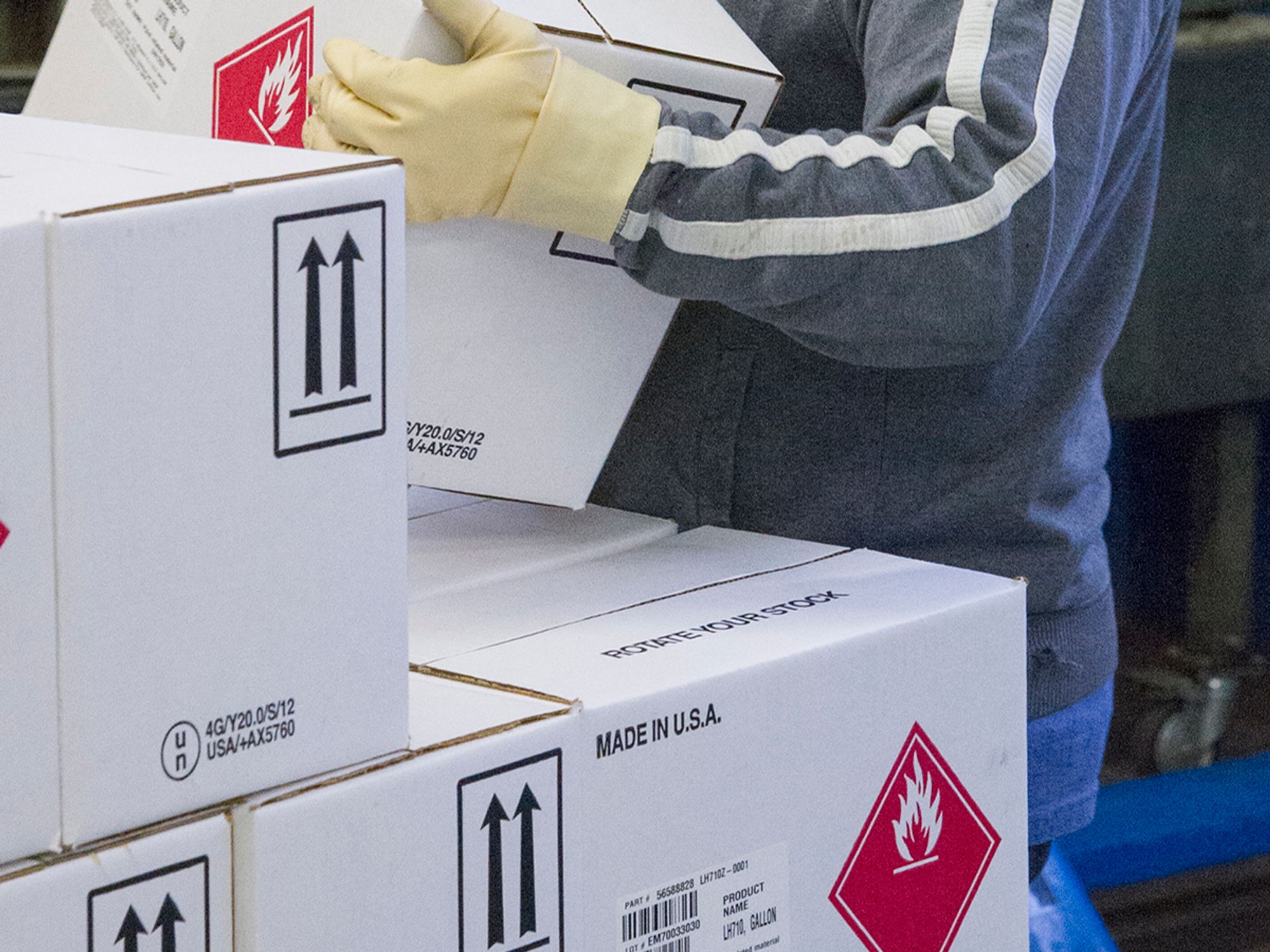
- Labels on packages of hazardous materials need to be easily visible with no markings or attachments blocking the labels from view.
- Duplicate labels and consolidated packages have their own requirements for compliance.
- Labels are required to meet certain specifications, though modifications and special labels are permitted in certain circumstances.
Placement
Labels on hazardous material packages must be clearly visible and not blocked by markings or attachments. Each label must be placed on a contrasting background or have a solid or dotted border so it stands out.
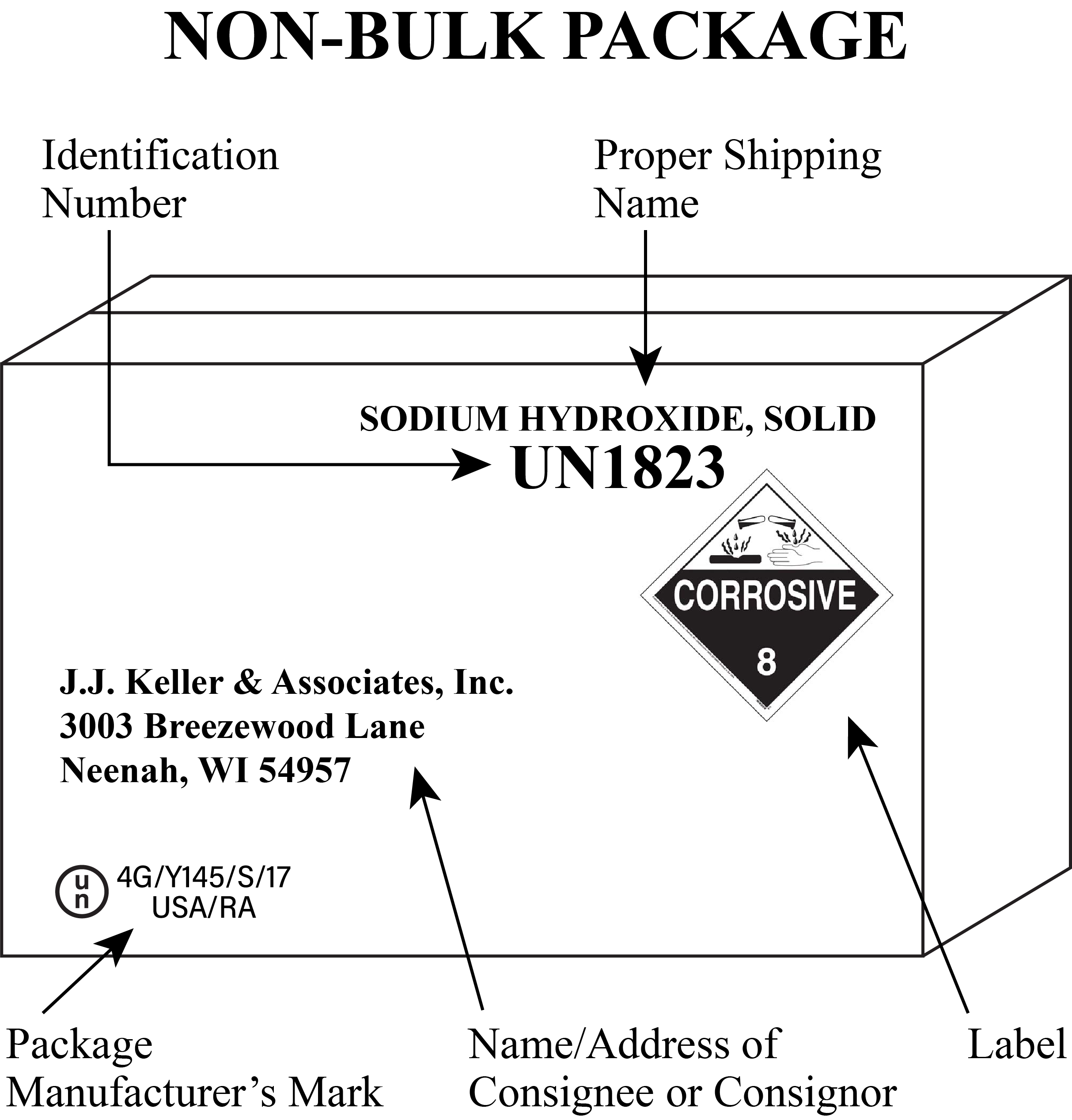
The label must be printed on or attached to a surface of the package, other than the bottom. When possible, it should be placed on the same side and near the proper shipping name marking. Labels can also be printed on or applied to a securely attached tag or affixed by other suitable means to:
- A package that contains no radioactive material and has dimensions less than those of the required label,
- A cylinder, or
- A package with such an irregular surface that a label cannot be satisfactorily affixed.
When both primary and subsidiary labels are required, they must be placed next to each other within 6 inches. Unless noted otherwise in the section on duplicate labels, you don’t need to repeat labels on a package. In most cases, only one of each required label is needed.
Using duplicate labels
Generally, only one of each different required label must be displayed on a package. However, duplicate labels must be displayed on at least two sides or two ends (other than the bottom) of the following:
- Each package or overpack having a volume of 64 cubic feet (1.8 cubic meters) or more;
- Each non-bulk package containing a radioactive material;
- Each DOT 106 or 110 multi-unit tank car tank, and labels must be displayed on each end;
- Each portable tank of less than 1,000 gallons (3,785 L) capacity;
- Each freight container or aircraft unit load device having a volume of 64 cubic feet (1.8 cubic meters) or more, but less than 640 cubic feet (18 cubic meters), and one of each required label must be displayed on or near the closure; and
- An IBC having a volume of 64 cubic feet (1.8 cubic meters) or more.
Labeling consolidated packages
When two or more packages containing compatible hazardous materials are placed within the same outside container or overpack, the outside container or overpack must be labeled for each class of material contained within the package, unless labels on the inside packages are visible and represent each hazardous material in the container or overpack.
Label specifications
Labels must meet the following specifications:
- Must be durable and weather-resistant. Must be able to withstand a 30-day exposure to conditions incident to transportation.
- Each side of a label must be a minimum size of 3.9 inches (100 mm). Each side must also have a solid-line inner border approximately 0.2 inches (5 mm) inside and parallel to the outside edge.
- The printing, inner border, and symbol on each label must be as shown in the Hazardous Materials Regulations (HMR).
- Specifications for color must be as prescribed in Appendix A to Part 172.
- The specified color must extend to the edge of the label (with a few exceptions), as prescribed for each label.
- The symbol, text, numbers, and border of a label must be black — except that white may be used on a label with a one-color background of green, red, or blue. White must be used for the text and class number for the “CORROSIVE” label.
- The hazard class or division number must be at least 0.25 inches (6.3 mm) and no greater than 0.5 inches (12.7 mm).
- When text is displayed, it must be in letters measuring at least 0.3 inches (7.6 mm) in height, with a few exceptions.
- Labels may contain form identification information — including the name of the maker — if such information is printed outside of the solid-line inner border in no larger than 10-point type.
Hazard class or division numbers must be displayed in the lower (bottom) corner of primary and subsidiary labels.
Label modifications
Text is not required on a primary or subsidiary label for Classes 1, 2, 3, 4, 5, 6, and 8. However, the label must meet the other specifications in the HMR.
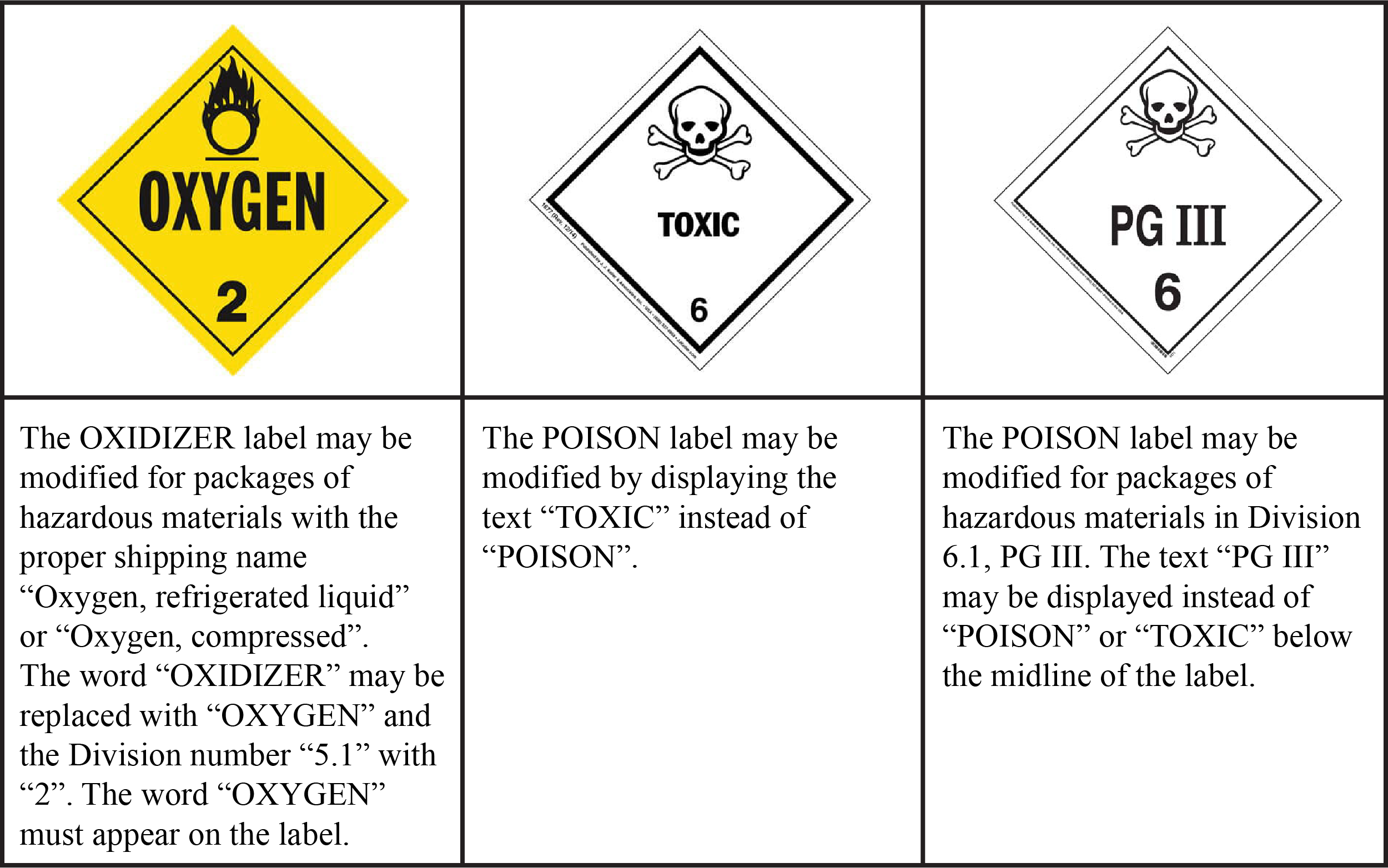
Special labels (172.403, 172.407, 172.450)
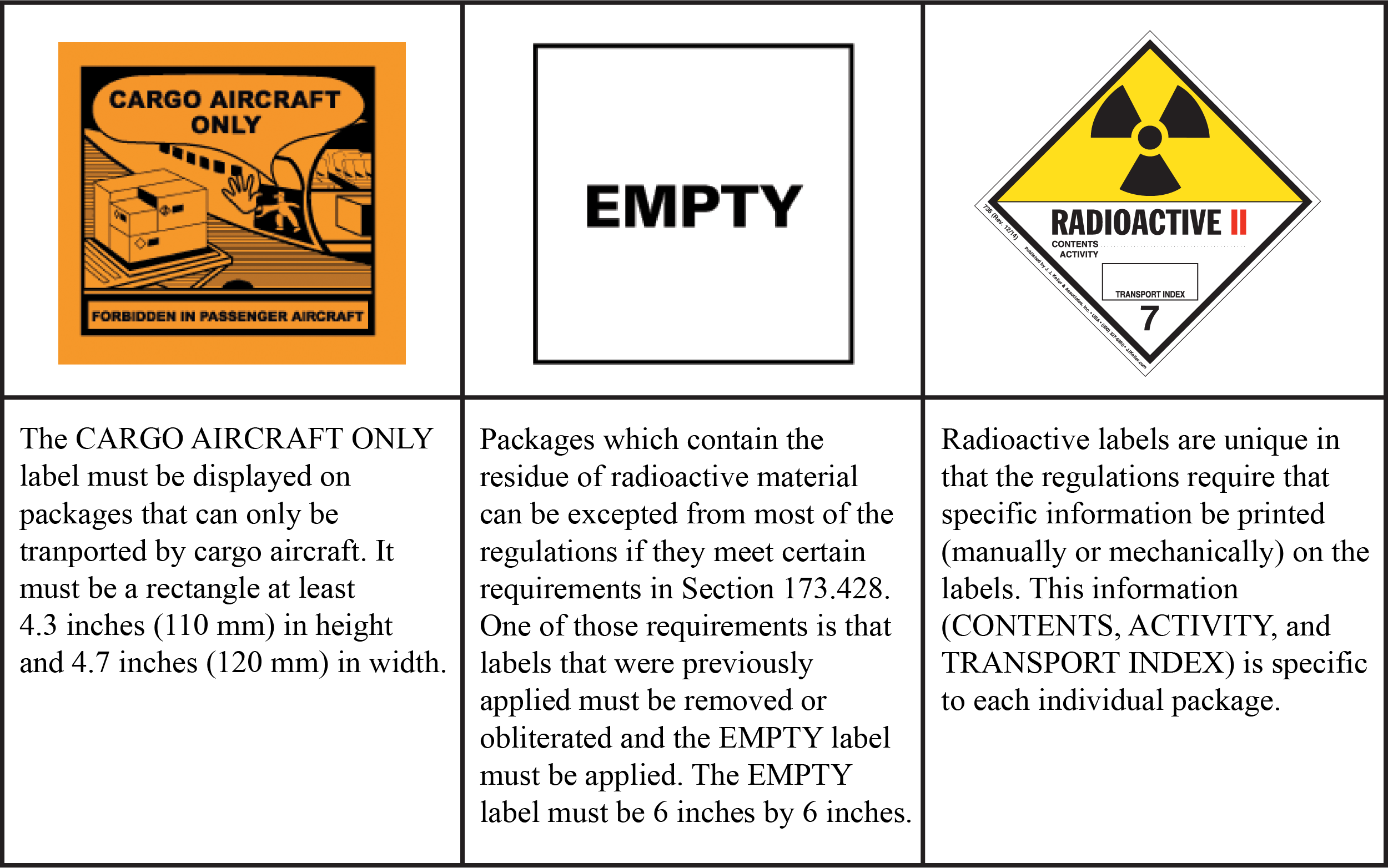
:
- Labels on packages of hazardous materials need to be easily visible with no markings or attachments blocking the labels from view.
- Duplicate labels and consolidated packages have their own requirements for compliance.
- Labels are required to meet certain specifications, though modifications and special labels are permitted in certain circumstances.
Placement
Labels on hazardous material packages must be clearly visible and not blocked by markings or attachments. Each label must be placed on a contrasting background or have a solid or dotted border so it stands out.
The label must be printed on or attached to a surface of the package, other than the bottom. When possible, it should be placed on the same side and near the proper shipping name marking. Labels can also be printed on or applied to a securely attached tag or affixed by other suitable means to:
- A package that contains no radioactive material and has dimensions less than those of the required label,
- A cylinder, or
- A package with such an irregular surface that a label cannot be satisfactorily affixed.
When both primary and subsidiary labels are required, they must be placed next to each other within 6 inches. Unless noted otherwise in the section on duplicate labels, you don’t need to repeat labels on a package. In most cases, only one of each required label is needed.
Using duplicate labels
Generally, only one of each different required label must be displayed on a package. However, duplicate labels must be displayed on at least two sides or two ends (other than the bottom) of the following:
- Each package or overpack having a volume of 64 cubic feet (1.8 cubic meters) or more;
- Each non-bulk package containing a radioactive material;
- Each DOT 106 or 110 multi-unit tank car tank, and labels must be displayed on each end;
- Each portable tank of less than 1,000 gallons (3,785 L) capacity;
- Each freight container or aircraft unit load device having a volume of 64 cubic feet (1.8 cubic meters) or more, but less than 640 cubic feet (18 cubic meters), and one of each required label must be displayed on or near the closure; and
- An IBC having a volume of 64 cubic feet (1.8 cubic meters) or more.
Labeling consolidated packages
When two or more packages containing compatible hazardous materials are placed within the same outside container or overpack, the outside container or overpack must be labeled for each class of material contained within the package, unless labels on the inside packages are visible and represent each hazardous material in the container or overpack.
Label specifications
Labels must meet the following specifications:
- Must be durable and weather-resistant. Must be able to withstand a 30-day exposure to conditions incident to transportation.
- Each side of a label must be a minimum size of 3.9 inches (100 mm). Each side must also have a solid-line inner border approximately 0.2 inches (5 mm) inside and parallel to the outside edge.
- The printing, inner border, and symbol on each label must be as shown in the Hazardous Materials Regulations (HMR).
- Specifications for color must be as prescribed in Appendix A to Part 172.
- The specified color must extend to the edge of the label (with a few exceptions), as prescribed for each label.
- The symbol, text, numbers, and border of a label must be black — except that white may be used on a label with a one-color background of green, red, or blue. White must be used for the text and class number for the “CORROSIVE” label.
- The hazard class or division number must be at least 0.25 inches (6.3 mm) and no greater than 0.5 inches (12.7 mm).
- When text is displayed, it must be in letters measuring at least 0.3 inches (7.6 mm) in height, with a few exceptions.
- Labels may contain form identification information — including the name of the maker — if such information is printed outside of the solid-line inner border in no larger than 10-point type.
Hazard class or division numbers must be displayed in the lower (bottom) corner of primary and subsidiary labels.
Label modifications
Text is not required on a primary or subsidiary label for Classes 1, 2, 3, 4, 5, 6, and 8. However, the label must meet the other specifications in the HMR.
Special labels (172.403, 172.407, 172.450)
2657105095
UPGRADE TO CONTINUE READING