Compliance Just Got Easier: Stay ahead of regulatory changes with instant notifications on updates that matter.
['Walking Working Surfaces']
['Stairway Railings and Guides', 'Walking Working Surfaces']
04/22/2026

Copyright 2026 J. J. Keller & Associate, Inc. For re-use options please contact copyright@jjkeller.com or call 800-558-5011.
:
|
InstituteSafety & HealthGeneral Industry SafetyWalking Working SurfacesStairway Railings and GuidesWalking Working SurfacesUSAEnglishAnalysisFocus AreaIn Depth (Level 3)
Key definitions
['Walking Working Surfaces']
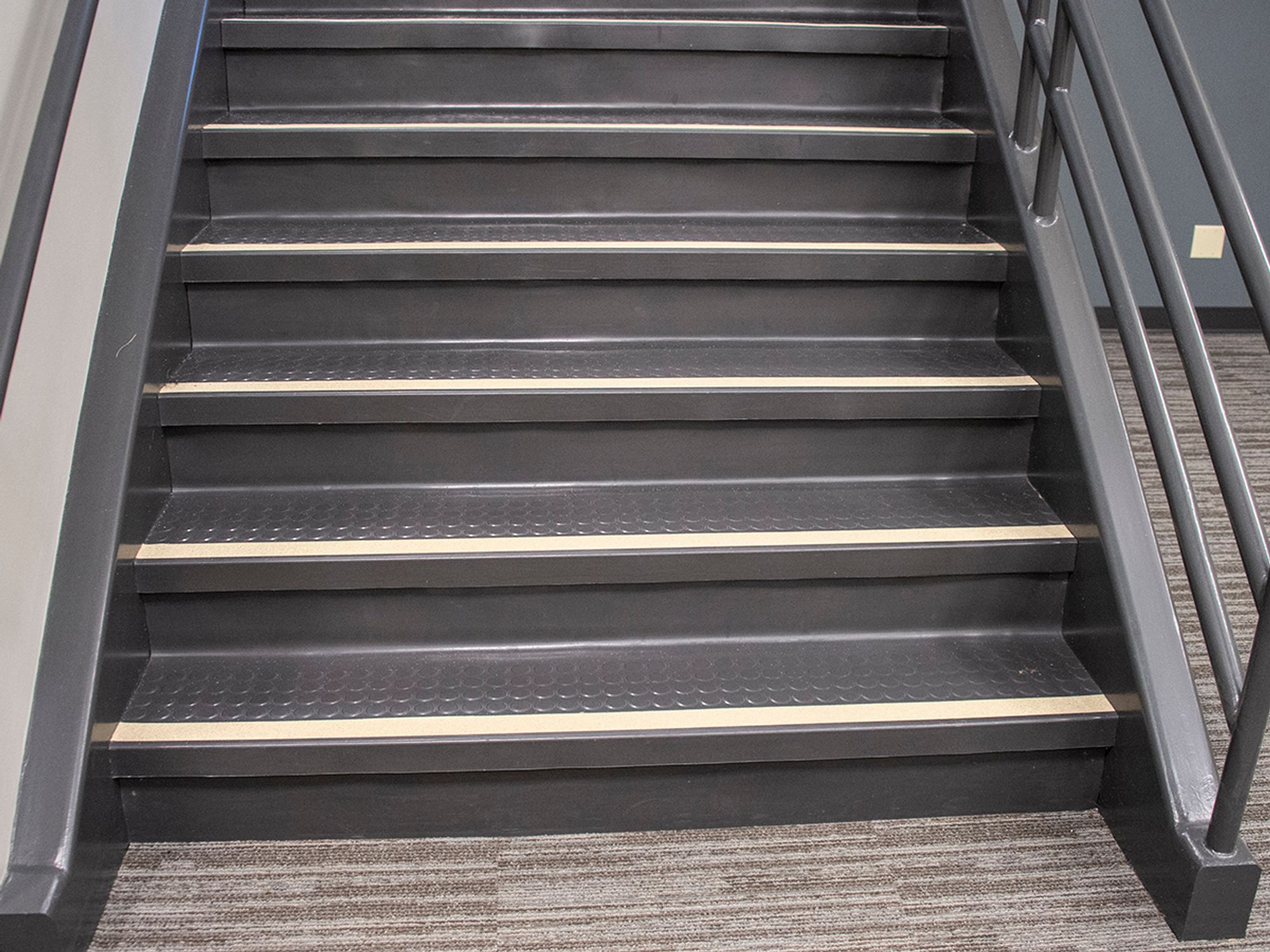
- Key definitions for stairways are found in this section.
Alternating tread-type stair: A type of stairway consisting of a series of treads that usually are attached to a center support in an alternating manner such that an employee typically does not have both feet on the same level while using the stairway.
Handrail: A rail used to provide employees with a handhold for support.
Open riser: The gap or space between treads of stairways that do not have upright or inclined members (risers).
Ship stair (ship ladder): A stairway that is equipped with treads, stair rails, and open risers, and has a slope that is between 50 and 70 degrees from the horizontal.
Spiral stairs: A series of treads attached to a vertical pole in a winding fashion, usually within a cylindrical space.
Stair rail or stair rail system: A barrier erected along the exposed or open side of stairways to prevent employees from falling to a lower level.
Stairway (Stairs): Risers and treads that connect one level with another, and includes any landings and platforms in between those levels. Stairways include standard, spiral, alternating tread-type, and ship stairs.
Standard stairs: A fixed or permanently installed stairway. Ship, spiral, and alternating tread-type stairs are not considered standard stairs.
Tread: A horizontal member of a stair or stairway, but does not include landings or platforms.
:
walking-working-surfaces
walking-working-surfaces
FOUNDATIONAL LEARNING
Key definitions
InstituteSafety & HealthGeneral Industry SafetyWalking Working SurfacesStairway Railings and GuidesWalking Working SurfacesUSAEnglishAnalysisFocus AreaIn Depth (Level 3)
['Walking Working Surfaces']
- Key definitions for stairways are found in this section.
Alternating tread-type stair: A type of stairway consisting of a series of treads that usually are attached to a center support in an alternating manner such that an employee typically does not have both feet on the same level while using the stairway.
Handrail: A rail used to provide employees with a handhold for support.
Open riser: The gap or space between treads of stairways that do not have upright or inclined members (risers).
Ship stair (ship ladder): A stairway that is equipped with treads, stair rails, and open risers, and has a slope that is between 50 and 70 degrees from the horizontal.
Spiral stairs: A series of treads attached to a vertical pole in a winding fashion, usually within a cylindrical space.
Stair rail or stair rail system: A barrier erected along the exposed or open side of stairways to prevent employees from falling to a lower level.
Stairway (Stairs): Risers and treads that connect one level with another, and includes any landings and platforms in between those levels. Stairways include standard, spiral, alternating tread-type, and ship stairs.
Standard stairs: A fixed or permanently installed stairway. Ship, spiral, and alternating tread-type stairs are not considered standard stairs.
Tread: A horizontal member of a stair or stairway, but does not include landings or platforms.
2656870339
2656871535
UPGRADE TO CONTINUE READING
RELATED TOPICS
J. J. Keller is the trusted source for DOT / Transportation, OSHA / Workplace Safety, Human Resources, Construction Safety and Hazmat / Hazardous Materials regulation compliance products and services. J. J. Keller helps you increase safety awareness, reduce risk, follow best practices, improve safety training, and stay current with changing regulations.
Copyright 2026 J. J. Keller & Associate, Inc. For re-use options please contact copyright@jjkeller.com or call 800-558-5011.