Compliance Just Got Easier: Stay ahead of regulatory changes with instant notifications on updates that matter.
['Ergonomics']
['Lifting and Back Safety']
11/29/2023

Copyright 2026 J. J. Keller & Associate, Inc. For re-use options please contact copyright@jjkeller.com or call 800-558-5011.
Use this exercise to improve inspection skills and teach employees to recognize and prevent workplace hazards.
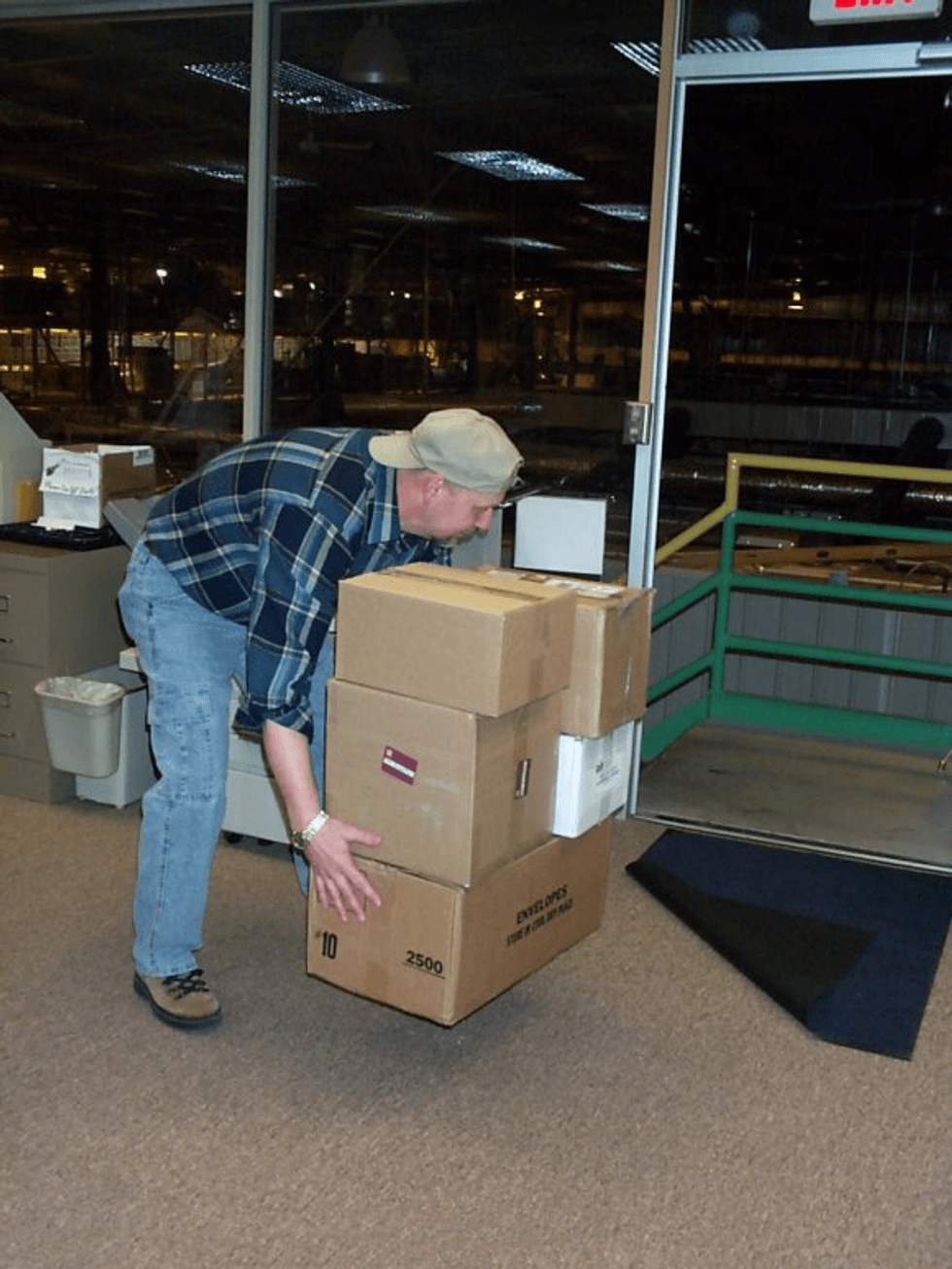
Boxes: Lifting Answers
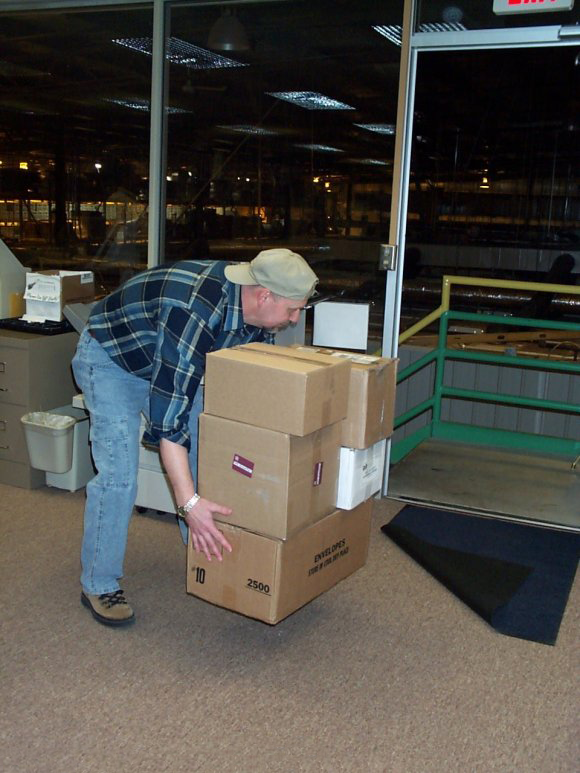
1) Bad lifting technique. Lift with your legs, not your back. Bend at the knees, not at the waist.
Related information:
- Safety Training: Ergonomics
- Safety Training: Lifting Techniques
- Fun Stuff - clip art: Ergonomics
- Fun Stuff - clip art: Lifting
- Ergonomics
- Lifting
- NIOSH lifting equation
2) Carrying too many items. Unable to see over packages. Uneven (unstable) stacking. Wear foot protection where there’s a risk of heavy items falling onto the feet (1910.136).
Related information:
- Safety Training: Slips, trips, and falls
- Fun Stuff - cartoons: Ergonomics
3) Mat on floor is turned up. Tripping hazard.
Related information:
- Safety Training: Slips, trips, and falls
- Written Plans: Housekeeping
- Office safety
4) Foot protection. Employees must wear protective footwear when heavy items may fall on the feet (1910.136). In addition, many industry settings also require safety glasses and/or hearing protection. The PPE required depends on the hazards that exist.
Related information:
If you see other things wrong in these pictures (please provide exercise title in comments) or have ideas for new pictures, please contact us.
ergonomics
Ergonomics
Use this exercise to improve inspection skills and teach employees to recognize and prevent workplace hazards.
Boxes: Lifting Answers
1) Bad lifting technique. Lift with your legs, not your back. Bend at the knees, not at the waist.
Related information:
- Safety Training: Ergonomics
- Safety Training: Lifting Techniques
- Fun Stuff - clip art: Ergonomics
- Fun Stuff - clip art: Lifting
- Ergonomics
- Lifting
- NIOSH lifting equation
2) Carrying too many items. Unable to see over packages. Uneven (unstable) stacking. Wear foot protection where there’s a risk of heavy items falling onto the feet (1910.136).
Related information:
- Safety Training: Slips, trips, and falls
- Fun Stuff - cartoons: Ergonomics
3) Mat on floor is turned up. Tripping hazard.
Related information:
- Safety Training: Slips, trips, and falls
- Written Plans: Housekeeping
- Office safety
4) Foot protection. Employees must wear protective footwear when heavy items may fall on the feet (1910.136). In addition, many industry settings also require safety glasses and/or hearing protection. The PPE required depends on the hazards that exist.
Related information:
If you see other things wrong in these pictures (please provide exercise title in comments) or have ideas for new pictures, please contact us.
Use this exercise to improve inspection skills and teach employees to recognize and prevent workplace hazards.
Answer
UPGRADE TO CONTINUE READING